
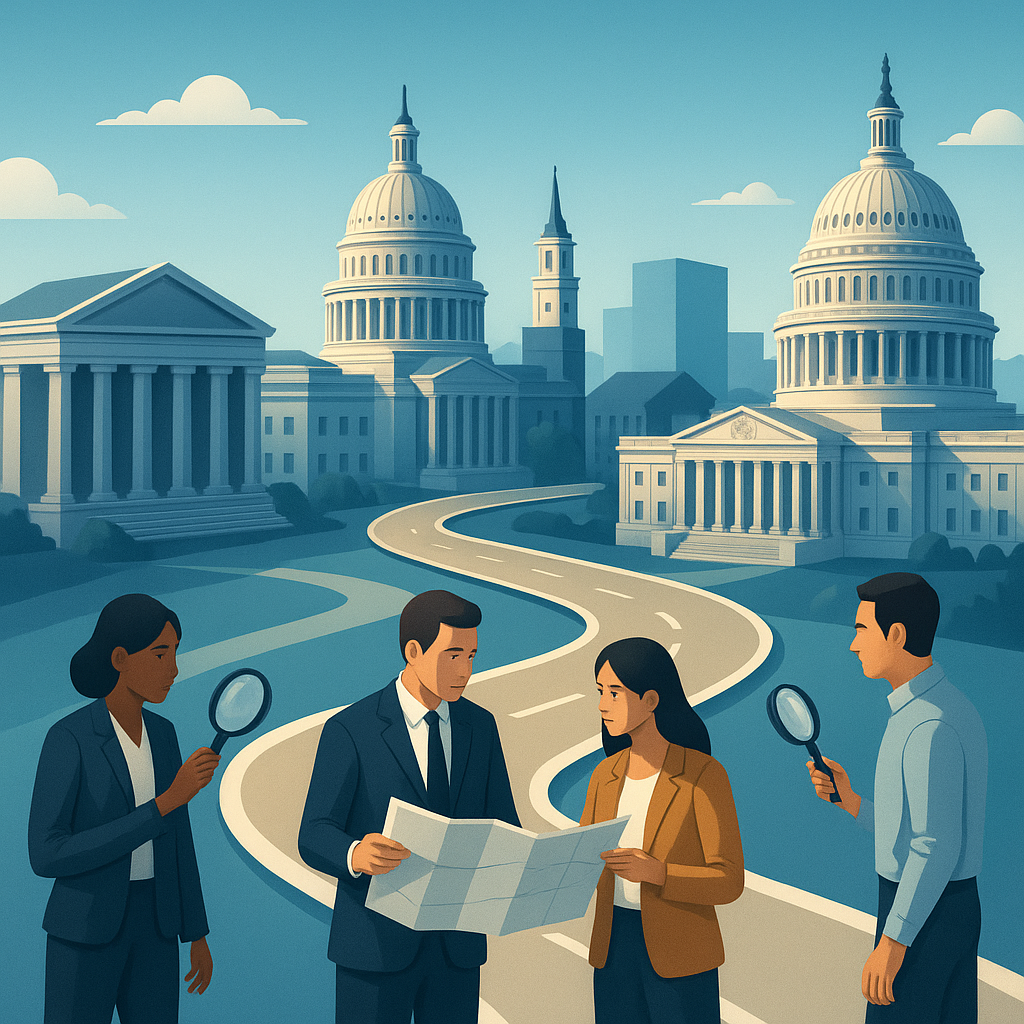
Understanding the Power Behind Policy: A Vivid Introduction
Imagine a bustling city square in the heart of any capital. People gather, businesses operate, infrastructure hums, and social services reach the vulnerable. Behind this lively scene lies an invisible framework of rules and directives shaping daily life — government policy. In 2026, governments worldwide are more interconnected and complex than ever, with policy decisions rippling through economies, societies, and technologies. Yet, for many beginners, government policy remains an opaque, intimidating domain, often misconstrued as mere bureaucratic jargon or distant political maneuvering.
However, policy is fundamentally about choices—choices that define priorities, allocate resources, and set the rules of engagement for citizens and institutions alike. Whether it’s regulating emerging AI ethics, managing climate resilience, or reforming education, government policy is the blueprint for collective action. As we embark on this guide, the goal is to unravel these blueprints, revealing how policies are conceived, debated, enacted, and evaluated.
“Policy is the art of making choices clear, actionable, and accountable — it shapes not just governance but the very fabric of society.” — Senior Policy Analyst, Global Governance Forum
Historical and Structural Foundations: How We Arrived Here
Tracing the evolution of government policy reveals a tapestry woven from centuries of political theory, social movements, and institutional innovation. Historically, policy emerged as monarchs and early states sought to consolidate power and regulate society. The Enlightenment era introduced the notion of governance by law, emphasizing rationality and rights, which laid the groundwork for modern democratic policymaking.
In the 20th century, the rise of welfare states and regulatory regimes marked a shift towards active government roles in managing economies and social welfare. The post-World War II period especially saw an expansion of policy instruments aimed at reconstruction, social security, and international cooperation.
Structurally, modern government policy is shaped within complex systems involving multiple actors:
- Legislatures enact laws that provide the legal framework for policies.
- Executives and bureaucracies design and implement policies through agencies and departments.
- Judiciaries interpret policy legitimacy and resolve disputes.
- Civil society and interest groups influence policy through advocacy and public engagement.
- International organizations increasingly shape national policies through treaties and standards.
This interconnectedness means that policy decisions today are rarely isolated — they reflect cross-sectoral dynamics and global considerations. The challenges of the 21st century, such as climate change and digital governance, demand policies that are adaptive and multifaceted.
Core Elements of Government Policy: Breaking Down the Process
Grasping government policy requires understanding its lifecycle — from conception to evaluation. The process typically unfolds as follows:
- Agenda Setting: Identifying problems or opportunities that require government attention. This stage is influenced by political priorities, public opinion, and events.
- Policy Formulation: Experts, officials, and stakeholders develop policy options, often supported by research and data analysis.
- Decision-Making: Policymakers choose among alternatives. This may involve legislative votes, executive orders, or regulatory approvals.
- Implementation: Bureaucracies execute the policy through programs, regulations, or services.
- Evaluation and Feedback: Assessing policy effectiveness and unintended consequences, leading to revisions or termination.
Each phase is shaped by political negotiation, resource constraints, legal frameworks, and social values. For example, the 2025 Digital Privacy Act passed by the European Union illustrates this complexity: the agenda was propelled by rising public concern over data misuse; formulation engaged technologists, lawyers, and civil rights groups; decision-making reflected intense parliamentary debates; implementation required coordination across member states; and evaluation is ongoing with real-time data audits.
“Effective policy is less about perfect solutions and more about continuous adaptation informed by evidence and public trust.” — Policy Director, International Institute for Governance
2026 Policy Landscape: Emerging Trends and Innovations
As of mid-2026, government policy is witnessing transformative shifts. One notable trend is the mainstreaming of agile governance, a concept that promotes flexibility, stakeholder engagement, and rapid iteration in policymaking. Governments in Scandinavia, Singapore, and Canada are pioneering frameworks that allow policies to evolve responsively to technological and societal changes, breaking away from static, top-down models.
Another critical development is the integration of artificial intelligence and data analytics in policy design and implementation. According to recent reports, over 60% of OECD countries now employ AI-driven tools to forecast policy impacts, identify vulnerable populations, and optimize resource allocation. However, this raises ethical and transparency concerns, prompting new guidelines emphasizing accountability and inclusivity.
Climate policy has also intensified, with over 120 countries committing to net-zero targets by 2050. This has led to policies incentivizing green technologies, carbon pricing, and urban resilience projects. For instance, the U.S. Inflation Reduction Act's latest amendments allocate $30 billion towards climate adaptation infrastructure, reflecting both environmental urgency and economic opportunity.
Social equity remains high on policy agendas globally. The 2026 Global Social Justice Index highlights that governments are increasingly embedding equity considerations into healthcare, housing, and education policies. This shift aligns with broader movements for inclusive governance, as discussed in our analysis of agile and inclusive governance.
- Key 2026 policy trends include:
- Agile governance frameworks for rapid adaptation
- AI integration in policy analytics
- Accelerated climate action and green investments
- Embedding social equity in policy design
- Enhanced transparency and public participation mechanisms
Expert Insights and the Industry Impact of Understanding Policy
Experts emphasize that mastering government policy literacy is increasingly essential not only for policymakers but also for businesses, nonprofits, and citizens. As regulations become more sophisticated and interdependent, understanding policy nuances can be the difference between compliance success and costly penalties.
Industry leaders in technology, finance, and healthcare actively monitor policy shifts to anticipate market changes and innovate responsibly. For instance, the fintech sector’s rapid growth in 2026 is shaped by evolving anti-money laundering regulations and digital currency policies. Firms that engage proactively with regulators often influence policy formulation, fostering environments conducive to innovation and stability.
Moreover, NGOs and advocacy groups leverage policy knowledge to drive social change. By engaging in public consultations and impact assessments, these organizations help ensure that policies reflect diverse community needs. This dynamic interaction between government and civil actors exemplifies the collaborative governance models emerging worldwide.
“Policy fluency is the new literacy in a complex world — it empowers stakeholders to shape outcomes rather than just respond to them.” — Dr. Elena Martinez, Governance Expert and Author
Educational institutions are responding by incorporating policy studies into interdisciplinary curricula, preparing future leaders with skills to analyze legal frameworks, stakeholder interests, and economic impacts. This trend reflects a recognition that policy understanding bridges law, economics, sociology, and technology.
Looking Ahead: Navigating the Future of Government Policy
The trajectory of government policy suggests continued evolution driven by technological innovation, societal demands, and global challenges. Key areas to watch include:
- Digital Sovereignty and Data Governance: As data becomes a critical asset, policies will increasingly focus on privacy, cross-border data flows, and AI ethics.
- Climate Adaptation Policies: Beyond mitigation, governments will develop robust frameworks for disaster resilience, sustainable infrastructure, and community empowerment.
- Participatory and Transparent Policymaking: Advances in digital platforms will facilitate greater citizen engagement and real-time feedback loops.
- Global Policy Coordination: International cooperation on pandemics, cyber threats, and trade will necessitate harmonized yet flexible policies.
For beginners, cultivating a mindset of continuous learning and critical inquiry is vital. Resources such as Rethinking Government Policy: Balancing Innovation, Equity, and Accountability provide frameworks to understand these complexities.
Ultimately, government policy is a living process, shaped by values, evidence, and power relations. Engaging with it thoughtfully offers a pathway to informed citizenship and effective advocacy.
- Actionable takeaways for beginners:
- Start by following key policy debates in trusted media and official government portals.
- Engage in public consultations or local governance meetings to experience policymaking firsthand.
- Study landmark policies to understand their lifecycle and impact.
- Use interdisciplinary approaches to grasp policy implications across sectors.