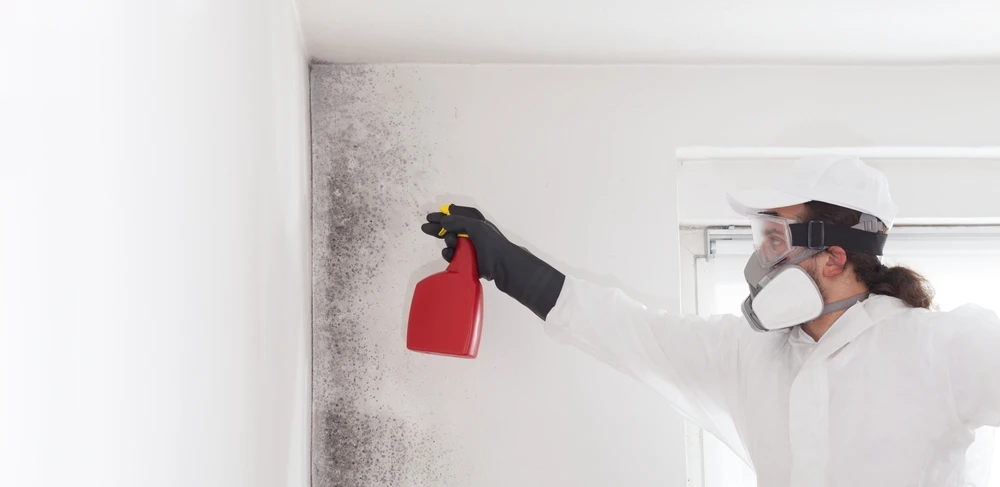
The Hidden Danger Lurking in Your Home
You spot a patch of black, green, or white fuzz creeping up a wall or under a sink. Your first instinct is likely: I’ll just grab a bottle of bleach and scrub it away. It seems easy, cost-effective, and fast.
The truth is, mold is one of the most insidious problems a homeowner can face. It’s not just an ugly stain; it’s a living organism that compromises your air quality and can silently erode the structure of your home. While the internet is full of quick fixes, at Feels Like Home Restorations, we’ve seen countless cases where DIY attempts failed, leading to more extensive and costly damage down the line.
We are here to clear the air. Trying to tackle a mold problem yourself often means leaving the root issue—and most of the spores—behind. For complete eradication and long-term safety, professional help is non-negotiable.
Here are 7 common myths about DIY mold removal you absolutely need to ignore:
Myth 1: Bleach Kills Mold on Any Surface
This is arguably the most dangerous and widely accepted myth in DIY mold removal. Many homeowners believe that dousing a moldy area with chlorine bleach is the definitive solution.
The Reality: While bleach can kill mold on non-porous surfaces (like glass or tile), it is largely ineffective on porous materials like drywall, wood, or concrete. The bleach’s water content is absorbed by these materials, feeding the mold beneath the surface, while the chlorine evaporates too quickly to be effective. All you’ve done is bleached the surface stain, leaving the deep-seated fungal roots intact. Proper mold restoration services use specialized, professional-grade biocides and techniques designed to penetrate porous materials and ensure that mold is killed at the source.
Myth 2: If I Can’t See the Mold, It’s Not a Problem
Many people believe mold only exists where it's visible—in corners, on grout, or around window sills.
The Reality: The mold you see is often just the tip of the iceberg. Mold thrives in dark, damp, and hidden places: behind drywall, under floorboards, in crawl spaces, and inside HVAC systems. It can be identified by a musty odor long before you see the physical growth. Ignoring the smell because you don't see the colony is a critical mistake that prevents complete eradication. Professionals conduct thorough inspections, often using thermal imaging and moisture meters, to track the mold back to its source, which is almost always a water or moisture issue.
Myth 3: Mold Can Be Scrubbed Away with Soap and Water
For small patches, some homeowners resort to basic household cleaners, scrubbing brushes, and elbow grease.
The Reality: Scrubbing surface mold without proper containment often does more harm than good. A vigorous scrub disperses millions of microscopic mold spores into the air, effectively turning a localized problem into an airborne one that can contaminate other areas of your home. Mold restoration services rely on containment barriers (like negative air pressure machines and plastic sheeting) to isolate the affected area before removal begins. This specialized process ensures spores are contained and removed safely.
Myth 4: Any Mold Removal Is the Same as Mold Remediation
These two terms are often used interchangeably, but they represent a vast difference in quality and effectiveness.
The Reality: "Removal" simply means taking the visible mold off a surface. "Remediation," which is what professional expert reconstruction services like ours provide, is a comprehensive process that includes:
- Identifying and fixing the moisture source.
- Containing the area.
- Removing all contaminated material (often requiring demolition).
- Cleaning and sanitizing structural components.
- Restoring the structure.
Remediation targets complete eradication—eliminating both the growth and the underlying cause to prevent recurrence. Removal only focuses on the symptom.
Myth 5: A Strong Fan or Dehumidifier Will Dry Out the Mold
Homeowners often try to dry out a moldy basement or bathroom using an industrial fan or a dehumidifier they already own.
The Reality: While reducing humidity is essential, using a standard fan on a mold colony will rapidly spread the spores throughout the house's ventilation system. Furthermore, simple drying is rarely enough. Mold grows deep into materials, and simply reducing the ambient moisture doesn't reverse the damage to the material itself. Professional restoration involves controlled drying with commercial-grade equipment after the contaminated materials have been safely removed.
Myth 6: Mold Will Never Grow Back After I Clean It
The belief that one cleaning session permanently solves the problem leads to complacency and recurrent issues.
The Reality: Mold will always return if the conditions that allowed it to grow in the first place are still present. This means a persistent moisture source, whether it’s a slow pipe leak, high indoor humidity, or post-flood residue. A key part of our mold restoration services involves identifying and eliminating the moisture source. Without this step, your DIY efforts are just a temporary, cosmetic fix. True complete eradication requires environmental control.
Myth 7: I Don't Need to Wear Protective Gear for Small Areas
Gloves and maybe a paper face mask are often considered enough for a small DIY clean-up job.
The Reality: Mold spores and mycotoxins pose significant health risks, especially to individuals with allergies or respiratory issues. Disturbing mold without proper Personal Protective Equipment (PPE) exposes you to inhalation dangers. Professional expert reconstruction services teams use full-face respirators, non-vented goggles, and hazmat suits, even for small jobs, to ensure personal safety and prevent tracking spores outside the contained area.
Why Professional Restoration is the Only Path to Complete Eradication
At Feels Like Home Restorations, we understand that finding mold is stressful, but we urge you to resist the DIY urge. The financial and health risks associated with incomplete removal far outweigh the cost of professional service.
Our team specializes in:
- Thorough Assessment: Identifying the scope of contamination, including hidden colonies.
- Safe Containment: Preventing cross-contamination of clean areas.
- Complete Remediation: Using industry-leading standards to achieve complete eradication, not just surface cleaning.
- Structural Integrity: Beyond mold, we offer expert reconstruction services to repair any structural damage caused by the mold and moisture, ensuring your home is returned to its pre-loss condition—or better.
When mold threatens the health and integrity of your home, trust the professionals to restore your peace of mind. We invite you to check out our Google Business Profile to see our customer reviews and commitment to service.
Ready to schedule a professional assessment? Learn more about our specialized mold restoration services today.