
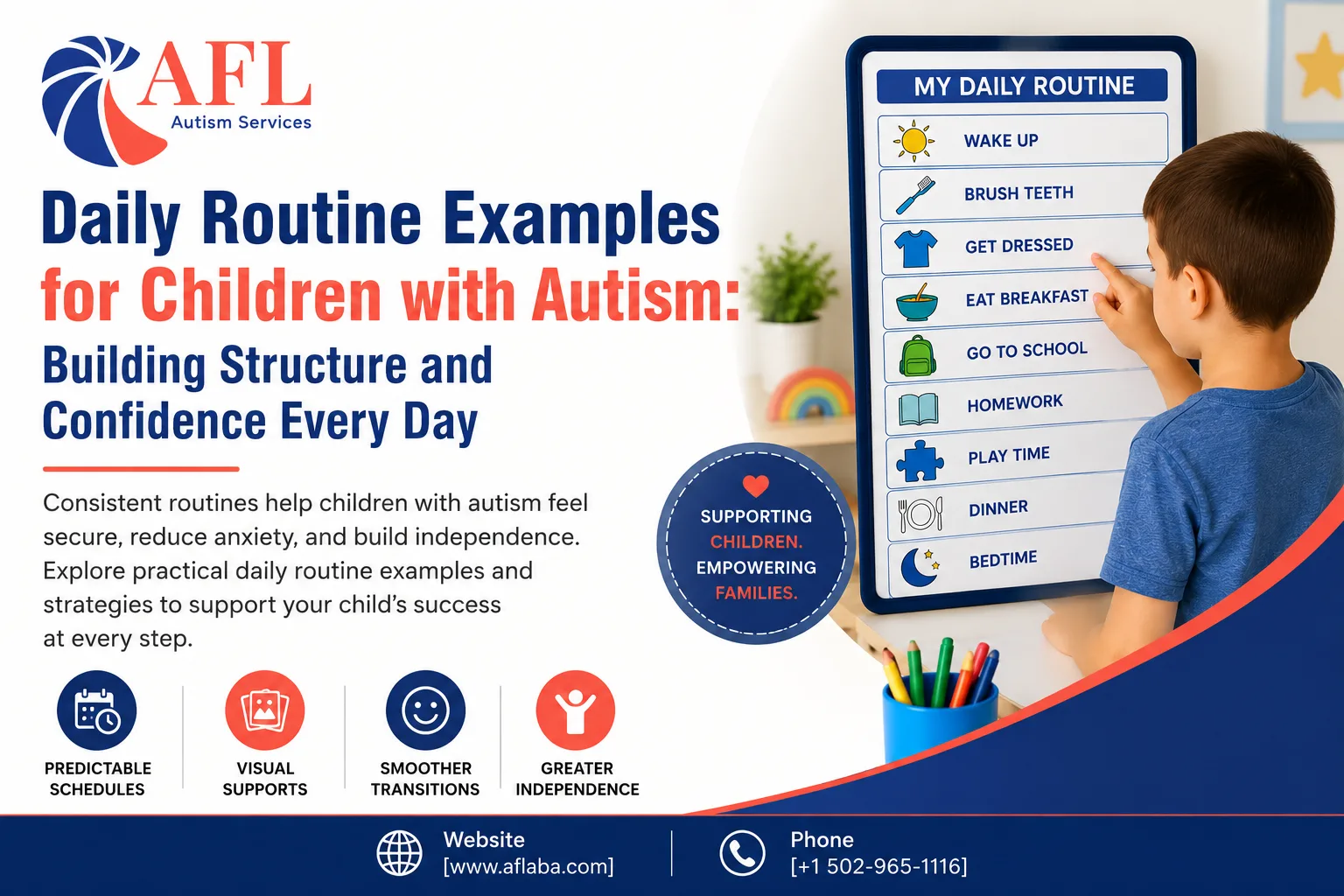
Children with autism often benefit from routines that provide consistency and predictability. When daily activities follow a familiar pattern, children know what to expect, which can help reduce anxiety and make transitions between tasks easier. While every child has unique needs, creating a structured daily routine can support independence, improve behavior, and encourage the development of important life skills.
At Adapt For Life - AFL Autism Services, families often discover that small changes in daily structure can make a significant difference in a child's ability to navigate everyday situations. A well-planned routine does more than organize the day. It creates a sense of stability that helps children feel secure in their environment. Many parents notice that their child responds more positively when activities occur at similar times each day.
Why Routines Matter for Children with Autism
For many children with autism, uncertainty can be challenging. A predictable routine helps reduce confusion and provides a clear understanding of what will happen throughout the day. This sense of predictability can help children feel more comfortable and confident when moving between activities.
Structured routines also create opportunities to practice essential life skills. Daily activities such as getting dressed, eating meals, completing homework, and preparing for bedtime become learning opportunities that can strengthen independence over time. Consistency helps children understand expectations and can reduce resistance to everyday tasks.
Creating an Effective Morning Routine
The morning is often one of the busiest parts of the day for families. Establishing a consistent morning routine can help children prepare for school or other activities with less stress and frustration.
A typical morning routine may begin with waking up at the same time each day, followed by personal hygiene tasks, getting dressed, eating breakfast, and preparing to leave the house. Repeating these activities in the same order creates familiarity and can make mornings feel more manageable.
Parents may find that visual reminders, schedules, or simple checklists help reinforce the routine and encourage greater independence. Over time, children may require fewer prompts as the routine becomes a natural part of their day.
Supporting Success During the School Day
School routines are equally important because they help children understand expectations and participate more confidently in classroom activities. Predictable schedules allow children to prepare for transitions and reduce uncertainty about what comes next.
When classroom activities follow a consistent structure, children often find it easier to stay engaged and focused. Regular routines can also support communication skills, social interactions, and academic participation throughout the school day.
Developing a Positive After-School Routine
The transition from school to home can sometimes be difficult, especially after a long and demanding day. Creating a structured after-school routine can help children adjust more comfortably and maintain a sense of consistency.
Many families find success by including a period of relaxation before introducing homework, therapy activities, or family responsibilities. Providing a predictable sequence of events helps children understand expectations and can reduce resistance to less preferred tasks.
Including time for recreation and preferred activities is equally important. A balanced routine helps children recharge while maintaining structure throughout the afternoon and evening.
Establishing a Consistent Bedtime Routine
A predictable bedtime routine can support healthy sleep habits and create a smoother end to the day. Repeating the same activities each evening helps children recognize that bedtime is approaching and allows them to transition more calmly into sleep.
Activities such as taking a bath, changing into pajamas, brushing teeth, reading a favorite story, and going to bed at a consistent time can create a calming environment that promotes better rest. Consistency is often one of the most important factors in developing successful bedtime habits.
The Value of Visual Supports
Visual supports can be an effective way to reinforce daily routines. Many children with autism process visual information more easily than verbal instructions alone. Visual schedules help children understand what is happening now and what will happen next, reducing uncertainty and supporting smoother transitions.
These tools can be customized to meet individual needs. Some children respond well to photographs, while others prefer symbols, illustrations, or written schedules. The goal is to create a system that makes daily expectations clear and easy to follow.
Helping Children Build Independence
One of the greatest benefits of a structured routine is the opportunity to build independence. As children become familiar with daily expectations, they often gain confidence in completing tasks on their own. Small achievements throughout the day can contribute to greater self-esteem and encourage continued progress.
At Adapt For Life - AFL Autism Services, supporting families in developing practical strategies for everyday success is an important part of helping children reach their full potential. Consistent routines can provide a strong foundation for learning, growth, and long-term development.
Conclusion
Creating a structured daily routine is one of the most effective ways to support children with autism. Consistency helps reduce anxiety, improve transitions, encourage independence, and create a more predictable environment for learning and development.
While every child is different, routines that are tailored to individual needs can help establish confidence and stability throughout the day. By focusing on structure, consistency, and gradual skill development, families can create routines that support long-term success and improve overall quality of life.