
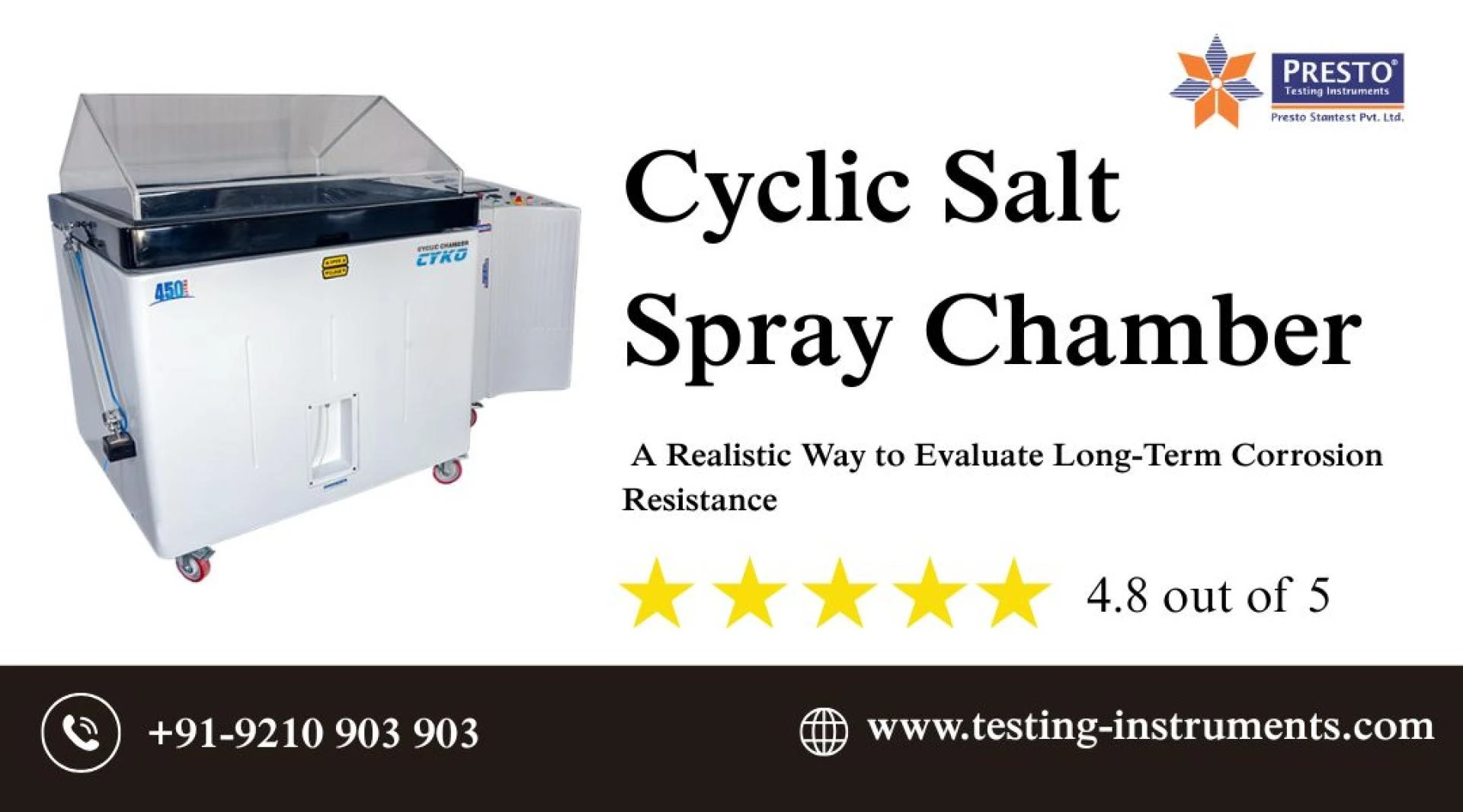
Corrosion is one of the most persistent and expensive problems faced by modern industries. Whether it’s automotive components, coated metal parts, marine equipment, or outdoor structures, materials are constantly exposed to changing environmental conditions. These conditions—salt, humidity, condensation, wet-dry cycles, and temperature variations—gradually weaken the surface protection of materials and lead to rust formation.
To prevent failures and ensure long-term durability, manufacturers rely on advanced laboratory testing. Among all corrosion test methods used today, the Cyclic Salt Spray Chamber has emerged as one of the most dependable and realistic solutions. Unlike the conventional salt spray test, this method closely replicates the dynamic and unpredictable nature of real outdoor conditions.
In this blog, we’ll break down what a cyclic salt spray chamber is, how it works, why it is more reliable than traditional tests, and how different industries use it to improve material performance.
Why Traditional Salt Spray Testing Isn’t Enough Anymore
For decades, the neutral salt spray (NSS) test has been the standard for conducting corrosion checks. It exposes materials to a continuous fog of salt solution inside an enclosed chamber. While this method is helpful for basic comparison of coatings, it doesn’t fully represent real environmental situations.
Real weather is never constant. During an actual day, materials may experience:
- Moisture in the morning
- Heat and drying during the day
- Condensation at night
- Salt exposure in coastal regions
- Humidity changes across seasons
A continuous spray cannot mimic these variations. That is where the cyclic salt spray test becomes more powerful and meaningful.
What Exactly Is a Cyclic Salt Spray Chamber?
A Cyclic Salt Spray Chamber is a specialized corrosion testing instrument designed to simulate alternating environmental conditions in cycles. Instead of exposing samples to one type of environment, it creates a sequence of conditions that resemble natural aging.
These cycles usually include:
- Salt spray (salt fog) exposure
- Controlled humidity
- Drying (hot air or ambient drying)
- Condensation (water droplets forming on the surface)
- Temperature variations
By repeating these cycles over several hours or days, the chamber accelerates corrosion in a way that truly matches what materials experience outdoors.
How the Chamber Works – Step-by-Step
The working of a cyclic salt spray chamber is based on programmable cycles. Operators set a customized sequence depending on test standards or specific testing needs. Here’s how the chamber typically performs:
1. Salt Spray Stage
In this stage, a fine mist of salt solution (generally sodium chloride) is sprayed inside the chamber. This exposes the material to a corrosive environment similar to marine or coastal conditions.
2. High Humidity Stage
The chamber increases humidity levels above 95%, allowing the material to absorb moisture. Since moisture accelerates corrosion, this step plays a major role in recreating natural damage.
3. Air Drying Stage
Warm or ambient air is introduced to dry the sample surface. The drying process generates stress on the coating or substrate, just like daytime sunlight or warm weather would.
4. Condensation Stage
Moisture condenses on the surface, forming droplets. This mimics dew formation during the night or early morning.
5. Temperature Cycle
The chamber may raise or lower temperature depending on the cycle. These changes create expansion and contraction stress on coatings and metals.
Every stage contributes to a more realistic corrosion mechanism. The test cycle continues for several hours or days, depending on the standard (ASTM, ISO, JIS, or buyer requirements).
Why Cyclic Salt Spray Testing Gives Realistic and Reliable Results
1. Close Simulation of Natural Corrosion
The biggest advantage is its ability to mimic real-world conditions. Products in the field are not exposed to continuous salt; they go through cycles of wetting, drying, condensation, and temperature changes. Cyclic testing recreates all of these.
2. Faster Yet Accurate
This method accelerates corrosion without compromising realism. Instead of waiting for months to study natural weathering, manufacturers can get comparable results in a few days.
3. Ideal for Modern Coatings
Today’s coatings—powder coatings, galvanization, electroplating, and advanced paint systems—are designed to resist simple salt fog tests. Cyclic testing reveals weaknesses that regular salt spray cannot detect.
4. Helps Validate Product Lifespan
Manufacturers can confidently predict how long a coating or component will survive in outdoor conditions. This helps reduce warranty claims and customer complaints.
5. Meets International Standards
Many modern standards such as ASTM G85, ISO 16701, and automotive OEM corrosion tests recommend cyclic methods.
Industries That Heavily Depend on Cyclic Corrosion Testing
Automotive Industry
From body panels to underbody coatings, exhaust components to fasteners, vehicles face rain, road salt, mud, humidity, and temperature changes daily. Cyclic testing helps predict how these parts will behave over years of real usage.
Paints & Surface Coatings
Coating manufacturers rely on cyclic testing to evaluate coating adhesion, blistering, rust formation, and long-term protective performance.
Marine & Offshore Equipment
Marine hardware, boat parts, offshore structures, and marine coating systems need extreme corrosion resistance because of constant exposure to salt.
Electronics and Outdoor Equipment
Street lights, electrical enclosures, wiring boxes, and outdoor power units face moisture cycles and temperature fluctuations.
Construction & Architecture
Metal facades, railings, gates, and roofing materials require strong corrosion resistance to survive different weather conditions.
Key Features to Look for While Choosing a Cyclic Salt Spray Chamber
When selecting a chamber, manufacturers should check for:
- A corrosion-resistant inner body (FRP or GRP construction)
- Programmable cyclic test profiles
- Accurate temperature and humidity controls
- Uniform salt fog distribution
- Easy-to-use touchscreen interface
- Data logging and record storage
- Efficient heating and drying systems
- Proper sealing and safety features
A well-designed chamber ensures repeatable and reliable test results every time.
Why This Testing Matters More Than Ever
Today, customers expect products to last longer. Industries face tough competition, strict quality standards, and high customer expectations. A product that fails due to corrosion can damage a company’s reputation instantly.
Cyclic salt spray testing helps companies:
- Improve material quality
- Reduce premature failures
- Ensure compliance with global standards
- Minimize replacement and warranty costs
- Increase customer trust
It is one of the smartest investments for long-term product reliability.
Conclusion
A Cyclic Salt Spray Chamber is far more realistic, accurate, and reliable than conventional corrosion tests. By reproducing natural environmental cycles such as salt spray, humidity, drying, and condensation, it helps manufacturers understand how their materials will behave in real-life conditions. This not only ensures better product performance but also strengthens quality assurance and customer satisfaction.
If your industry involves metals, coatings, automotive parts, outdoor equipment, or marine components, cyclic corrosion testing is essential. It gives you genuine insights, helps refine your products, and makes sure they truly stand the test of time.