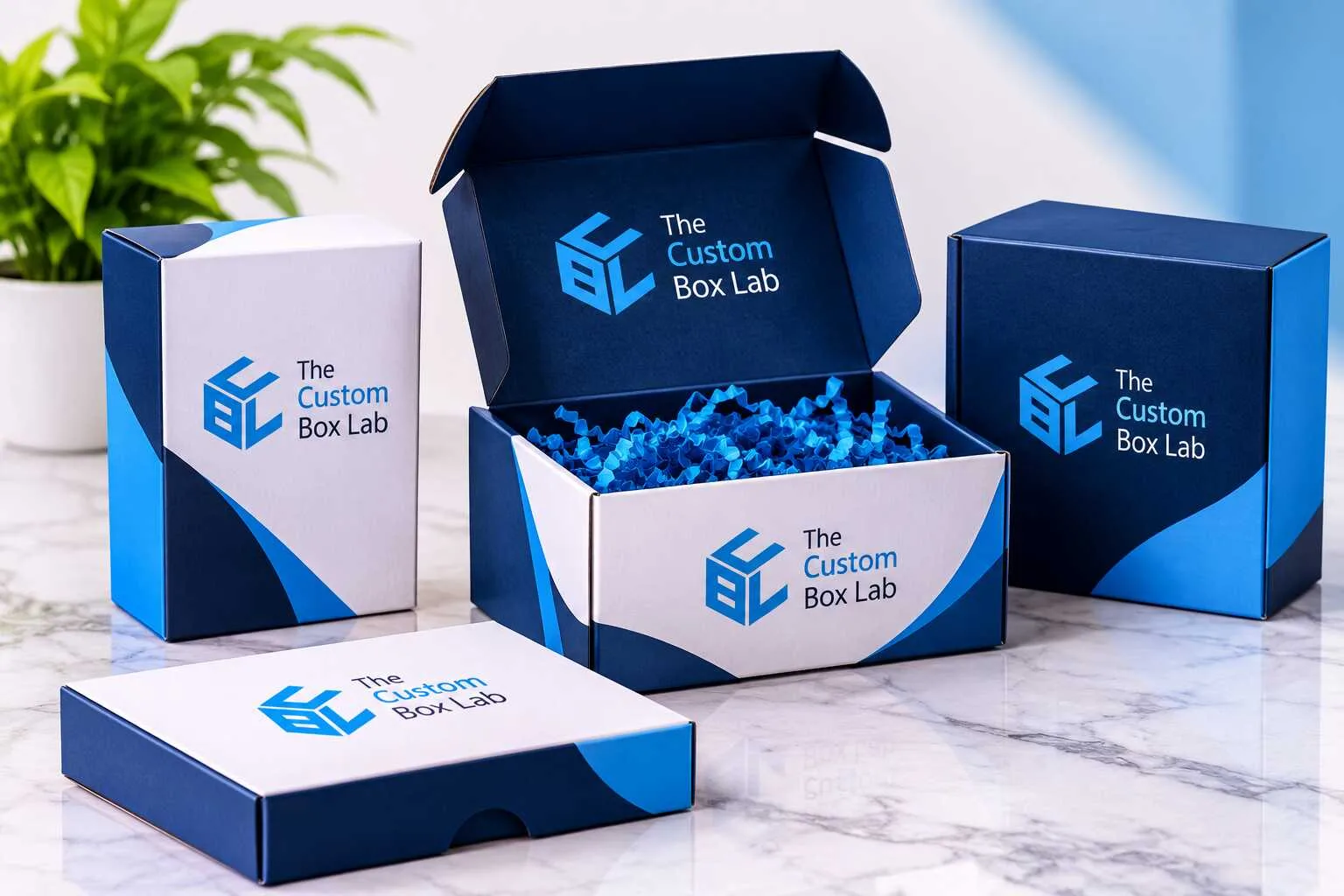
Custom tuck boxes are one-piece folding cartons with flaps that tuck into the box to close it, which makes them a simple, secure way to package retail products, gifts, and light e-commerce orders. They ship flat, print well, and come in styles like straight tuck, reverse tuck, and auto-bottom. This guide covers styles, materials, sizes, finishes, and ordering.
You can see the range and request a quote on The Custom Box Lab's custom tuck top boxes page.
What Are Custom Tuck Boxes?
A tuck box is a folding carton made from a single piece of board, cut and scored to your dimensions, with a flap that tucks into the body to hold it shut. Because it's glued flat at the factory and folded open at the point of packing, it takes up very little space until you need it.
Brands use them for:
- Cosmetics, skincare, and soap
- Candles, small gifts, and stationery
- Supplements and health products
- Playing cards, small electronics, and accessories
- Retail shelf packaging and light e-commerce orders
The appeal is practical. A tuck box is quick to pack, cheap to store flat, and gives you a clean printed surface on every panel.
Which Tuck Box Style Fits Your Product?
The right style depends on how the box is packed and how heavy the product is. The Custom Box Lab lists straight tuck end, reverse tuck end, tuck top with auto bottom, gusset, window, roll end, and white tuck top boxes, plus snap lock bottom and tuck flap variations.
StyleHow It ClosesGood ForStraight tuck endTop and bottom flaps open on the same panelHand-packed retail products, simple presentationReverse tuck endTop and bottom flaps open on opposite panelsHigher-volume packing, retail shelvesTuck top, auto bottomBottom locks into place when the box is openedHeavier or loose items that need a stronger baseTuck top with windowSame closure with a cutoutShowing the product insideRoll end, gusset, white tuck topOther listed variationsAsk for specifics for your productStraight Tuck or Reverse Tuck: Which Is Better?
Neither is better overall. Straight tuck ends are simple for hand packing, while reverse tuck ends are generally preferred when boxes are filled in volume, since the flaps open on opposite panels. If you're unsure, share your product and how it's packed, and ask which closure the supplier recommends.
What Materials and Board Thickness Should You Choose?
Cardstock and kraft suit most light products, E-flute corrugated suits heavier or shipped items, and board thickness should rise with the weight of what's inside. The product page lists stock from 10pt to 28pt (60lb to 400lb), including eco-friendly kraft, E-flute corrugated, bux board, and cardstock.
Point (pt) is board thickness in thousandths of an inch, so 10pt is 0.010 inch and 28pt is 0.028 inch. Thinner board suits cards and small cosmetics, and thicker board suits heavier items like candles or bottles.
MaterialBest ForNotesCardstock / cardboardRetail shelf boxes, cosmeticsPrints sharply; moderate strengthKraftNatural, handmade, eco-minded looksRecyclable in most cases, depending on coatingsE-flute corrugatedHeavier products, light shippingStronger, with a fine surface for printingBux boardBudget-conscious runsAsk the supplier about suitability for your productAre Custom Tuck Boxes Eco-Friendly?
They can be. The Custom Box Lab lists eco-friendly, recycled, and biodegradable options, and most paper-based boxes are recyclable. Coatings and laminations can affect that, so ask which materials and finishes are used if sustainability is part of your marketing.
How Do You Pick the Right Size?
Measure the product itself, then ask for a snug fit with just enough clearance to slide the product in and out. The product page lists common tuck box sizes of 4 by 4 by 2 inches for small, 6 by 6 by 3 inches for medium, and 8 by 8 by 4 inches for large, and notes that all custom sizes and shapes are available.
Steps:
- Measure length, width, and depth of the product in inches.
- Add a small clearance so the box closes without bulging.
- Decide how the product sits, upright or flat, since that sets which panel is the front.
- For fragile items, ask whether an insert is needed.
- Confirm the fit on a mockup or sample before a full run.
If you're not sure of the dimensions, the site has an instant-quote form for that.
What Printing and Finishing Options Are Available?
Printing options run from no printing at all to full-color CMYK plus one or two Pantone colors, and finishes range from simple lamination to foil and embossing. Digital, offset, and screen printing are all listed.
FinishEffectGood ForMatte laminationSoft look, fewer visible fingerprintsSkincare, minimalist designsGloss lamination, gloss AQ, gloss UVBright, shiny surfaceColor-rich retail packagingSpot UVGloss highlights on matteLogos and patternsSoft touch laminationVelvety feelPremium positioningFoil stamping (gold, silver, holographic)Metallic accentLogos and bordersEmbossing and debossingRaised or recessed detailBrand marksA matching Pantone color keeps your brand consistent across products. Foil and embossing look best used sparingly, on a logo or one border.
How Do Tuck Boxes Compare With Other Box Styles?
Tuck boxes are the lower-cost choice for retail and light shipping, while mailers, rigid boxes, and pillow boxes each suit a different job.
StyleBest ForStrengthRelative CostTuck boxRetail shelves, gifts, light e-commerceLight to moderateLowerMailer boxShipping directly to customersModerate to highModerateRigid boxPremium giftingHighHigherPillow boxSmall, light giftsLightLowerIf a tuck box needs a bit more strength for shipping, the site also lists tuck top mailer boxes.
How Much Do Custom Tuck Boxes Cost?
Cost depends on size, board, printing, finishes, and quantity, and the per-unit price usually falls as the order grows. A simple one-color kraft box costs far less than a full-color box with foil and embossing.
FactorEffect on PriceSizeLarger boxes use more boardBoard type and thicknessThicker stock and corrugated cost morePrintingMore colors add cost; no printing costs leastFinishesFoil, embossing, and spot UV each add costQuantityHigher volume generally lowers per-unit priceSetupSome suppliers charge for die plates; check your quoteThe product page states that you pay no extra for die plates and can order at a wholesale price in any quantity. Die cutting, gluing, scoring, and perforation are listed as included options.
Is There a Minimum Order Quantity?
The product page states that no minimum order is required. That helps new brands and small businesses test a design before committing to a large run. Even so, compare per-unit pricing at a few quantities, since larger runs usually cost less per box.
How Long Does It Take, and How Do They Ship?
The product page lists a turnaround of 4 to 8 business days, with a rush option, and tuck boxes ship flat. Flat shipping keeps freight and storage space down, and you fold the boxes open as you pack. Your quote confirms the exact timeline for your order and location.
Proofing options include a flat view, a 3D mockup, and a physical sample on request. Checking a sample before a large order is worth the time if your product is fragile or the fit is tight.
How Do You Order Custom Tuck Boxes?
- Choose the style from the tables above.
- Gather your details: length, width, and depth, the unit (inches, cm, or mm), and quantity.
- Pick your printing, from 1 color up to full color with CMYK plus Pantone colors.
- Fill in the quote form with your product name and a short message.
- Review the proof, whether a flat view, a 3D mockup, or a sample.
- Approve and pay. Credit cards, debit cards, and wire transfers are accepted.
Conclusion
Custom tuck boxes work best when the style matches how you pack, the board matches the weight of the product, and the size is a snug fit. Choose straight tuck, reverse tuck, or auto-bottom by how the box is filled and how heavy the contents are, and keep the finishing focused on one or two details. Check a proof before approving a run, and compare itemized quotes so setup fees don't surprise you later.
Frequently Asked Questions
What are custom tuck boxes used for?
They package retail products, gifts, cosmetics, candles, supplements, and light e-commerce orders. They're a one-piece folding carton that ships flat and closes with a tuck flap.
How much do custom tuck boxes cost?
Cost depends on size, board, printing, finishes, and quantity, and per-unit price usually falls as quantity rises. The product page notes wholesale pricing and no extra charge for die plates, so request a quote at your exact size.
How do I order custom tuck boxes?
Submit your product name, dimensions, quantity, and print colors through the quote form, then review a proof before approving production. If you're unsure of the dimensions, use the instant-quote form.
Is there a minimum order quantity for tuck boxes?
The product page states no minimum order is required. You can start with a small quantity and scale up later.
How long does it take to make custom tuck boxes?
The product page lists 4 to 8 business days, with a rush option. Confirm the exact date for your order in your quote.
What board thickness should I choose?
Thinner board around 10pt suits light items like cards, and thicker board toward 28pt or E-flute corrugated suits heavier products. The supplier can recommend a thickness based on your dimensions and weight.
Do tuck boxes ship flat?
Yes, the product page lists flat shipping, which saves storage and freight space. You fold the boxes open when you pack.