The early years of cryptocurrency were dominated by speculation. Many tokens launched during the ICO boom of 2017 had little more than a whitepaper and a promise. While some generated massive short-term gains, the lack of real-world value quickly led to market crashes and disillusioned investors. Today, the blockchain ecosystem has matured. Regulators, investors, and users now demand tokens that provide clear utility, sustainable demand, and genuine market value.
Creating such tokens requires careful planning. It is no longer enough to mint a digital asset and market it aggressively. Projects must design economic systems that align incentives, integrate real-world use cases, and foster long-term adoption. This article explores how tokens can be structured to deliver authentic utility while also holding—and growing—their market value.
Defining Real Utility in Tokens
Utility is the lifeblood of a successful token. Unlike speculative assets, utility tokens serve a functional purpose within an ecosystem. The more integral the token is to user activity, the stronger its demand base becomes. Utility can take many forms, depending on the project’s design:
- Transactional utility: Tokens used for payments within a platform (e.g., Binance Coin for trading fee discounts on Binance).
- Access rights: Tokens granting users entry to services, premium features, or gated communities (e.g., Filecoin tokens required to store data).
- Governance power: Tokens allowing holders to participate in decision-making through voting mechanisms (e.g., UNI token in Uniswap governance).
- Staking and security: Tokens staked to validate transactions or secure networks, generating passive rewards for participants (e.g., ETH in Ethereum’s Proof of Stake system).
- Interoperability: Tokens enabling interaction between multiple blockchains or systems, essential for cross-chain liquidity.
What separates a token with staying power from one that fades away is how indispensable it becomes. If users cannot fully engage with a platform without the token, its demand remains steady. This principle explains why tokens tied to strong ecosystems—Ethereum’s ETH, Chainlink’s LINK, or Polygon’s MATIC—continue to thrive despite market fluctuations.
Designing Tokenomics for Market Value
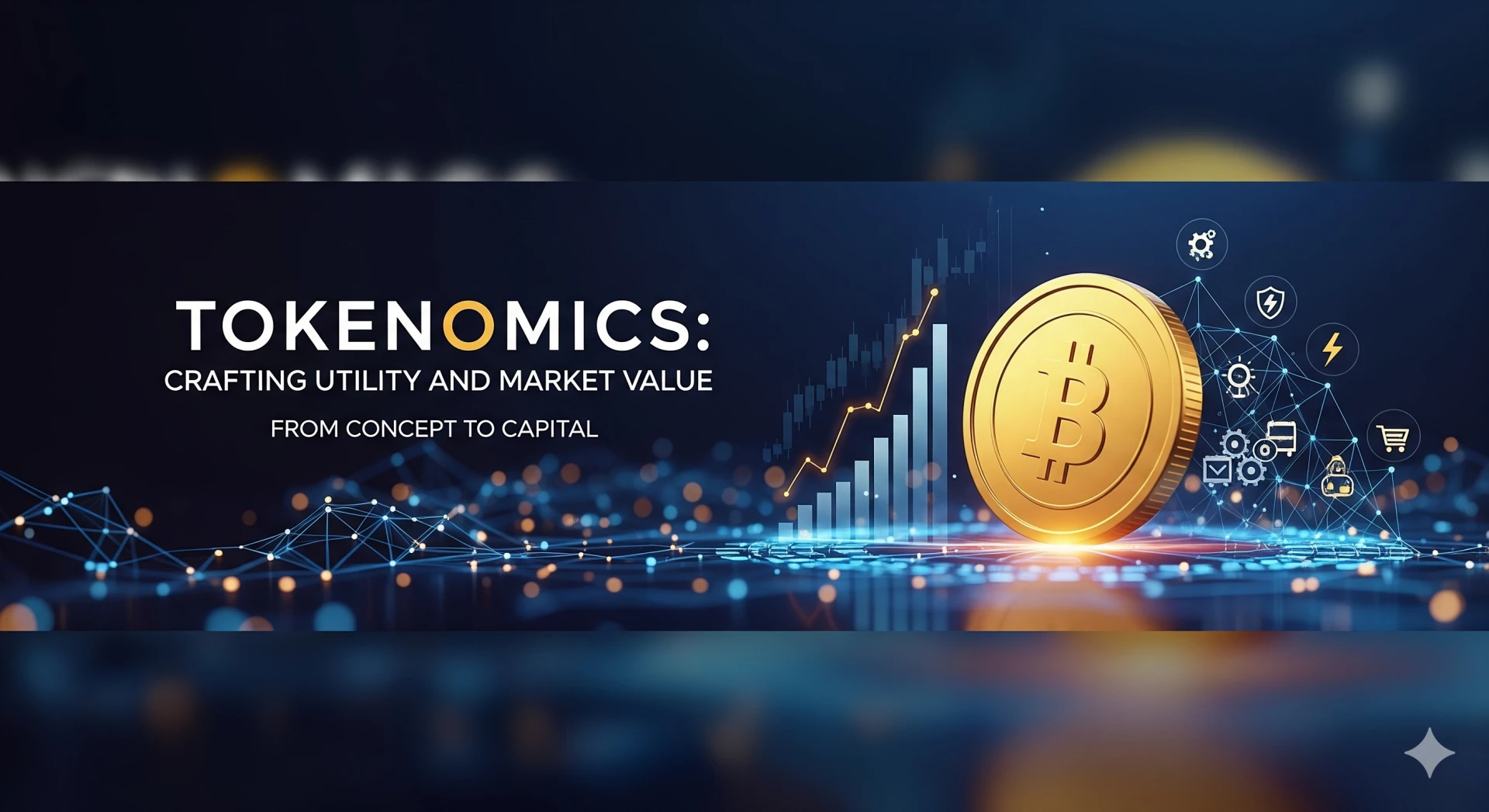
A token’s design must go beyond its utility—it needs a robust economic framework that ensures scarcity, demand, and price stability. This discipline, often called tokenomics, involves creating an internal economy that mirrors the fundamentals of traditional finance while leveraging blockchain’s unique capabilities.
Key Elements of Tokenomics
Supply Structure
- Fixed vs. inflationary supply models influence scarcity. Bitcoin’s capped supply of 21 million coins is a prime example of scarcity driving long-term value.
- Projects can adopt dynamic models, such as token burns, to adjust circulating supply and maintain balance.
Distribution Strategy
- How tokens are allocated—between team, investors, community, and ecosystem development—directly impacts trust. Excessive insider allocation often signals potential dumping risks.
- Vesting schedules and lock-up periods ensure team members and early investors stay committed.
Incentive Alignment
- Token rewards for behaviors like staking, liquidity provision, or ecosystem participation align community interests with project growth.
- Rewards must be sustainable; inflationary giveaways can harm long-term value if not balanced with token sinks.
Utility Loops
- Tokens should have recurring use cases, ensuring demand is not a one-time event. For example, stablecoin-based lending protocols require continuous token utility to operate.
Market Stabilizers
- Mechanisms like buy-backs, burns, or algorithmic supply adjustments can counteract volatility.
- Real-world asset (RWA) backing, such as tokenized commodities or fiat reserves, provides stability while retaining blockchain-native benefits.
Example: Binance Coin (BNB)
BNB demonstrates how well-designed tokenomics sustains market value. Initially launched to give users trading fee discounts, its utility expanded to powering Binance Smart Chain transactions and participating in token sales. Coupled with regular quarterly burns, this multi-pronged tokenomics design cemented BNB’s position as one of the most valuable cryptocurrencies globally.
Integrating Real-World Use Cases
The strongest tokens are not built in isolation—they are embedded into industries, solving real-world problems that cannot be addressed as effectively by traditional systems. Blockchain brings decentralization, programmability, and transparency, but without relevant applications, tokens remain speculative instruments.
DeFi and Financial Services
In decentralized finance (DeFi), tokens function as both liquidity drivers and governance assets. Stablecoins like USDC and DAI anchor lending markets by providing price stability, while governance tokens such as COMP give users control over protocol upgrades. This integration of utility and value demonstrates how tokens can form the backbone of new financial systems.
Gaming and the Metaverse
In blockchain gaming, tokens act as in-game currencies, assets, or governance rights. Axie Infinity’s AXS token illustrates this model. It was not just a speculative asset—it allowed players to stake, vote on proposals, and earn rewards. Similarly, in metaverse ecosystems like Decentraland, the MANA token enables land purchases, digital commerce, and governance. Here, tokens blur the line between play and economy, creating entirely new business models.
Telecommunications and Global Connectivity
Emerging Web3 telecom projects showcase another layer of real-world application. Instead of relying on fragmented national carriers, blockchain-based platforms offer global eSIMs, decentralized roaming, and crypto-based micropayments. Tokens in this context do more than fundraise—they directly enable usage of network services, ensuring their value is grounded in recurring demand.
Real-World Asset (RWA) Tokenization
One of the fastest-growing sectors is RWA tokenization, where physical assets such as real estate, commodities, or even fine art are fractionalized into blockchain tokens. These tokens make high-value assets more accessible, improve liquidity, and provide a secure record of ownership. For instance, a property token can grant fractional owners rent-based income, while also being tradable globally. The token’s value comes not only from demand but also from real asset backing, combining digital efficiency with tangible security.
Case Studies of Successful Tokens
To understand how real-world utility translates into market value, it’s useful to study tokens that have succeeded beyond hype.
Ethereum (ETH)
Ethereum is more than a digital currency—it is gas for the largest smart contract ecosystem. Every decentralized application (dApp) deployed on Ethereum requires ETH to execute transactions. This structural demand has sustained ETH’s position as the second-largest cryptocurrency, regardless of market cycles. Its transition to Proof of Stake in 2022 further added staking utility, making ETH both an operational and yield-generating asset.
Chainlink (LINK)
Chainlink provides decentralized oracles—an essential service that feeds external data into smart contracts. LINK tokens are used to pay node operators, ensuring data accuracy and reliability. This function creates a steady demand cycle, as dApps in DeFi, insurance, and supply chain all require trusted oracles. By solving a specific, indispensable problem, Chainlink positioned its token as a necessity in blockchain infrastructure.
Polygon (MATIC)
MATIC powers transactions on the Polygon network, a Layer-2 scaling solution for Ethereum. With Ethereum’s high fees limiting adoption, Polygon’s lower-cost environment became a natural extension for developers. Demand for MATIC is directly tied to network growth, as every transaction and smart contract interaction requires it. The token’s rise highlights how solving scalability issues can translate into sustainable value creation.
Filecoin (FIL)
Filecoin leverages decentralized storage, where FIL tokens are essential for uploading, retrieving, and hosting data. Unlike traditional tokens that rely on speculative demand, FIL’s value comes from being the medium of exchange in a storage marketplace. As data generation continues to explode, Filecoin’s real-world relevance strengthens its token’s market position.
Challenges and Pitfalls in Token Creation
Despite the promise, building tokens that deliver utility and market value is not straightforward. Many projects fail due to flawed strategies or shortsighted goals.
Overemphasis on Speculation
Projects that focus only on token sales and rapid price appreciation often collapse. Without real utility, tokens become pump-and-dump instruments, eroding community trust. Investors now scrutinize roadmaps, partnerships, and adoption metrics before committing.
Poor Tokenomics Design
A weak economic structure—such as excessive token supply, unchecked inflation, or poor distribution—quickly destabilizes value. If early investors or insiders hold too much supply, the market risks sudden crashes due to large sell-offs. Similarly, inflationary reward systems can drain value if not offset by token sinks.
Lack of Adoption
Even with solid technology, tokens without real users remain irrelevant. Building communities, forging partnerships, and ensuring integration with existing industries are essential steps. Without adoption, utility exists only in theory.
Regulatory and Compliance Risks
Global regulators increasingly monitor token projects for securities violations, money laundering, and consumer protection. A token that ignores compliance may face legal crackdowns, exchange delistings, or restricted access in key markets. Projects must proactively integrate KYC/AML frameworks, security audits, and region-specific compliance measures to mitigate these risks.
Sustainability Challenges
Short-term hype can attract users, but sustainability requires long-term value creation. Projects must continually innovate, expand use cases, and incentivize loyal communities to avoid stagnation. Tokens tied to single-use scenarios are highly vulnerable to obsolescence.
Strategies for Creating Sustainable Utility Tokens
For businesses and projects aiming to launch tokens that last, success depends on a disciplined approach. Designing for both utility and value requires a balance of technology, economics, community-building, and compliance.
1. Start with a Clear Problem-Solution Fit
Tokens should never be created for their own sake. The starting point must be a real problem that blockchain solves better than existing methods. Whether it’s reducing payment friction, fractionalizing ownership, or enabling decentralized governance, the token should be indispensable to the solution. Projects that skip this step often end up with “zombie tokens” that serve no purpose beyond speculation.
2. Build Robust Tokenomics
Tokenomics is not an afterthought—it is the foundation of long-term value. Projects should carefully model supply dynamics, inflation schedules, burn mechanisms, and incentive loops. Tokenomics must create a healthy balance between rewarding early adopters and preserving future sustainability. Simulations and stress-testing under different market conditions can reveal weaknesses before launch.
3. Prioritize User Adoption Over Hype
Marketing may generate initial buzz, but adoption is the true measure of success. Integrating the token into user-friendly applications, forming real-world partnerships, and incentivizing genuine use will create organic demand. Tokens like ETH and MATIC thrive because they are impossible to avoid within their ecosystems.
4. Embed Compliance Early
Regulatory oversight is tightening worldwide. Building tokens without legal and compliance structures risks forced shutdowns, fines, or loss of investor trust. Smart projects adopt frameworks like KYC/AML, align with securities law in target jurisdictions, and establish transparent governance models to future-proof themselves.
5. Foster Strong Communities
No token survives without its community. Building transparent communication, rewarding participation, and granting users governance rights transform passive holders into active stakeholders. Community-driven growth often becomes the strongest defense against market downturns, as loyal users continue supporting projects beyond short-term price swings.
6. Innovate Continuously
Technology and user expectations evolve rapidly. Tokens must adapt, either by adding new utilities, expanding to multi-chain ecosystems, or integrating with emerging sectors like AI, DePIN (Decentralized Physical Infrastructure Networks), or tokenized real-world assets. Continuous innovation prevents stagnation and strengthens long-term relevance.
Conclusion
Creating tokens that deliver real utility and market value requires moving past speculation and focusing on substance. Tokens tied to clear use cases, supported by robust tokenomics, and embedded in thriving ecosystems stand the best chance of success. Case studies from ETH to BNB and FIL show that when tokens become essential to user activity, demand grows naturally, reinforcing long-term value. Yet, challenges remain: poor design, lack of adoption, and regulatory missteps can derail even promising projects. Businesses must adopt disciplined strategies—problem-solution fit, compliance, user adoption, community engagement, and continuous innovation—to launch tokens that endure. In the evolving Web3 economy, the projects that focus on delivering real-world utility will be the ones to capture lasting market value.