Most homeowners don’t start a landscaping project dreaming about weekends spent trimming, weeding, mowing, and constantly fixing things that seem to grow out of control. The real goal for many people today is much simpler: they want an outdoor space that looks good, feels comfortable, and doesn’t demand endless effort to keep it that way.
That shift in expectation has changed how modern landscaping is designed. Instead of building outdoor spaces that rely heavily on constant upkeep, professional designers now focus on creating environments that naturally stay organized, healthy, and visually appealing with minimal intervention.
This is where professional landscaping Clarence NY services have become especially valuable. The focus is no longer just about making a yard look good on day one—it’s about designing it so that it continues looking good six months, one year, and even five years later without becoming overwhelming to maintain.
A low-maintenance landscape doesn’t happen by accident. It comes from intentional planning, smart material choices, and understanding how a property behaves over time. Every detail—from plant selection to drainage—plays a role in how much work the landscape will require in the future.
Why Some Landscapes Become High-Maintenance Over Time
Many outdoor spaces start off looking great but slowly become harder to manage. This usually happens when design decisions prioritize appearance over long-term performance. Plants are placed too close together, soil conditions are ignored, or materials are chosen without considering durability.
As plants grow and seasons change, these small decisions turn into larger problems:
- Overgrown planting beds
- Constant pruning requirements
- Patchy or thinning lawns
- Weed overgrowth in unmanaged areas
- Drainage issues after heavy rain
Once these problems start, maintenance becomes repetitive and time-consuming. The solution is not more work—it’s better design from the beginning.
Core Principles of Low-Maintenance Landscape Design
Professional landscape planning focuses on reducing unnecessary effort while maintaining strong visual appeal. This is achieved through a combination of natural systems and structural design choices that support long-term balance.
1. Native and Climate-Adapted Plant Selection
One of the most effective ways to reduce maintenance is choosing plants that are naturally suited to the local environment. Native and climate-adapted plants require less watering, fewer fertilizers, and are generally more resistant to local pests and seasonal stress.
Instead of constantly trying to “force” plants to thrive, the landscape works with nature rather than against it.
2. Mulched and Protected Planting Beds
Mulch plays a much bigger role than many homeowners realize. It helps regulate soil temperature, retain moisture, and significantly reduce weed growth. When planting beds are properly mulched, they remain cleaner and require far less frequent maintenance.
This also improves the overall visual consistency of the landscape, keeping everything looking organized and well-kept.
3. Proper Plant Spacing and Layout Design
One of the most common maintenance issues in older landscapes is overcrowding. Plants that are placed too close together eventually compete for sunlight, water, and nutrients. This leads to weaker growth and more frequent trimming.
Proper spacing allows plants to grow naturally into their full shape without constantly interfering with each other. It also improves airflow, which reduces disease and plant stress.
4. Durable Hardscape Integration
Hardscape features like patios, walkways, edging, and retaining walls reduce the amount of lawn and planting area that needs care. These elements create structure within the landscape and eliminate repetitive maintenance tasks such as mowing tight or uneven spaces.
They also improve usability, turning outdoor areas into functional living spaces rather than purely decorative yards.
5. Efficient Drainage and Grading Systems
Water management is one of the most overlooked aspects of maintenance reduction. Poor drainage leads to soggy lawns, erosion, plant damage, and long-term soil issues. Once these problems appear, they often require ongoing correction.
A well-designed drainage system prevents water from becoming a problem in the first place. Proper grading ensures that rainwater flows naturally away from vulnerable areas, protecting both the lawn and landscape features.
The Misconception About Low-Maintenance Landscaping
Many people assume that low-maintenance landscaping means “no maintenance.” That is not the case. Every landscape requires some level of care. The difference is in frequency, intensity, and frustration level.
A well-designed landscape:
- Needs fewer interventions
- Stays visually balanced for longer periods
- Recovers more easily from seasonal changes
- Requires less corrective work
Instead of constantly reacting to problems, homeowners can focus on simple seasonal upkeep rather than ongoing repairs.
Why Simplicity Often Performs Better Than Complexity
One of the most effective strategies in modern landscaping is simplicity. Complex landscapes with too many plant varieties, irregular layouts, and excessive decorative elements often become difficult to maintain over time.
Simple, structured designs tend to perform better because they are easier to manage and naturally more stable. Clean lines, defined spaces, and balanced planting layouts create a sense of order that lasts through changing seasons.
Long-Term Thinking Creates Better Outdoor Spaces
The biggest difference between a high-maintenance yard and a low-maintenance landscape is not size or budget—it’s planning. When long-term performance is considered from the beginning, the entire outdoor environment becomes easier to live with.
This includes thinking about:
- How plants will grow over 3–10 years
- How water will move across the property
- How much time maintenance will realistically take
- How materials will age and weather over time
Good landscaping is not just about what looks best today, but what continues to work tomorrow.
Building Smarter Outdoor Environments
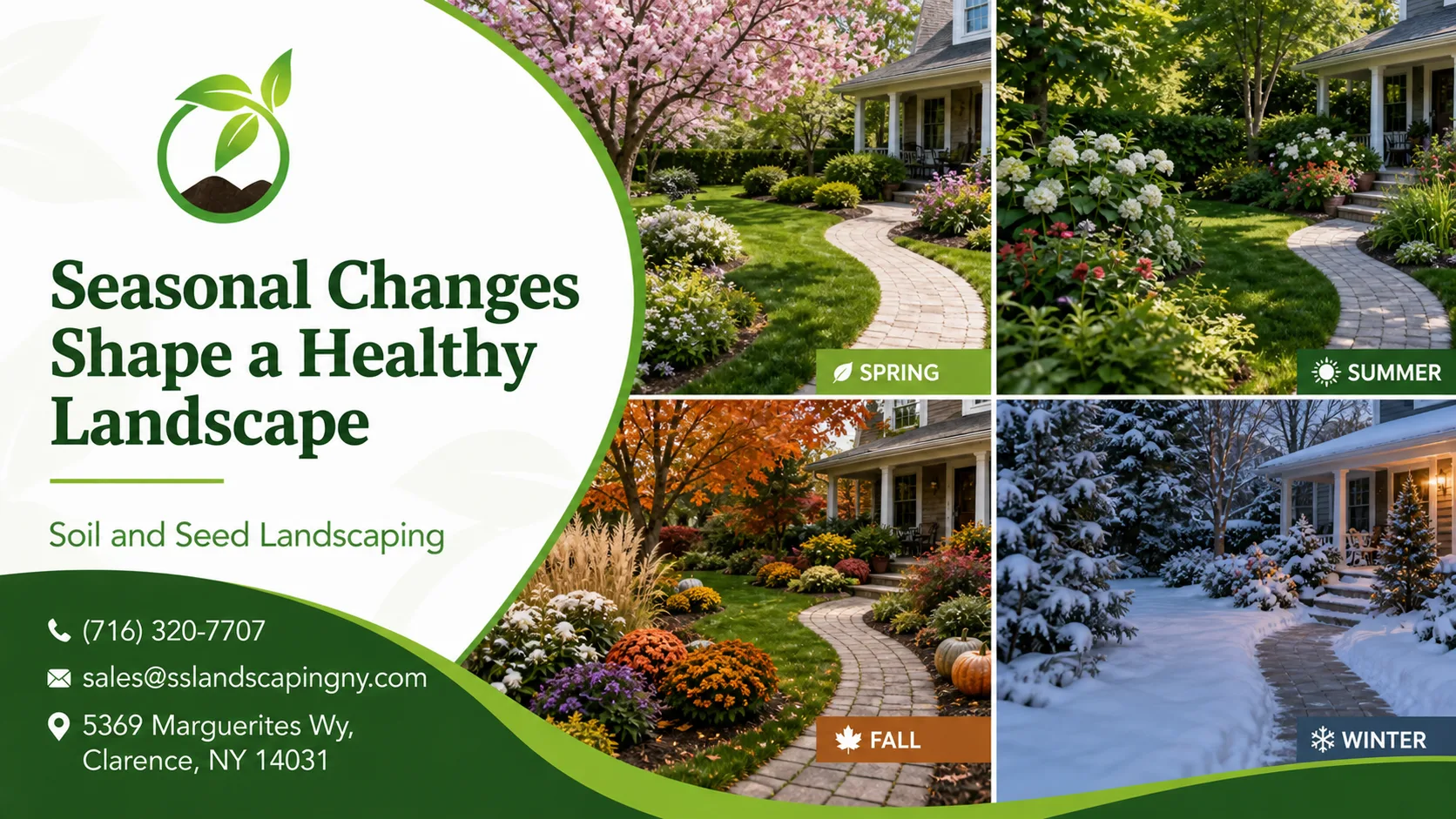
Soil and Seed Landscaping focuses on creating outdoor spaces designed for long-term simplicity, balance, and visual appeal. Their approach prioritizes practical design choices that reduce unnecessary maintenance while improving overall landscape performance.
Instead of overwhelming homeowners with complicated designs, the goal is to build landscapes that feel natural, organized, and easy to enjoy.
Whether it’s lawn improvement, planting design, or complete outdoor renovation, thoughtful planning is what separates a high-maintenance yard from a truly sustainable landscape.
For more information, contact Soil and Seed Landscaping at +1 (716) 320-7707 or email [email protected]. Their office is located at 5369 Marguerites Wy, Clarence, NY 14031.
Professional landscaping Clarence NY services help homeowners create outdoor environments that don’t just look good for a season—they stay functional, attractive, and manageable for years to come.