
Hand a toddler a box of art supplies and watch what happens. Colour pencils get pressed so hard the tips snap within minutes. Paper gets torn. And yet, somehow, a Crayon almost always survives the chaos — thick, forgiving, built for hands that haven't quite mastered fine motor control yet. That little bit of chaos says a lot about the Crayon vs colour pencil debate.
Pentonic's range of creative and stationery products offers another way to look at the choice: what matters most is how easily a child can use the tool. Most of that story comes down to hand development, not artistic talent.
Crayons vs Colour Pencils: What Works Better for Young Artists?
Ask a preschool teacher which tool is easier for younger children to handle, and a Crayon is likely to come up for good reason. The difference comes down largely to the physical demands of each tool.
Colour pencils require a proper grip, steady pressure, and enough hand strength to avoid snapping the tip. A Crayon asks for none of that. Press hard, press soft, drag it sideways across the page — it still works. For a child still developing fine motor skills, that forgiveness matters more than people realize.
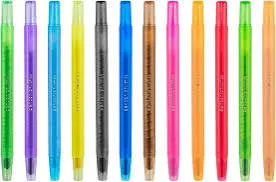
Pentonic's Twistick crayons are designed around that everyday convenience, with a twist-up format that keeps colouring simple, tidy and easy to handle. It's the kind of everyday convenience parents tend to appreciate most when they're packing and repacking a school bag.
What to Look for When Choosing a Crayon?
Not every Crayon on a shelf performs the same way, even though most boxes look identical from the outside. Some wear down quickly. Others barely show colour unless pressed down quite hard. Here's what actually separates a decent Crayon from a disappointing one:
- Smooth, even pigment that shows up clearly without heavy pressure
- Break-resistant formulation, since drops and twists are inevitable with younger kids
- Safety-conscious materials, especially important when choosing art supplies for younger children
- Consistent colour across the box, so reds and blues don't vary wildly between sticks
- Easy-to-hold shape, whether that's a classic stick or a chunkier toddler-friendly design
Parents usually only notice these details after buying a cheap box that snaps constantly or barely leaves a mark on paper.
Twist Crayons: A Cleaner Option for Parents
Anyone who has ever had to clean crayon shavings off a car seat or school bag knows the appeal of twist crayons immediately. Traditional crayons peel or wear down messily, leaving bits of wax everywhere. Twist crayons solve that specific problem by keeping the crayon retracted inside a casing until it's actually needed.
Pentonic's twist crayons are built around this exact convenience — twist up what's needed, twist back down when done, no loose wax rolling around in a pencil box. For parents packing school bags every morning, the format can cut down on both mess and breakage compared with a standard Crayon.
Here's why twist crayons tend to win over parents once they've tried them:
- No loose wax shavings collecting inside a pencil box or school bag
- Less breakage, since the crayon retracts into its casing when not in use
- Cleaner hands, especially useful for younger kids who touch their faces mid-drawing
- Longer shelf life, as the exposed tip isn't constantly rubbing against other supplies
- Easier travel packing, since a twist casing survives being tossed into a bag far better than a loose stick
It's a small design difference, but anyone who's dealt with melted crayon stuck to a bag lining knows exactly why Pentonic treats it as a real design problem rather than a gimmick.
Colour Pencils: Where They Actually Outperform a Crayon
To be fair, coloured pencils have their own strengths — they genuinely do some things better than a Crayon. They work particularly well for fine details, precise lines and controlled shading. An older child working on detailed drawings may naturally prefer coloured pencils over a Crayon, simply because the tool matches the level of control they've already developed.
For younger children who are still developing hand strength, a crayon is still the more sensible starting point. The debate isn't really about which tool is "better" in isolation — it's about matching the tool to the child's actual developmental stage, something that tends to get lost when parents shop purely by what looks impressive on a shelf.
Crayons as Part of Everyday School Stationery
Walk into any classroom for younger grades, and a Crayon box is almost guaranteed to be sitting somewhere in the supply bin. For school stationery, crayons remain a familiar part of many younger children's supply lists, alongside pencils, erasers and other everyday essentials.
Pentonic treats this seriously, since school stationery needs to survive far rougher daily handling than art supplies used occasionally at home. A Crayon that lasts an entire term, rather than crumbling within the first few weeks, ends up being the more economical choice even if it costs slightly more upfront. For parents, durability can make a noticeable difference when the same supplies need to be replaced throughout the school year.
Conclusion
Choosing between a Crayon and colour pencils really comes down to the child's age and what the task actually needs. Younger kids benefit from a Crayon's forgiving, low-pressure design, while older children doing detailed work tend to prefer colour pencils instead.
Pentonic offers both crayons and colour pencils, along with practical options like twist crayons for parents who want less mess in a school bag or car seat. As a staple of school stationery everywhere, a good Crayon earns its place not through flash, but through how well it survives daily use by small, still-developing hands, term after term, year after year.
In the end, there is no single winner in this debate — the better choice depends on the child's age, skill level, and the kind of artwork they want to create.