Performance management has long been a cornerstone of organizational strategy. Companies invest heavily in goal setting, KPIs, performance reviews, skill development, and productivity frameworks designed to maximize employee output. Yet despite these systems, many organizations continue to struggle with inconsistent productivity, declining engagement, and rising burnout.
The gap often lies not in performance strategy, but in human sustainability.
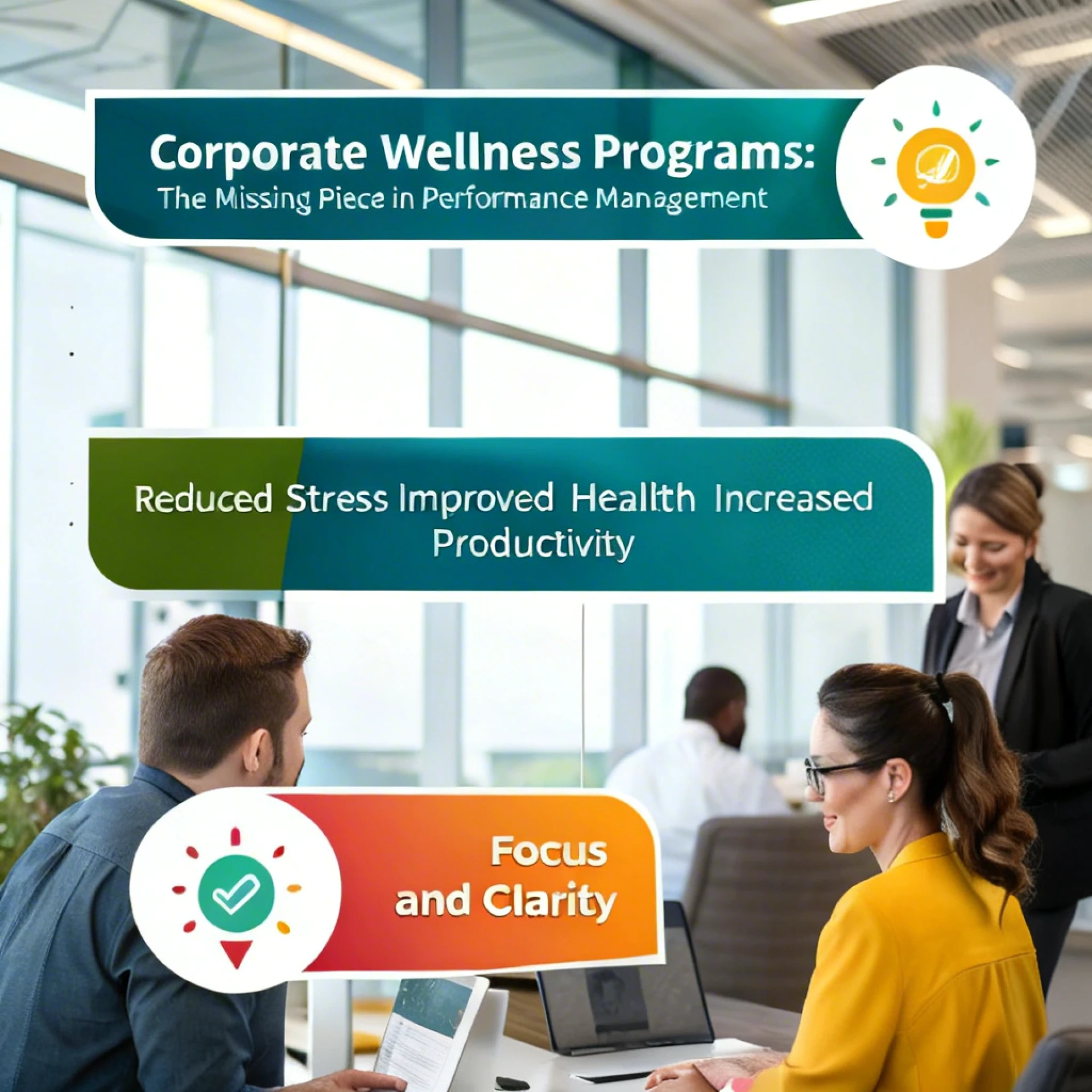
Corporate wellness programs are increasingly emerging as the missing piece in performance management, addressing the mental and emotional factors that directly influence how employees perform.
Performance Is Driven by More Than Metrics
Traditional performance management focuses on measurable outcomes such as targets, efficiency, and deliverables. While these indicators are essential, they overlook a critical driver of sustained performance: cognitive and emotional capacity.
Employees are not machines responding only to systems and processes. Their ability to perform depends on mental clarity, focus, emotional regulation, and resilience under pressure.
When these internal resources decline, performance systems lose effectiveness.
The Hidden Performance Barriers
Modern employees operate under continuous cognitive demand. Deadlines, multitasking, digital communication, and decision-heavy roles contribute to mental overload and emotional fatigue.
This leads to subtle yet impactful disruptions:
-Reduced focus
-Decision fatigue
-Mental exhaustion
-Emotional reactivity
-Declining creativity
-Fluctuating productivity
Organizations often misinterpret these shifts as performance gaps rather than signs of cognitive strain.
Why Traditional Performance Solutions Fall Short
When productivity declines, organizations frequently respond with tighter KPIs, additional training, new tools, or motivational interventions. While beneficial, these strategies may not resolve deeper mental overload or stress-related fatigue.
An exhausted mind cannot be optimized through pressure alone.
Without addressing emotional and cognitive regulation, performance management becomes reactive rather than sustainable.
The Strategic Role of Corporate Wellness Programs
Corporate wellness programs strengthen performance management by stabilizing the internal conditions required for productivity.
Effective wellness initiatives help employees:
-Regulate stress responses
-Reduce cognitive overload
-Restore mental clarity
-Improve emotional balance
-Enhance resilience
-Strengthen recovery cycles
When employees regain cognitive freshness, performance improves organically.
Wellness Enables Sustainable High Performance
High performance is not sustained through pressure. It is sustained through clarity, focus, emotional stability, and mental energy.
Employees supported through wellness programs demonstrate:
-Better concentration
-Improved decision-making
-Greater consistency
-Reduced burnout risk
-Stronger collaboration
Wellness becomes a performance multiplier.
Prevention Versus Performance Recovery
Waiting until burnout or disengagement appears forces performance systems into recovery mode. Productivity suffers, morale declines, and retention risks increase.
Preventive corporate wellness programs protect performance before strain escalates.
Benefits Organizations Frequently Observe
Organizations integrating structured wellness initiatives into performance strategies often experience:
Improved productivity stability
-Better engagement
-Reduced absenteeism
-Lower burnout rates
-Enhanced decision quality
-Stronger team dynamics
These outcomes reflect deeper regulation rather than temporary motivation boosts.
Rethinking Performance Management
Modern performance management must evolve beyond metrics and monitoring. It must include mechanisms that protect mental clarity, emotional balance, and cognitive resilience.
Corporate wellness programs fill this gap by aligning human sustainability with performance expectations.
Why Wellness Is No Longer Optional
As workplace demands intensify, organizations that ignore mental and emotional strain risk performance instability. Those that invest in wellness build resilient, focused, and sustainable teams.
Corporate wellness programs are not perks. They are essential components of modern performance management.