
Basketball is more than just dribbling, shooting, and passing—it’s a game that demands the integration of strength, agility, balance, and coordination. At the heart of these physical abilities lies the core. For youth athletes, core stability training for young athletes is essential to build a strong foundation that enhances every aspect of their on-court performance. The core encompasses not just the abdominal muscles but also the lower back, hips, and glutes. Developing these muscles helps young players maintain control, execute precise movements, and reduce injury risks while performing at higher intensity.
The Role of Core Strength in Shooting, Passing, and Dribbling
Every movement in basketball begins with the core. When a young athlete shoots, their ability to transfer energy from the legs through the torso to the arms determines shot power and accuracy. Strong core muscles stabilize the upper body, allowing for a smoother shooting motion and better follow-through. Similarly, when passing, a player relies on rotational strength and control from the core to deliver precise and powerful passes, even under defensive pressure.
Dribbling is equally dependent on core stability. Quick changes of direction, maintaining balance while navigating through defenders, and controlling the ball with both hands all require a solid and responsive core. Without proper core strength, young athletes are more prone to losing balance, misjudging movements, or experiencing fatigue during high-intensity games. Core stability training for young athletes ensures that these fundamental basketball skills are performed with efficiency and reduced injury risk.
Improving Agility and Explosiveness Through Core Training
Basketball is a dynamic sport that demands rapid movements, sudden stops, and explosive bursts of speed. Agility and explosiveness are directly influenced by core strength because the core acts as a central stabilizer and energy transfer hub. When a player changes direction quickly, jumps for a rebound, or sprints down the court, the core transmits power generated by the lower body through the torso to the limbs.
Integrating core stability training for young athletes can include exercises such as medicine ball rotations, plank variations, and dynamic balance drills. These exercises enhance neuromuscular coordination, enabling young players to move more efficiently. By strengthening the core, athletes gain the ability to react faster to game situations, accelerate with more power, and decelerate safely, reducing the likelihood of injuries such as ankle sprains or lower back strains.
Using Resistance Systems to Simulate On-Court
Movements
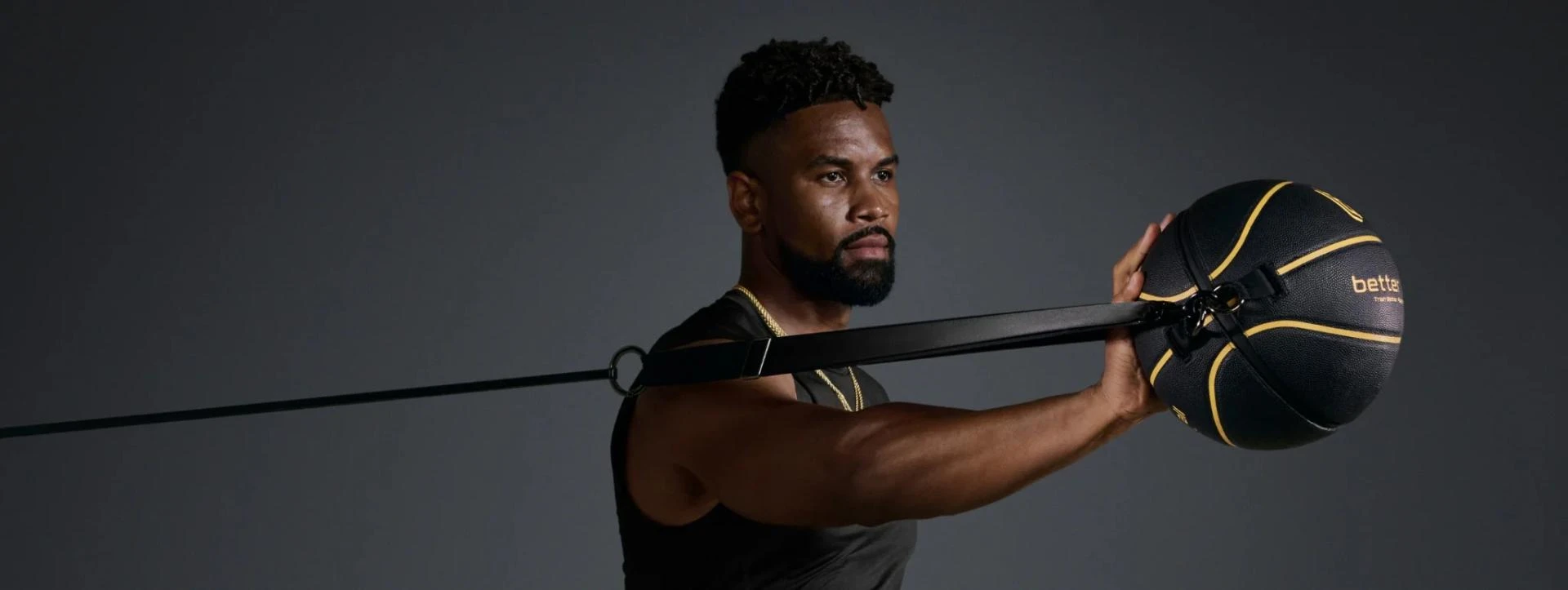
Traditional strength training provides benefits, but translating that strength to basketball-specific movements requires a more specialized approach. Tools like the Betterball® PRO Basketball Resistance Training System bridge this gap by allowing athletes to perform basketball motions with added resistance. This system integrates a size 7 basketball into a resistance frame with bands, enabling exercises that mimic shooting, passing, and dribbling while engaging the core intensely.
Using a resistance system, young athletes can perform rotational movements, explosive pushes, and vertical jumps against controlled resistance, which challenges the core in ways that are directly applicable to game scenarios. The resistance not only improves muscle strength but also enhances coordination, stability, and balance. Coaches and performance professionals have highlighted that athletes who incorporate such training show noticeable improvements in speed, power, and on-court agility, proving that core development is not just about aesthetics—it is functional and performance-driven.
Measuring Core Progress for Performance Gains
Monitoring progress in core stability is crucial for youth athletes to ensure that training translates into basketball performance gains. Metrics can include balance tests, plank endurance, rotational strength assessments, and movement efficiency drills. Tracking these measurements allows coaches and athletes to adjust exercises for optimal results and identify weaknesses before they lead to injury.
Moreover, integrating sport-specific movements into core assessments can help evaluate how well the athlete is transferring strength to basketball actions. For instance, a vertical jump test or a lateral agility drill can reveal the effectiveness of core engagement during dynamic movements. Regular monitoring encourages young athletes to focus on quality over quantity, ensuring that core stability training for young athletes leads to measurable improvements in shooting consistency, dribbling control, and overall court performance.
Conclusion
Core stability is the cornerstone of athletic performance, especially in youth basketball. From shooting and passing to explosive movements and agility, the strength and coordination of the core influence nearly every action on the court. Implementing structured core stability training for young athletes, using both traditional exercises and specialized resistance systems like the Betterball® PRO Basketball Resistance Training System, bridges the gap between raw strength and functional basketball ability.
By prioritizing core development, young athletes can enhance their performance, reduce injury risk, and gain the confidence to execute complex movements under pressure. In basketball, core stability is not just a fitness metric—it directly translates into better on-court performance and long-term athletic success.