
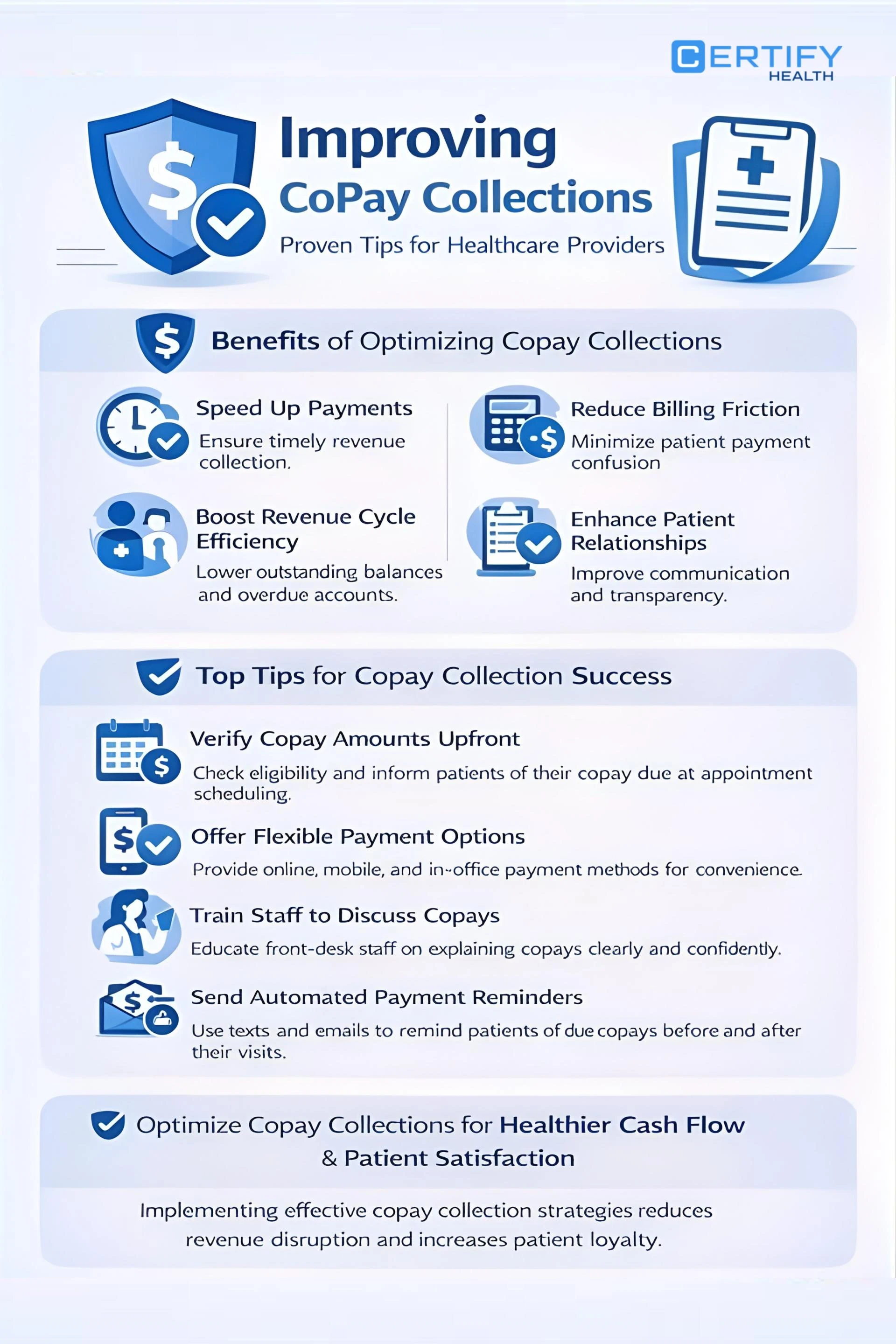
Copay collections are no longer just a front-desk responsibility — they are a strategic component of modern healthcare revenue cycle management. As patient financial responsibility continues to increase, healthcare providers must adopt smarter, technology-driven, and patient-friendly approaches to improve collections without affecting satisfaction.
In 2026, successful copay collections will depend on automation, transparency, digital payments, and integrated systems. This guide outlines the most effective best practices healthcare providers should implement to optimize revenue while maintaining a positive patient experience.
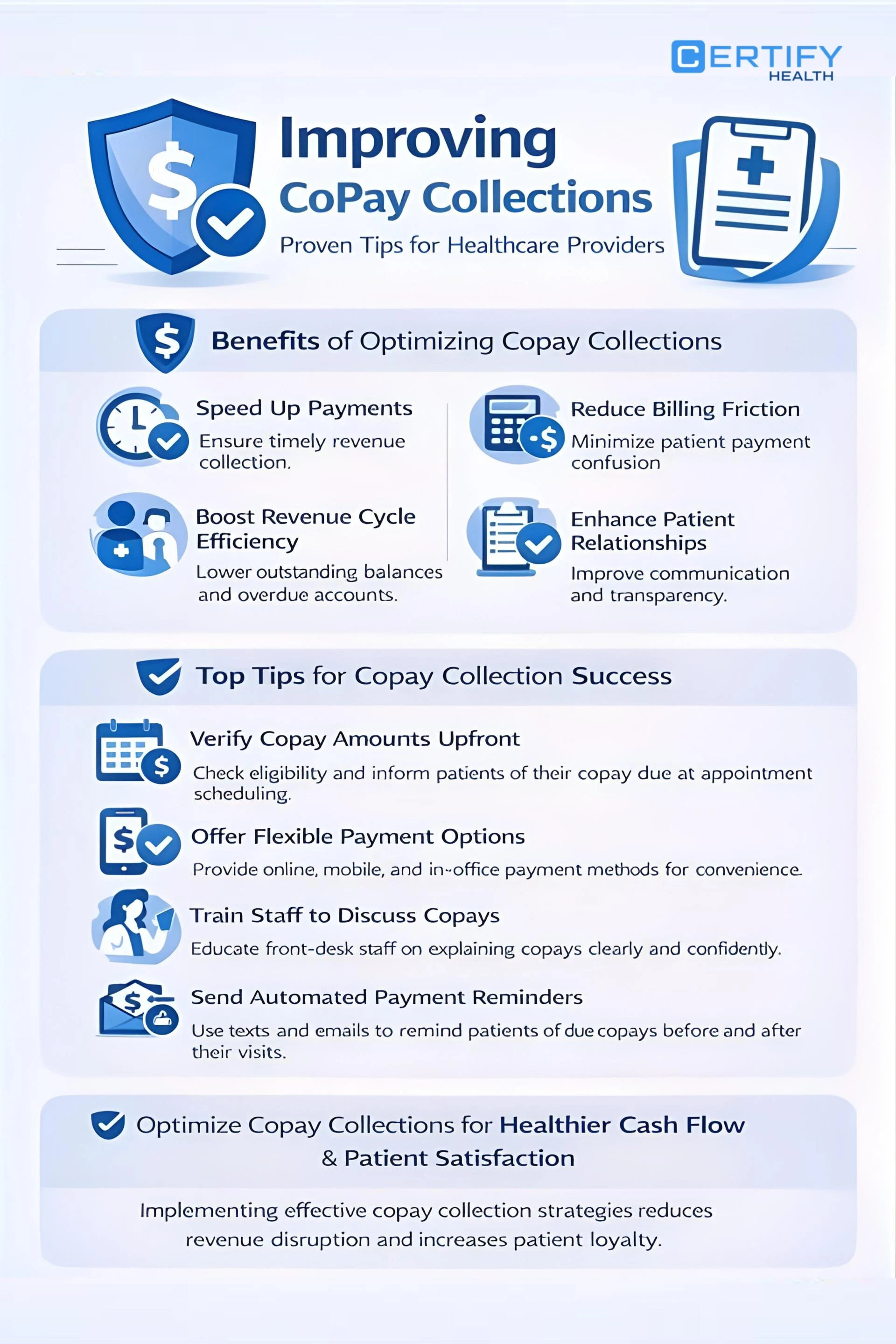
Why Copay Collections Are More Important Than Ever
Rising deductibles and out-of-pocket costs have shifted more financial responsibility to patients. As a result:
- Point-of-service collections have become critical
- Delayed payments increase bad debt
- Administrative follow-ups consume staff time
- Patient dissatisfaction grows when billing is unclear
Efficient copay collections improve cash flow, reduce accounts receivable (A/R) days, and minimize claim-related complications. When done correctly, they strengthen both financial performance and patient trust.
1. Implement Real-Time Insurance Eligibility Verification
One of the most important best practices in 2026 is real-time eligibility verification.
Automated verification systems help practices:
- Confirm active coverage instantly
- Identify accurate copay amounts
- Check deductible status
- Reduce claim denials
When eligibility is verified before the visit, staff can confidently collect the correct copay amount at check-in. This eliminates surprises and improves collection rates.
2. Communicate Financial Responsibility Before the Appointment
Transparency is essential for improving copay collections.
Modern healthcare practices send:
- Pre-visit cost estimates
- Automated appointment reminders with copay details
- SMS or email notifications about expected payments
- Patient portal alerts
Clear communication before the appointment prepares patients financially and reduces awkward payment discussions at the front desk.
In 2026, proactive financial communication will be a standard practice.
3. Offer Convenient Digital Payment Options
Patients expect seamless digital experiences across industries — healthcare is no exception.
Best-in-class copay collections now include:
- Contactless card payments
- Mobile wallet payments
- Text-to-pay links
- Online pre-visit payment options
- Secure patient portal payments
Flexible payment options reduce friction, shorten wait times, and increase same-day collections.
Digital healthcare payment solutions also enhance patient satisfaction and front-office efficiency.
4. Standardize Collection Policies Across the Organization
Inconsistent enforcement of payment policies is one of the biggest causes of collection failure.
Healthcare providers should:
- Clearly document payment policies
- Train staff on consistent communication
- Avoid selective collection practices
- Display policies visibly in waiting areas and portals
When copay collections are treated as a routine part of care — not an optional discussion — patients are more likely to comply.
Consistency builds predictability and trust.
5. Integrate Copay Collections With Practice Management Systems
Technology integration is a defining best practice for 2026.
An integrated practice management system connects:
- Scheduling
- Patient registration
- Insurance verification
- Billing
- Revenue cycle management
When copay collections are automated within the system, staff receive prompts at check-in, payment records sync instantly, and reporting becomes more accurate.
Integrated systems reduce errors, speed up payment posting, and provide real-time financial insights.
6. Leverage Digital Patient Intake Forms
Digital patient intake forms streamline both clinical and financial workflows.
They help by:
- Capturing updated insurance information
- Collecting digital financial policy acknowledgments
- Reducing manual data entry errors
- Improving patient registration accuracy
Accurate data ensures correct copay calculations and minimizes billing disputes.
Digital intake improves both operational efficiency and copay collection success.
7. Train Staff for Empathetic Financial Conversations
While technology drives efficiency, human interaction still matters.
Front-desk staff should be trained to:
- Communicate clearly and confidently
- Avoid apologetic language
- Address patient questions professionally
- Offer payment alternatives when necessary
For example, instead of saying, “Sorry, we need your copay,” staff can say:
“Your copay today is $40, and we can process it quickly here.”
Confident and respectful communication increases compliance without harming the patient experience.
8. Monitor Collection Metrics Regularly
Data-driven decision-making is essential in 2026.
Healthcare providers should track:
- Point-of-service collection rates
- Copay collection percentage
- Days in accounts receivable
- Denial rates
- Patient payment turnaround time
Analytics from revenue cycle management software help identify gaps and optimize performance.
When practices measure performance consistently, they can continuously refine their copay collection strategies.
Common Mistakes to Avoid
Even in 2026, some practices still struggle due to:
- Manual verification processes
- Limited payment options
- Delayed billing
- Poor communication
- Lack of system integration
Avoiding these pitfalls ensures stronger financial outcomes and improved patient satisfaction.
The Future of Copay Collections
The future of copay collections lies in automation, transparency, and integration.
Healthcare providers that invest in:
- Real-time eligibility verification
- Digital payment platforms
- Integrated practice management systems
- Patient-centered financial communication
Will see improved cash flow, reduced bad debt, and stronger patient loyalty.
Copay collections are no longer just about collecting payments — they are about creating a seamless financial experience within the overall patient journey.
Conclusion
In 2026, effective copay collections require a balanced approach: smart technology, standardized processes, and patient-first communication.
By implementing these best practices, healthcare providers can:
- Improve revenue cycle performance
- Reduce administrative workload
- Minimize claim denials
- Enhance patient satisfaction
A strategic, modern approach to copay collections ensures financial stability while preserving what matters most — patient trust and long-term relationships.