
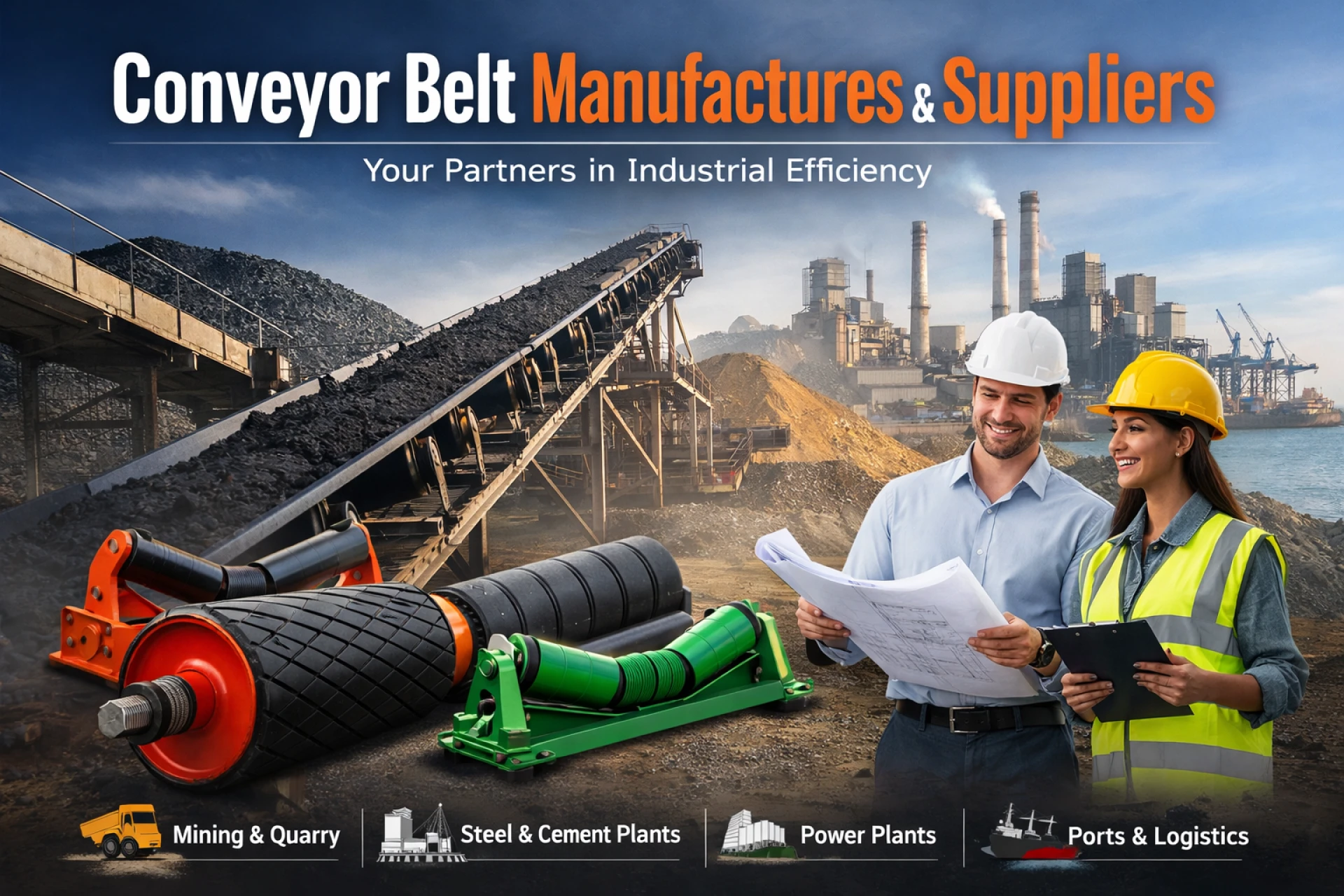
Efficient material handling is crucial for modern industries to maintain smooth operations and high productivity. Conveyor belt systems have become the backbone of bulk material transport in sectors like steel, cement, mining, power, and logistics. Partnering with reliable conveyor belt manufactures and suppliers ensures that industries receive high-quality, durable solutions tailored to their needs.
What Are Conveyor Belt Systems?
A conveyor belt system is a mechanical setup designed to move materials efficiently from one point to another. Core components include belts, rollers, idlers, pulleys, and support frames. The performance of a conveyor system largely depends on the quality of these components.
Industries rely on well-designed conveyor systems to minimize manual handling, enhance workplace safety, and increase operational efficiency. Sourcing components from established conveyor belt manufactures guarantees long-lasting performance and reliable operation.
The Role of Conveyor Belt Manufacturers
Conveyor belt manufactures are responsible for producing high-quality conveyor components and complete systems that meet industrial requirements. Their focus lies on strength, precision engineering, and durability, ensuring the systems can handle heavy loads and challenging environments.
Some common products offered by manufacturers include:
- Heavy-duty conveyor belts
- Idlers and rollers
- Drum pulleys and conveyor frames
- Customized conveyor systems for unique industrial applications
Top manufacturers often work closely with clients to design systems suitable for specific material types, operational speeds, and environmental conditions, ensuring maximum efficiency and reliability.
How Conveyor Belt Suppliers Support Industries
While manufacturers create the products, suppliers ensure their timely availability and smooth integration into industrial operations. A reliable supplier not only provides high-quality components but also offers services like:
- Technical support during installation and maintenance
- Quick delivery of spare parts to minimize downtime
- Assistance in system upgrades and customization
Having a dependable supplier allows industries to maintain continuous operations and avoid costly production delays.
Industries That Depend on Conveyor Belts
Conveyor systems are essential across several sectors, including:
- Mining: Transporting ore, coal, and minerals efficiently
- Steel and Cement: Moving raw materials and finished products
- Power Plants: Handling coal, ash, and other bulk materials
- Ports and Logistics: Streamlining cargo handling and warehouse operations
These systems enable industries to maintain a steady flow of materials, improving productivity and operational efficiency.
Choosing the Right Manufacturer and Supplier
Selecting the best conveyor belt manufactures and suppliers involves careful evaluation:
- Experience: Partner with manufacturers who have a proven track record in industrial solutions.
- Product Quality: Ensure components meet industrial standards and are built to last.
- Customization: Look for manufacturers that can provide tailored conveyor solutions.
- After-Sales Support: Technical guidance, maintenance, and spare part availability ensure long-term system reliability.
A trusted combination of manufacturer and supplier can enhance efficiency, reduce downtime, and improve overall productivity.
Advantages of Partnering with Reliable Manufacturers
- Durable conveyor systems with long lifespans
- Reduced operational interruptions
- Expert engineering for customized solutions
- Quick access to spare parts and technical support
Investing in high-quality conveyor systems from dependable manufacturers ensures seamless operations, safety, and cost savings over time.
Conclusion
Conveyor belt systems are vital for industrial efficiency, enabling smooth and safe material transport. Choosing reputable conveyor belt manufactures and trusted suppliers ensures durability, consistent performance, and operational reliability. With the right partners, industries can enhance productivity, minimize downtime, and achieve sustainable growth.