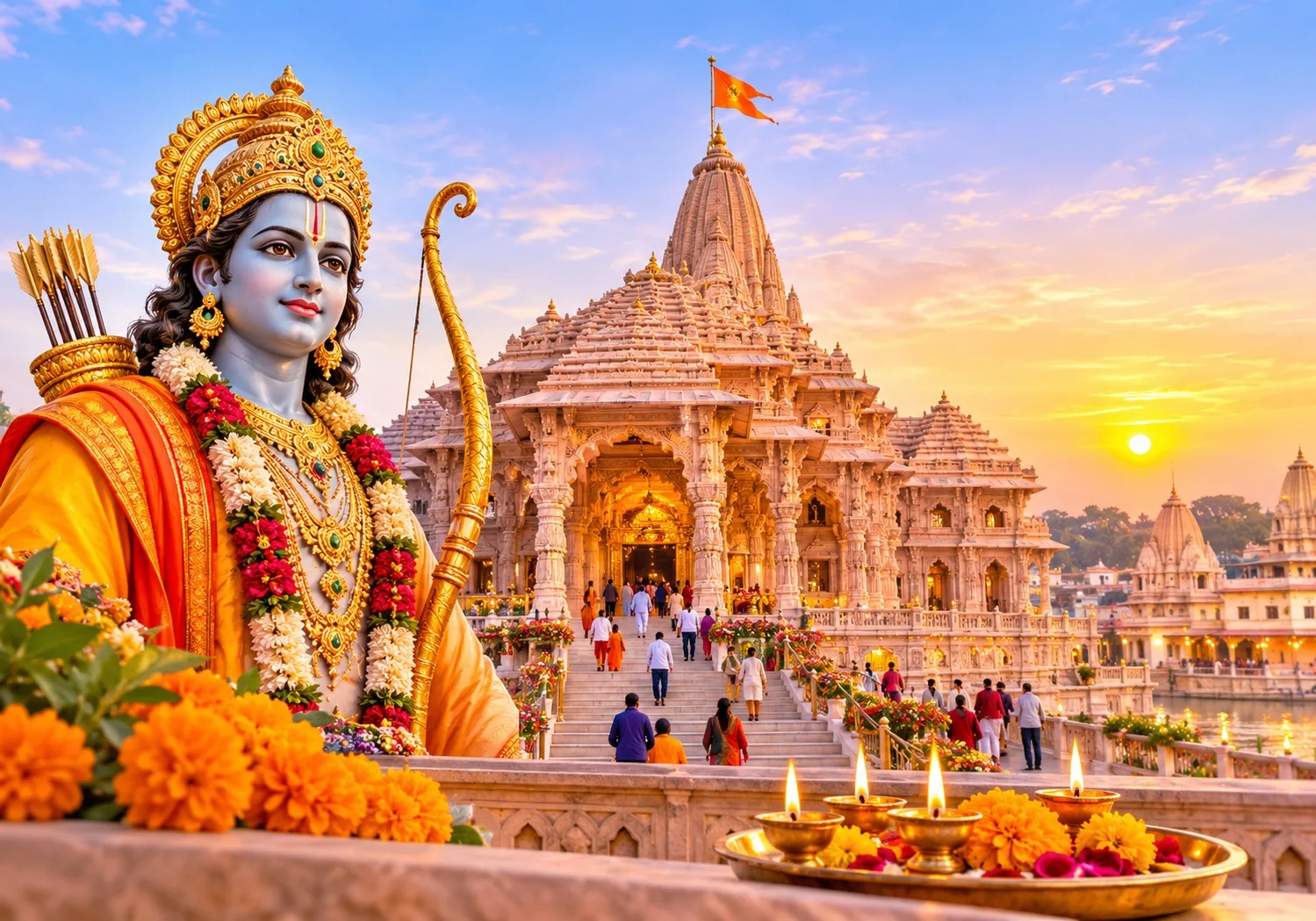
Ayodhya Dham is not just a destination. For millions of devotees it is the heart of Ram bhakti. Since the Pran Pratishtha of Ram Lalla in January 2024, the Shri Ram Janmabhoomi Mandir has become one of the most visited spiritual places in India. If you are planning your first trip, this guide explains how Ayodhya Dham darshan works, how to approach darshan and aarti passes, which temples to include and how to arrange a puja during your visit.
Why Ayodhya Dham matters
Ayodhya is counted among the seven sacred cities (Saptapuri) of Sanatan Dharma and is revered as the birthplace and kingdom of Shri Ram. A visit here is traditionally combined with Saryu snan, darshan of Ram Lalla and a visit to Hanuman Garhi. Many families also choose to perform a puja or sankalp here for health, family harmony or the fulfilment of a vow.
Ram Mandir darshan: what you need to know
General darshan at the Ram Mandir is free. The temple trust manages entry, timings and pass systems, and these can change during festivals, peak seasons and for security reasons. Reports and travel sites differ on exact timings, which is a good reason not to rely on old blog posts. Always confirm the current schedule on the official Shri Ram Janmbhoomi Teerth Kshetra website before you travel.
- Keep these practical points in mind:
- Expect queues and security checks. Mobile phones and many personal items are not allowed inside, so travel light.
- Carry a valid government photo ID, since it is commonly required for pass-based entry.
- Weekends, school holidays and festivals are the busiest. Weekdays are calmer.
- Allow a few hours for darshan itself and more time for the queue on busy days.
How to book Sugam Darshan and aarti passes
You may see the phrase "VIP darshan" online. The official system uses the term Sugam Darshan, and aarti attendance is handled through separate passes. The general process, as described by the temple trust's official channel and travel guides, is as follows:
- Open the official Shri Ram Janmbhoomi Teerth Kshetra website and log in or register with your mobile number.
- Go to the section for darshan or aarti booking and choose your date and slot.
- Enter the details of each devotee exactly as on their ID.
- Download or save your confirmation and carry the same ID to the temple. Some passes may need to be collected at a counter before the aarti.
Temples and places to include in your Ayodhya darshan
Hanuman Garhi
A hilltop temple dedicated to Hanuman Ji, traditionally visited before Ram Lalla. Many devotees offer prasad here and some choose to arrange a Hanuman puja or Sundar Kand Path during their trip.
Kanak Bhawan
Associated with Shri Ram and Mata Sita, Kanak Bhawan is known for its beautiful architecture and peaceful atmosphere, especially in the morning.
Saryu Ghat and evening Saryu Aarti
The River Saryu is central to Ayodhya's identity. Devotees take a holy dip, perform tarpan and attend the evening aarti at the ghats, which is a memorable experience for families.
Dashrath Mahal and other temples
Depending on your time, you can also include Dashrath Mahal, Nageshwarnath Temple and other smaller shrines across the city. A local pandit guide makes these visits more meaningful, as each place has its own story.
Puja you can do in Ayodhya
Many devotees want to do more than darshan. Some of the most common choices include Sri Ramraksha Stotra Puja for protection and wellbeing, Sundar Kand Path and Hanuman Puja for strength and removal of obstacles, Ram Charitra Manas Paath for peace in the family, and special sankalp pujas for births, new beginnings or thanksgiving. Which puja is right depends on your intention and the available muhurat, so it is best to speak with an experienced pandit before deciding.
Vedaangam offers puja with sankalp in your name and gotra, including for devotees who cannot travel. If you are planning a visit, you can read about our [Ayodhya Dham darshan and puja booking] service or contact us directly for guidance.
Best time to visit Ayodhya
October to March offers pleasant weather and is generally the best time for darshan. Summers are hot, and the monsoon can make travel slower. Major festivals such as Ram Navami, Diwali Deepotsav and Vivah Panchami bring spiritual energy and very large crowds, so plan well in advance if you want to visit then.
How to reach Ayodhya
- By air: Maharishi Valmiki International Airport Ayodhya serves the city. Lucknow airport is another option with road connectivity.
- By train: Ayodhya Dham Junction is the main railway station and connects with major cities.
- By road: Ayodhya is well connected to Lucknow (roughly 130 km), Prayagraj and Varanasi (roughly 200 km each) and is a comfortable road trip from all three. Check current road and traffic advisories during festivals.
Simple one-day Ayodhya itinerary
- Morning: Saryu snan, then Hanuman Garhi.
- Late morning: Ram Mandir darshan (as per your slot).
- Afternoon: Kanak Bhawan and Dashrath Mahal after a rest and lunch.
- Evening: Saryu aarti at the ghats.
If you have two days, add a puja with sankalp and spend more time in the smaller temples.
Frequently asked questions
Is Ram Mandir darshan free?
Yes, general darshan is free. Always check the official website for the latest rules.
Is online booking compulsory for darshan?
Rules differ for general darshan, Sugam Darshan and aarti, and they may change. Check the official portal before your visit.
Can I do a puja in Ayodhya without travelling?
Yes. Online puja services allow a pandit to perform the ritual on your behalf, with a video and prasad sent to you.
How many days are enough for Ayodhya?
One full day covers the main temples. Two days allow a more relaxed visit with a puja.
Plan your Ayodhya Dham darshan with Vedaangam
Whether you wish to visit in person or join a puja from your home, connect with Vedaangam, online puja booking services portal.
Source:
https://sites.google.com/view/onlinepujasbooking/blogs/ayodhya-dham-darshan-ram-mandir-darshan