Keeping your vehicle running strong and reliable means staying on top of routine maintenance, and few services are as important as an oil change.
This Oil Change guide helps Tulsa drivers understand what oil changes do, why they matter, how often to schedule them, and what to expect, so you can protect your engine, improve performance, and keep your repair costs low.
Whether you are a new driver or you have been behind the wheel for years, knowing the ins and outs of oil changes will help you make informed decisions and keep your vehicle in top condition.
Why Oil Changes Are Important
Engine oil is more than a lubricant; it is the lifeblood of your engine. While your car is running, oil is busy doing a few things at once: it greases moving parts, pulls heat away from the engine, helps keep things cool, and cleans out dirt. Over time, that oil gets old and dirty, losing its ability to protect your engine. Swapping in fresh oil brings those vital jobs back to life and stops the kind of wear and tear that could send your car to an early repair.
Without engine oil replacement, your engine can develop sludge, which can restrict oil flow and increase friction between parts. That friction leads to overheating, increased wear, and even component failure, all of which can be expensive to fix.
The Benefits of Oil Changes
It’s way more than just topping off a tank; it’s the easiest way to keep your engine healthy.
- A Smoother, Quieter Ride
Fresh oil keeps all those metal engine parts moving smoothly against each other. This reduces metal-to-metal contact and internal friction that slows you down, making your vehicle run quieter and more reliably.
- Better gas mileage
When your engine doesn't have to work hard against dirty, thick oil, that means you get more miles out of every gallon.
- Longer Engine Life
Routine oil changes remove contaminants and prevent excessive wear. This proactive care helps your engine stay healthier longer and can extend your vehicle's overall life.
- Fewer Costly Repairs
Skipping oil changes can turn your oil into thick sludge and cause your engine to overheat, which usually leads to some pricy repair bills. Sticking to a regular service schedule is the easiest way to avoid those major engine headaches.
- Peace of Mind
Clean oil means your engine is better protected and less likely to break down unexpectedly, giving you confidence every time you hit the road.
Choosing the Right Oil and Change Interval in Tulsa
Selecting the right engine oil and knowing when to replace it go hand in hand. The best oil and how often you should change it really depends on what you drive, how many miles are on the clock, and your daily habits. This is especially true in Tulsa, where blistering summers, wild temperature swings, and constant stop-and-go traffic can really beat up an engine.
Your owner’s manual should always be the first reference, as many newer engines allow longer intervals, but knowing the basics will go a long way toward making educated decisions.
- Conventional Oil
Conventional (mineral-based) oil is usually the cheapest available. It is suitable for light driving behaviour but degrades faster, especially at high temperatures. Most vehicles that use traditional oil should be changed about every 3,000–5,000 miles.
- Synthetic Blend Oil
Synthetic blends are a mix of conventional and synthetic base oils that provide better protection and performance at a reasonable price. They typically last for about 5,000–7,500 miles and offer improved resistance to heat and engine wear than conventional oil.
- Full Synthetic Oil
Full synthetic oil is specially made to give the engine top-tier protection and last a lot longer. It doesn't break down easily under high heat or tough driving, which makes it perfect for newer cars and long commutes. Because it's so durable, many vehicles using full synthetic can safely go 7,500 to 10,000 miles (or even more) between trips to the shop, depending on what your manual suggests.
- High-Mileage Oil
Designed for vehicles with over 75,000 miles, high-mileage oil contains additives that help reduce leaks, minimise oil burn-off, and protect ageing engine components.
Because driving patterns vary from short city trips around Tulsa to highway travel, there’s no single interval that fits every vehicle. Most newer cars have built-in oil life monitors that guess how much "level" is left based on how you drive. These systems watch your engine data and pop up an alert when it’s time for a change, so you don't have to guesswork.
What Happens During an Oil Change
A full-service oil change isn’t just about replacing old fluid; it involves a few key steps that protect and extend engine life.
- Inspect Oil Level and Condition: An automotive technician checks the current oil level and looks for signs of contamination.
- Drain Old Oil: Old oil is safely drained from the engine and disposed of properly.
- Oil Filter Replacement: A new filter helps keep clean oil circulating through your engine longer.
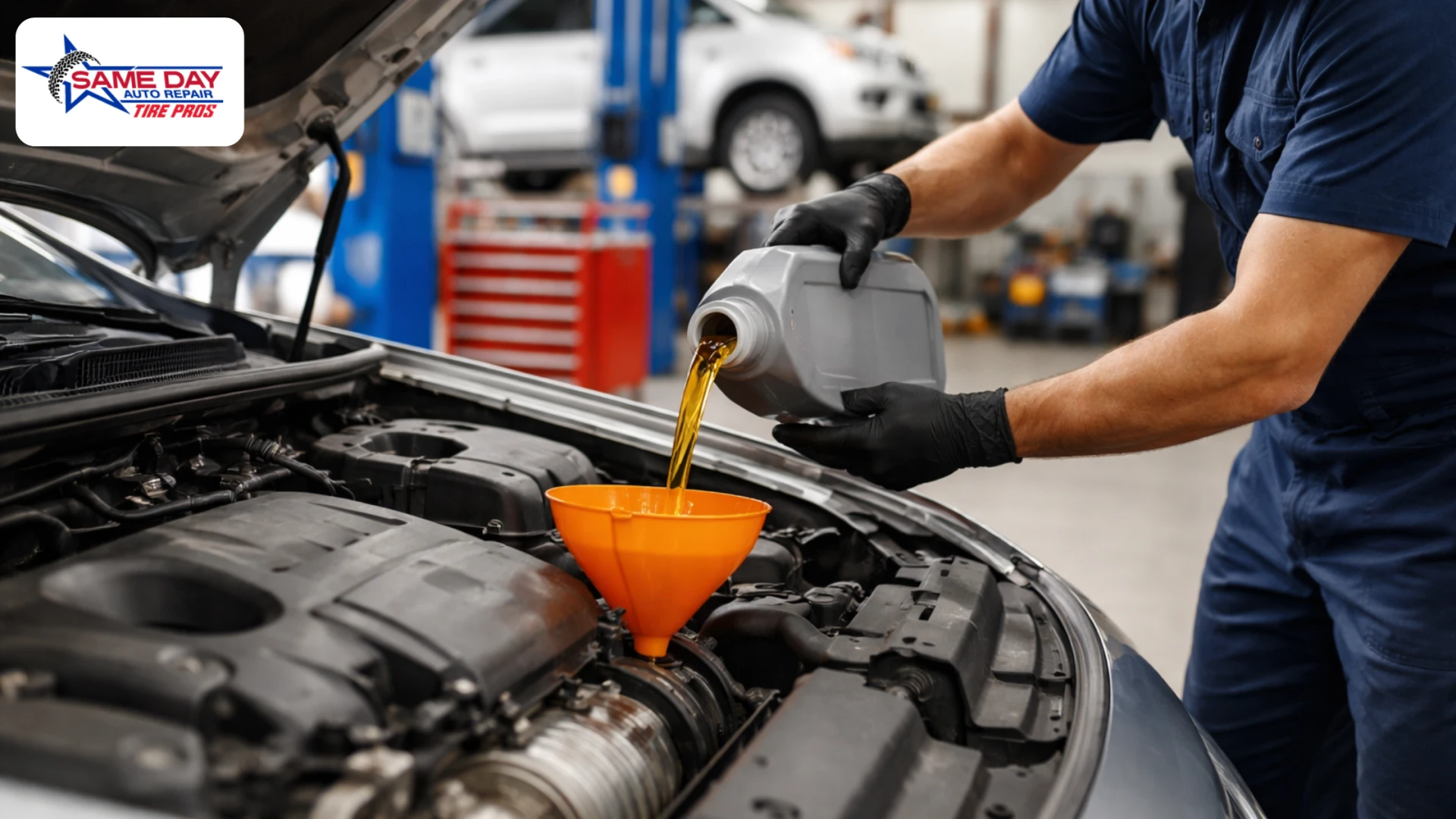
- Add Fresh Oil: The automotive technician adds the correct type and amount of oil based on your vehicle’s specifications.
- Multi‑Point Inspection: Other systems, such as belts, hoses, and fluid levels, may also be checked during service.
Most full oil change services in Tulsa take about 30–60 minutes when done by trained technicians.
Tips to Save Time and Money
An oil change doesn’t need to be costly or disrupt your schedule at the last minute.
1. Plan Ahead
Book your oil changes well before the recommended mileage so you don’t leave anything to the last minute.
2. Know Your Oil Type
Full synthetic might be more expensive on the front end, but it often lasts longer, resulting in fewer oil changes over time.
3. Follow Your Driving Patterns
Aggressive city driving, extreme temperatures, towing, or frequent short trips can stress the engine and may require shorter change intervals.
4. Check Level with Dipstick Monthly
Even with sensors, pulling the dipstick and checking your oil’s condition can warn you of changes sooner than the sensors will.
Signs You May Be Neglecting Oil Changes
It may be cheaper in the short term to skip oil changes, but it can cost you a lot more later:
- When oil isn’t changed regularly, it can oxidise and form sludge that blocks proper lubrication, damaging the engine.
- Dirty oil doesn’t transfer heat as well, increasing the risk of engine overheating, especially in the summertime.
- An engine that isn’t running right because of old oil can consume more gas and reduce fuel economy
Common Myths About Oil Changes
People often hold myths that lead them to avoid oil changes, which can cause problems. Let's clear it up or debunk it.
- “I Only Drive Short Distances, I Don’t Need Oil Changes Often”
Even short trips generate engine heat and contamination, so regular oil changes still matter.
- “Synthetic Oil Lasts Forever”
Synthetic oil lasts longer, but it still degrades over time and needs periodic replacement.
- “I Don’t Need to Change the Oil Filter Every Time”
Dirty filters can’t clean oil effectively. Replacing the filter with each oil change keeps the oil cleaner longer.
A Simple Step Toward Long-Term Reliability
Keeping up with oil changes may seem routine, but it’s actually the best way to make sure your vehicle stays reliable for years. By following the tips in this guide, you can make smarter choices about how you drive and when to head to the shop. Regular maintenance stops surprise breakdowns before they start and keeps your car running smoothly through Tulsa's wild weather shifts.
If you are not sure which oil to use or when to come in, a quick chat with Tulsa's local auto repair shop experts can give you that extra peace of mind. Taking care of it now means the vehicle stays efficient and ready for whatever the road brings.