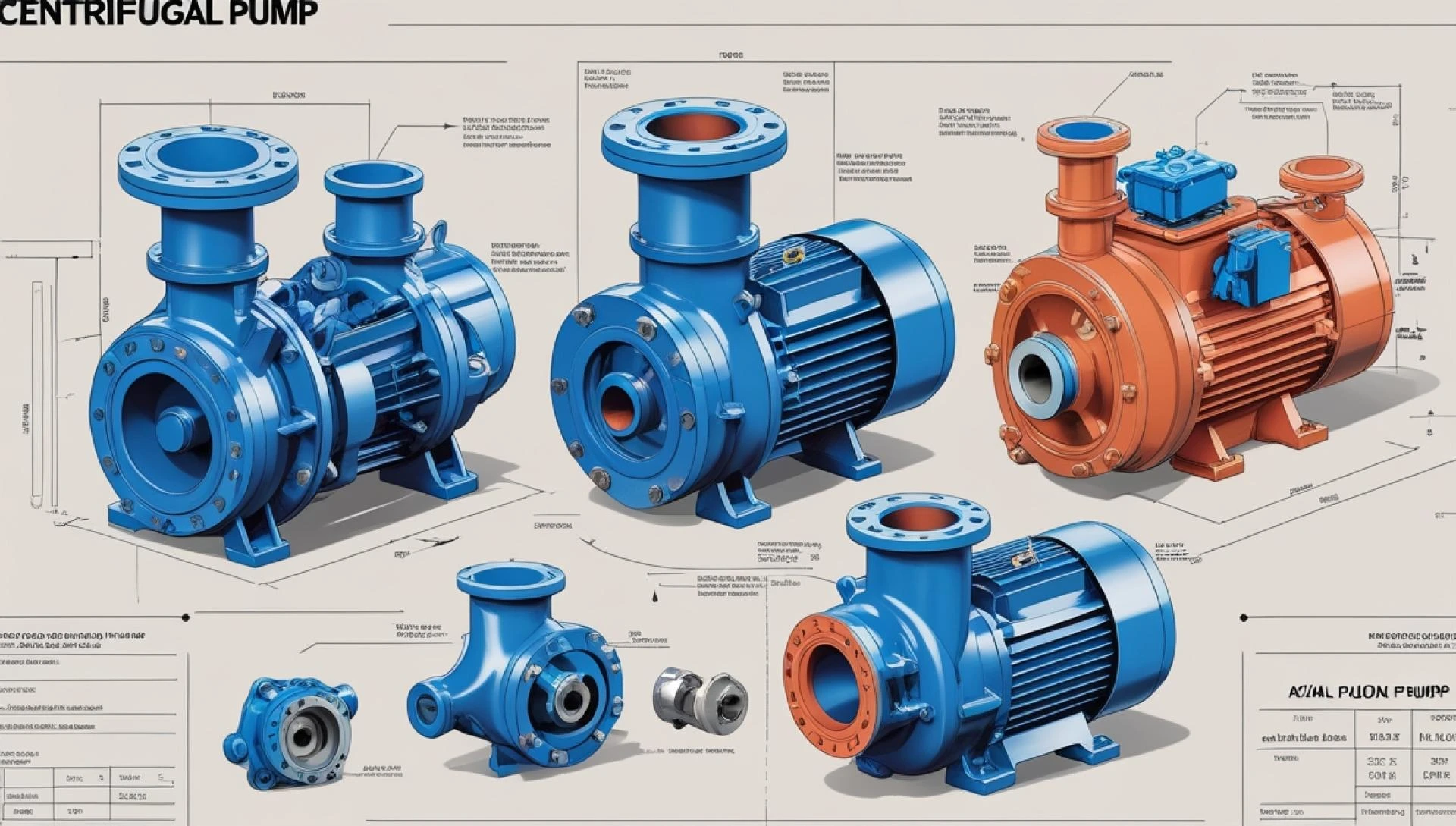
Centrifugal pumps come in a wide variety of designs, each tailored to specific operating conditions. These pumps can be classified based on impeller configuration, shaft orientation, materials of construction, or the type of fluid they are designed to handle. For engineers, plant managers, and buyers, understanding these types is key to selecting the right solution for their industry.
1. Single-Stage vs. Multistage Centrifugal Pumps
Single-Stage Pumps
Equipped with just one impeller, single-stage centrifugal pumps are known for their simplicity and ease of maintenance. They deliver high flow rates at low to medium pressures, making them cost-effective for applications such as agriculture, building services, and general water circulation.
Multistage Pumps
These pumps use two or more impellers arranged in series, with each stage adding to the overall pressure. Multistage centrifugal pumps are ideal for high-head applications like boiler feedwater, firefighting systems, high-rise building supply, and desalination. By distributing pressure across multiple stages, they achieve high efficiency without the need for oversized motors.
2. Horizontal vs. Vertical Centrifugal Pumps
Horizontal Centrifugal Pumps
Featuring a shaft mounted horizontally, these are widely used due to easy servicing and large flow capacity. Common layouts include end-suction and split-case designs. Horizontal multistage pumps are especially popular in industrial plants and utilities.
Vertical Centrifugal Pumps
With vertically aligned shafts, these pumps are space-saving and often semi-submerged. Variants include vertical turbine, inline, and sump pumps. They are preferred for deep-well pumping, drainage pits, and mechanical rooms with limited floor space.
3. Specialized Types of Centrifugal Pumps
Stainless Steel Pumps
Manufactured in SS304/316, these stainless steel pumps resist corrosion and ensure fluid purity. They are extensively used in food, beverage, pharmaceutical, and chemical industries, as well as seawater handling in desalination plants.
Centrifugal Water Pumps
A broad category designed for municipal supply, irrigation, and general industrial water transfer. Agricultural irrigation pumps, for example, move large volumes of water from canals or borewells and may be surface-mounted or submersible.
Chemical Centrifugal Pumps
Built with corrosion-resistant alloys or non-metallic linings, these pumps safely transfer acids, solvents, and reactive fluids. Mechanical seals or seal-less magnetic drives minimize leakage, making them indispensable in refineries, fertilizer plants, and chemical processing.
Slurry Pumps
Engineered for abrasive fluids like ore slurry, ash, or sewage, slurry centrifugal pumps feature open impellers, wear-resistant casings, and slower speeds to reduce erosion. They are commonly used in mining, dredging, steel plants, and wastewater treatment.
Desalination and Irrigation Pumps
Desalination plants rely on robust intake pumps and multistage units for high-pressure operations, while irrigation systems require efficiency and reliability. Both demand durable designs to minimize downtime and operating costs.
Self-Priming and Magnetic-Drive Pumps
Self-priming designs retain fluid for automatic restart after shutdown, ideal for dewatering or wastewater pumping. Magnetic-drive pumps eliminate seals, making them safer for hazardous chemical handling.
Final Thoughts
Centrifugal pumps are the workhorses of modern industry, powering everything from irrigation and municipal water supply to desalination and chemical processing. Choosing the right pump depends on fluid characteristics, required pressure, space constraints, and durability needs.
With a comprehensive portfolio covering everything from multistage high-pressure pumps to heavy-duty slurry pumps, manufacturers like Sintech Pumps can provide tailored solutions across industries. Selecting the right pump not only ensures reliable performance but also optimizes energy efficiency and lowers long-term operating costs.