If you own a trailer or caravan in Australia, having the right gear matters a lot. One piece of equipment that often gets overlooked is the jack.
Whether you're levelling your camper on an uneven site, changing a tyre on a dusty outback road, or doing basic maintenance at home, a good hydraulic trailer jack makes everything easier and safer.
This guide covers everything you need to know before you buy.
What Is a Hydraulic Trailer Jack and How Does It Work?
A hydraulic trailer jack uses fluid pressure to lift heavy loads with very little physical effort.
When you pump the handle, hydraulic fluid moves through an internal cylinder. This pushes a ram upward and lifts whatever is sitting on top of it. Release the valve, and the load comes back down in a smooth, controlled way.
Compared to a basic screw jack, the lift is much more stable and far less tiring. For anyone dealing with a heavy caravan or camper trailer, that difference is huge.
Why Hydraulic Jacks Are the Right Choice for Trailers
Most trailers and caravans are heavy. Lifting them with a basic mechanical jack is hard work — and it can be dangerous if the load shifts.
Hydraulic trailer jacks change that. The lifting force is distributed evenly, which means less risk of slipping or failing under load. The movement is gradual and controlled, giving you time to adjust if needed.
They're also just more convenient. Most models are compact enough to fit in a storage bay, quick to set up, and easy to operate. Once you've used a quality hydraulic jack for trailer work, it's hard to go back.
Different Types of Hydraulic Jacks for Trailers
Not all hydraulic jacks are the same. Here are the main types worth knowing about.
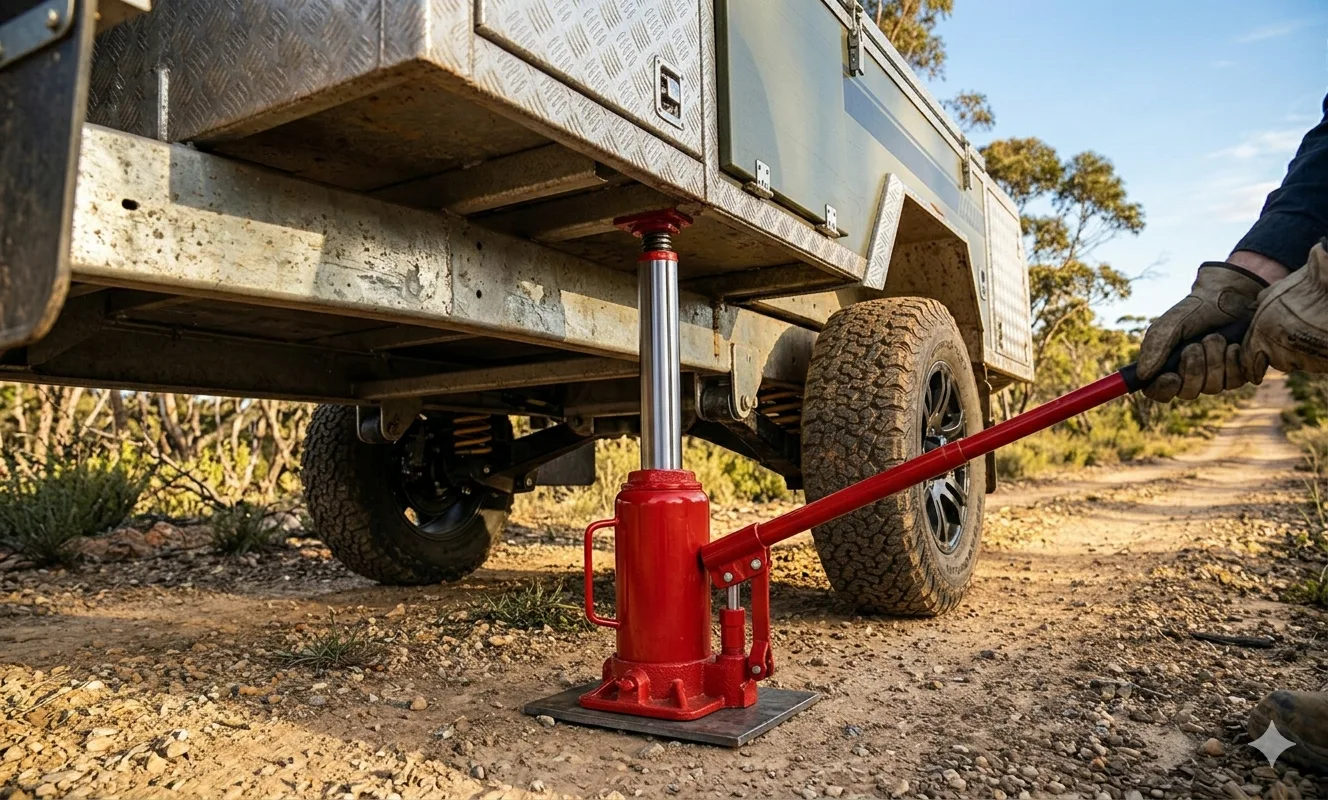
Bottle Jacks are the most popular choice for trailers. They're compact, upright, and fit easily under a trailer chassis. They come in a range of weight capacities and are generally the most affordable option. A solid pick for anyone wanting a reliable hydraulic jack for trailer use on a budget.
Floor Jacks roll on wheels and sit low to the ground. They're best used on flat surfaces, like a driveway or workshop floor. The wide footprint gives excellent stability, and the long handle makes lifting feel effortless. Great for home maintenance, but less practical on the road.
Scissor Jacks with Hydraulic Assist combine the low profile of a scissor jack with the power of hydraulics. They're compact, easy to store, and well-suited to levelling tasks. A favourite among camper trailer owners who want something simple and space-saving.
What to Look for When Buying Hydraulic Trailer Jacks
There are a few key things to check before you buy. Getting these right means you end up with a jack that actually works for your setup.
Weight Capacity is the most important spec. Your jack needs to handle the full gross trailer mass of your rig. Always go higher than you think you need — too much lifting capacity is never a problem, too little can be dangerous.
Lift Height needs to match your trailer's ground clearance. Check that the jack can actually fit underneath your chassis at its lowest point, and that it lifts high enough to do the job properly.
Build Quality matters more than people realise. Australian conditions are tough on gear. Look for heavy-gauge steel, quality hydraulic seals, and a rust-resistant finish. A jack that corrodes or leaks after one season is money wasted.
Portability is worth thinking about, too. If you travel frequently, a compact bottle jack that fits in a bag is far more practical than a heavy floor jack. Many owners keep a small travel jack in the rig and a larger one at home.
How to Use a Hydraulic Jack Safely
Even the best hydraulic trailer jack can cause damage or injury if used the wrong way. These simple habits will keep you safe every time.
Always place the jack on firm, level ground. On soft or sandy surfaces, use a base plate or a solid piece of timber to stop it sinking.
Never rely on the jack alone while you're working underneath the trailer. Always use axle stands as secondary support. The jack lifts, the stands hold.
Position the jack under a proper jacking point on the chassis. Placing it under a weak section of the frame can cause serious damage. Check your owner's manual if you're not sure where the jacking points are.
Always chock the wheels before you lift. Even on flat ground, this step is essential. On a slope, it's non-negotiable.
Maintaining Your Hydraulic Jack
A hydraulic jack doesn't need much maintenance, but a little care goes a long way.
After each use, wipe down the ram and cylinder with a clean cloth to remove dirt and grit. Store the jack with the ram fully retracted to protect the seals.
Check the hydraulic fluid level every few months. If the jack sinks slowly under load or feels sluggish, low fluid is usually the cause. A simple top-up with the correct grade of hydraulic oil often fixes it.
Give the moving parts a light spray of lubricant periodically, especially if the jack is stored near the coast or in a humid area. A small amount of preventative care means you won't be caught off guard when you need it most.
Where to Find Quality Hydraulic Jacks for Trailers in Australia
When it comes to buying hydraulic jacks for trailers, it pays to shop with a supplier who understands the Australian market.
Trailer Camper Australia's hydraulic jack range offers a well-selected collection of hydraulic trailer jacks to suit everything from lightweight camper trailers to heavy caravans. Different weight capacities, different lift heights — you can find something that actually fits your rig.
Shopping local also means proper product support from people who know Australian conditions. If you're not sure which model suits your setup, their team can point you in the right direction before you buy.
Final Thoughts
A hydraulic trailer jack is one of those things you don't think about until you need it. And when you do need it, you really need it to work.
Buying the right jack for your trailer isn't something to cut corners on. The right hydraulic jacks for trailers will handle tyre changes, levelling, and maintenance with ease — and keep you and your family safe while doing it.
Take the time to match the jack to your rig, look after it properly, and it'll be one of the most reliable tools in your kit for years of Australian adventure.