
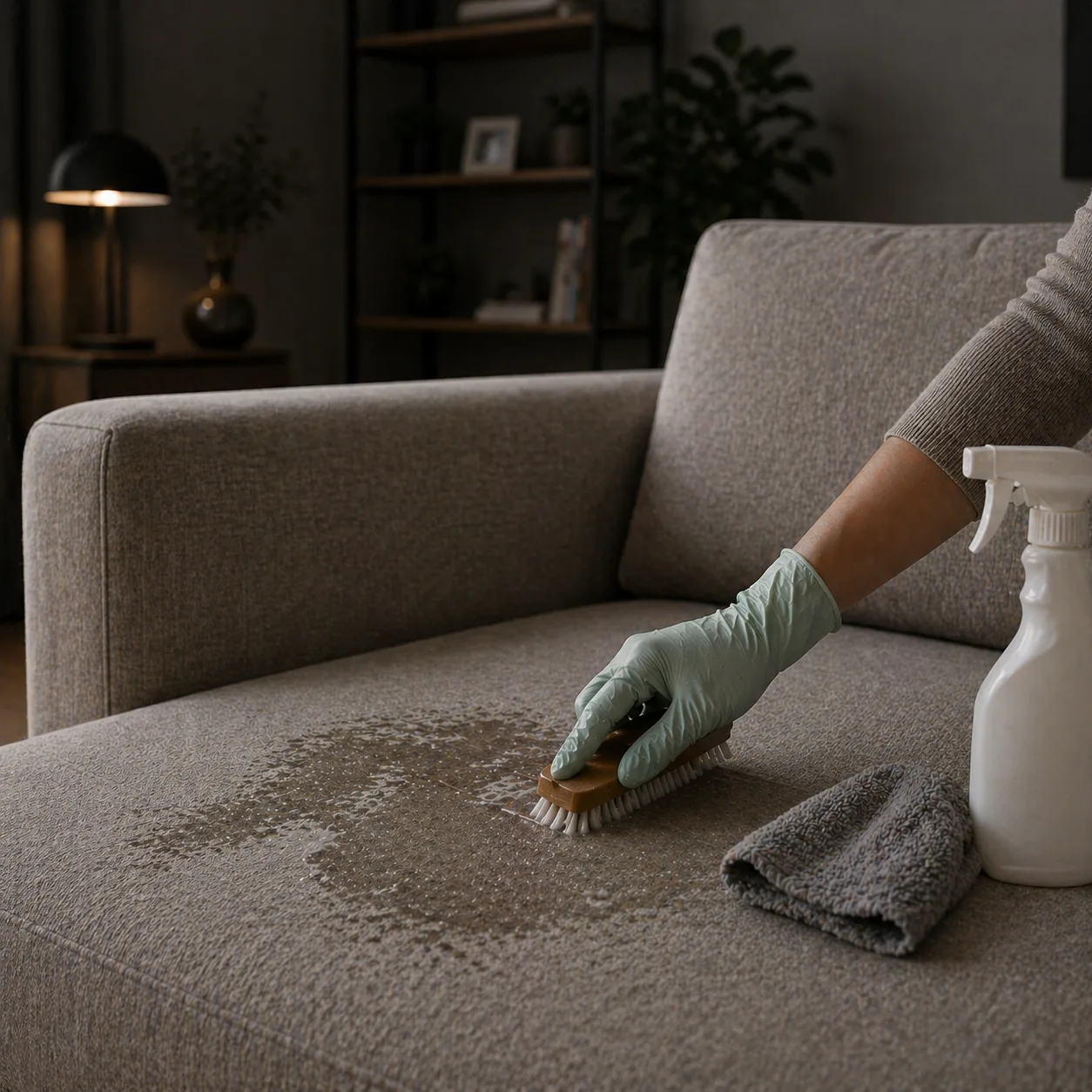
Cleaning upholstered furniture requires care because fabrics respond differently to moisture, heat, and household cleaning products. An unsuitable method can create additional problems rather than solve the original issue.
Premium Commercial Carpet Cleaning can help homeowners address upholstery maintenance needs, but understanding common cleaning mistakes remains equally important.
Mistake 1: Using the Wrong Cleaning Product
One of the biggest mistakes homeowners make involves applying a general household cleaner to upholstery without checking the fabric's care instructions.
Different upholstery materials have different cleaning requirements.
Some fabrics tolerate particular water-based treatments, while others require solvent-based cleaning or professional attention. Certain delicate materials may not tolerate conventional wet cleaning.
Using an unsuitable product can cause discoloration, water marks, or damage to the fabric.
Homeowners should locate the manufacturer's care label before beginning treatment.
If the label is missing or unclear, seeking professional advice may be safer than experimenting with unfamiliar chemicals.
Mistake 2: Scrubbing Stains Too Aggressively
When a drink spills onto a couch, the natural reaction is often to scrub the affected area.
Unfortunately, aggressive rubbing can spread the stain or push the substance deeper into the upholstery.
Repeated scrubbing may also disturb delicate fibers, leaving the treated area looking different from the surrounding fabric.
For many fresh spills, gentle blotting with a clean, absorbent cloth is a better initial response, provided the fabric's instructions permit it.
The goal is to absorb as much liquid as possible without spreading it.
Homeowners should avoid applying multiple cleaning solutions in an attempt to remove a stubborn mark.
Mistake 3: Applying Excessive Water
Too much water can create significant problems for upholstered furniture.
A couch contains more than its visible outer fabric. Cushions, padding, backing materials, and internal components may absorb moisture.
If water penetrates these layers, drying can become difficult.
Some fabrics also develop water marks, discoloration, or changes in texture after excessive moisture exposure.
Professional cleaners consider the material and construction of the furniture before selecting a cleaning method.
Homeowners should avoid saturating upholstery and should never assume that more water produces better results.
Mistake 4: Ignoring Regular Vacuuming
Many people vacuum their floors regularly but forget to clean upholstered furniture.
Couches collect crumbs, loose dirt, pet hair, and dust in areas that may not be immediately visible.
Debris often accumulates between cushions, along seams, and beneath removable seating sections.
Regular vacuuming with an appropriate upholstery attachment can help remove loose particles.
Homeowners should use gentle settings for delicate fabrics and follow the manufacturer's recommendations.
Cleaning beneath removable cushions can also help prevent crumbs and dirt from collecting in difficult-to-reach spaces.
Mistake 5: Waiting Too Long to Address Spills
Fresh spills are generally easier to manage than stains that have remained on upholstery for an extended period.
Once a substance dries or penetrates deeper into the fabric, removal may become more difficult.
However, homeowners should not rush to apply an unsuitable product.
A careful response involves identifying the substance, checking the upholstery instructions, and using an appropriate treatment method.
Some stains require professional assessment, particularly when the fabric is delicate or previous cleaning attempts have failed.
Mistake 6: Mixing Household Cleaning Chemicals
Combining different cleaning products can create unnecessary risks.
Some chemical combinations produce hazardous reactions, while others may damage upholstery dyes or leave unwanted residues.
Even products that appear mild may not be suitable for every fabric.
Homeowners should use only products recommended for the material and follow the instructions carefully.
Applying several products one after another can also make professional stain treatment more difficult because the original stain may interact with the added chemicals.
A cautious approach is usually more effective than experimenting with multiple solutions.
Mistake 7: Forgetting About Cushion Care
Couch cushions experience substantial wear because people sit, lean, and rest against them every day.
Removable cushions may require different maintenance depending on their construction.
Some cushion covers can be cleaned separately, but others may shrink, lose their shape, or become difficult to reinstall after washing.
A removable cover does not automatically mean it is machine washable.
Homeowners should check the care label before removing or washing any upholstery cover.
Rotating reversible cushions, where the manufacturer permits it, may also help distribute wear more evenly.
Mistake 8: Expecting Every Stain to Disappear
Not every upholstery stain can be removed completely.
The final result depends on the substance involved, the fabric material, how long the stain has remained, and whether previous treatments altered the fibers.
Certain substances may permanently change fabric dyes.
Other marks may actually represent wear, fading, or damage rather than removable dirt.
Professional cleaning can address many forms of accumulated soil, but it cannot reverse every type of discoloration or physical damage.
Understanding these limitations helps homeowners make realistic decisions.
Benefits of Professional Couch Cleaning
Professional upholstery cleaning provides an alternative when routine maintenance is insufficient.
A cleaning technician can examine the fabric, identify visible concerns, and recommend an appropriate treatment.
Depending on the material and condition, cleaning may help remove accumulated dirt, improve appearance, and address certain stains.
Professional equipment may also provide more controlled application and extraction than unsuitable household cleaning methods.
However, the benefits depend on the furniture's construction and the cleaning approach used.
Customers should ask about drying requirements and any precautions before returning the couch to normal use.
How Often Should a Couch Be Cleaned?
Cleaning frequency varies according to household activity.
A couch used daily by several family members may require more attention than furniture in a formal sitting room.
Pets, children, food consumption, and the type of upholstery can also influence maintenance needs.
Regular vacuuming and prompt attention to spills help reduce buildup between professional appointments.
Homeowners should review the manufacturer's recommendations and monitor the furniture's condition rather than relying on a universal schedule.
Simple Ways to Keep Upholstery Looking Better
Several everyday habits can help maintain upholstered furniture.
Avoid eating messy foods on delicate couches where practical.
Use washable throws or suitable furniture protectors in areas that receive heavy use.
Vacuum cushions, seams, and accessible surfaces regularly.
Keep furniture away from unnecessary moisture and follow the manufacturer's guidance concerning direct sunlight.
Address spills promptly without aggressive rubbing.
Avoid placing wet cushions back into use before they have dried adequately.
These measures help homeowners manage routine wear without relying on harsh cleaning products.
Choosing Couch Cleaning Services in Toronto
Before arranging professional cleaning, homeowners should ask whether the provider can assess their specific upholstery material.
It is also helpful to discuss visible stains, previous cleaning attempts, expected drying times, and treatment limitations.
Clear communication helps customers understand which results may be achievable.
Gold Carpet Cleaning provides couch and upholstery cleaning services for customers in Toronto, Vaughan, Richmond Hill, and surrounding GTA communities.
More information about available services can be found at https://www.goldcarpet.ca/.
Final Thoughts
Couch maintenance requires more than occasional stain removal.
Regular vacuuming, careful treatment of spills, appropriate cleaning products, and attention to fabric instructions can help upholstered furniture maintain its appearance.
Avoiding common cleaning mistakes is especially important because an unsuitable method may cause permanent damage.
Toronto homeowners who combine routine care with professional cleaning when appropriate can better maintain their couches and enjoy comfortable, presentable living spaces.