Building a spot trading exchange involves much more than creating a trading interface. From managing liquidity to protecting user assets and ensuring regulatory compliance, developers must overcome several technical and operational challenges. Understanding these challenges early helps businesses build a more secure, scalable, and reliable trading platform.
Performance and Scalability Challenges
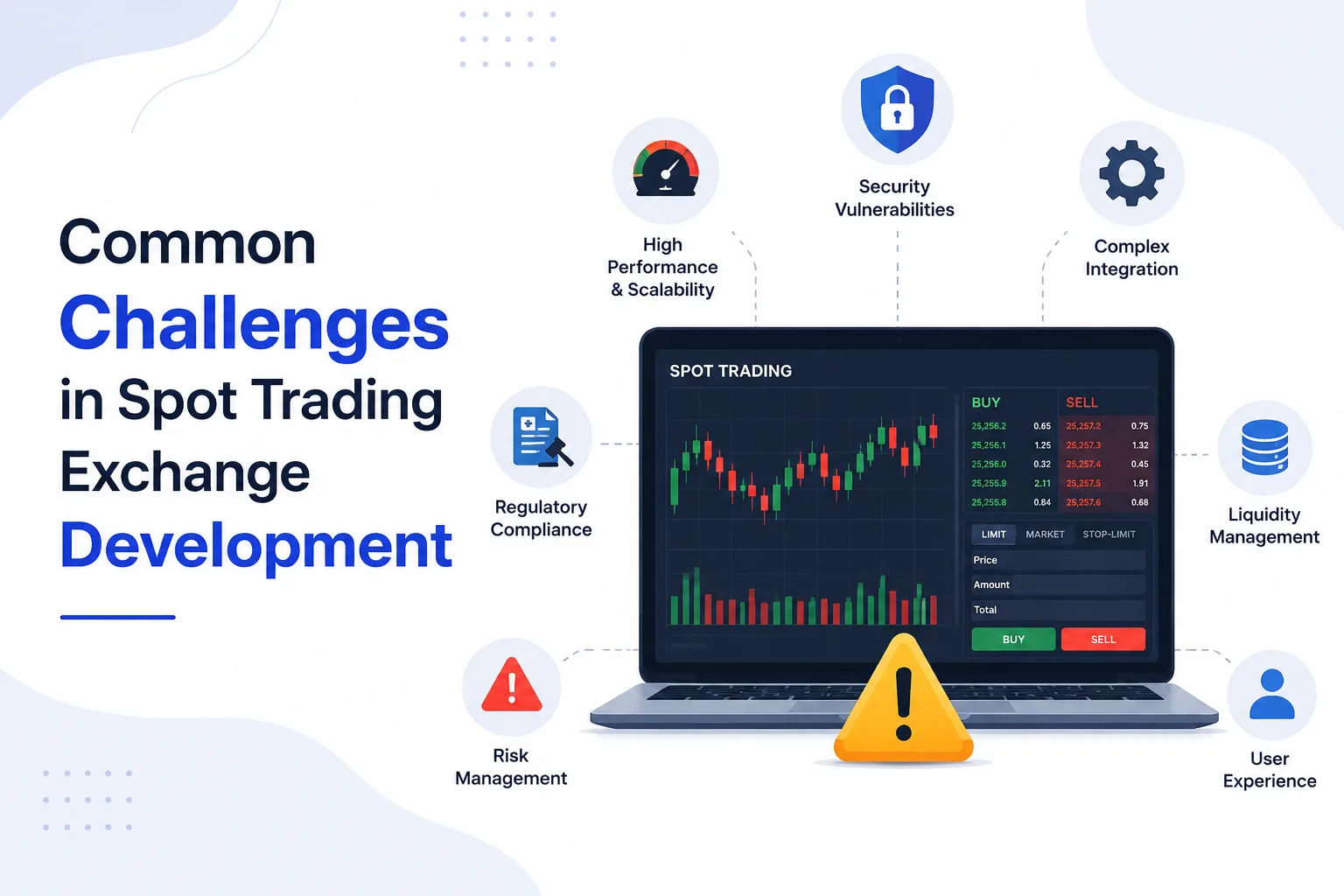
One of the biggest hurdles is developing a high-performance matching engine that can process thousands of buy and sell orders with minimal latency. As trading volume increases, the platform must maintain fast transaction speeds, high availability, and consistent performance without downtime.
Security and Compliance Challenges
Security is another major concern, requiring advanced measures such as two-factor authentication (2FA), cold wallet storage, encryption, DDoS protection, and continuous monitoring to safeguard user funds and sensitive information. At the same time, exchanges must comply with evolving KYC and AML regulations, making regulatory compliance an essential part of the development process.
Integration and User Experience Challenges
Integrating multiple blockchain networks, payment gateways, liquidity providers, and third-party APIs can be technically complex. Businesses must also focus on creating an intuitive trading interface that delivers a seamless user experience across desktop and mobile devices while ensuring reliable wallet management and fast transaction processing.
You can add this subheading naturally before "Overcoming These Challenges":
Liquidity Management Challenges
Maintaining sufficient liquidity is one of the biggest challenges in spot trading exchange development. Without adequate liquidity, users may experience delayed order execution, wider bid-ask spreads, and price slippage, which can negatively impact the trading experience. To address this, many exchanges integrate liquidity providers, market makers, or shared liquidity pools to ensure smooth and efficient trading. A well-planned liquidity strategy helps improve market depth, increases trader confidence, and supports the long-term success of the platform.
This fits well into the flow of your article:
- Performance and Scalability Challenges
- Security and Compliance Challenges
- Integration and User Experience Challenges
- Liquidity Management Challenges (new)
- Overcoming These Challenges
Overcoming These Challenges
Successfully addressing these challenges requires careful planning, the right technology stack, and experienced development expertise. If you're planning to build a crypto exchange platform, following a structured development process can help you overcome technical obstacles, improve platform security, and deliver a scalable trading solution that meets user expectations and adapts to future market growth.
Conclusion
Developing a successful spot trading exchange comes with challenges, but each one can be addressed through careful planning, the right technology, and a strong focus on security and scalability. From optimizing platform performance and managing liquidity to ensuring regulatory compliance and protecting user assets, every aspect plays a crucial role in the exchange's long-term success.
If you're planning to build a crypto exchange platform development , understanding these challenges before development begins will help you make informed decisions, reduce potential risks, and create a secure, high-performance trading environment. By partnering with an experienced development team and adopting industry best practices, you can launch a reliable spot trading exchange that delivers an exceptional user experience and supports sustainable business growth.