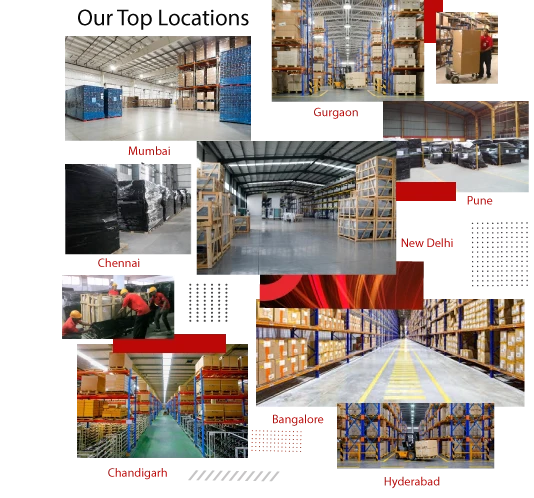
In today’s fast-paced and competitive business environment, efficient storage and inventory management play a crucial role in operational success. Commercial Warehouse Storage has become an essential solution for businesses looking to manage goods safely, reduce costs, and improve supply chain efficiency. From small enterprises to large corporations, warehouses support smooth business operations by offering secure and scalable storage options.
What Is Commercial Warehouse Storage?
Commercial warehouse storage refers to dedicated facilities designed to store goods, raw materials, finished products, or equipment for businesses. These warehouses are equipped with modern infrastructure, security systems, and inventory management tools to ensure safe handling and easy access to stored items. Depending on business needs, warehouses can be used for short-term storage, long-term storage, or distribution purposes.
Key Benefits of Commercial Warehouse Storage
One of the biggest advantages of commercial warehouse storage is cost efficiency. Instead of investing in large storage spaces or managing in-house facilities, businesses can rent warehouse space as required. This reduces capital expenditure and allows companies to allocate resources to core activities such as sales, marketing, and production.
Another important benefit is scalability. Warehouse storage solutions are flexible, allowing businesses to increase or decrease storage space based on seasonal demand or business growth. This is especially useful for industries such as retail, e-commerce, manufacturing, and FMCG, where inventory levels fluctuate frequently.
Security is also a major advantage. Modern commercial warehouses are equipped with CCTV surveillance, access control systems, fire safety measures, and trained personnel. This ensures goods remain protected from theft, damage, and environmental risks.
Improved Inventory Management
Commercial warehouses often use advanced inventory management systems that help businesses track stock levels in real time. This improves accuracy, reduces errors, and minimizes the risk of overstocking or stock shortages. Efficient inventory management leads to faster order processing, improved customer satisfaction, and better decision-making.
Warehouses also help in organizing goods systematically. With proper racking systems, labeling, and dedicated zones, businesses can store products efficiently and retrieve them quickly when needed. This saves time and improves operational efficiency.
Support for Logistics and Distribution
Commercial warehouse storage plays a vital role in logistics and distribution. Many warehouses are strategically located near highways, ports, or industrial hubs, enabling faster transportation and reduced delivery times. This makes them ideal for businesses involved in regional or national distribution.
Warehouses can also act as distribution centers where goods are sorted, packed, and dispatched directly to customers or retail outlets. This integrated approach streamlines supply chain operations and helps businesses meet delivery deadlines consistently.
Suitable for Various Industries
Commercial warehouse storage is suitable for a wide range of industries, including retail, e-commerce, pharmaceuticals, electronics, automotive, and manufacturing. Whether it is bulk storage, palletized goods, or sensitive inventory, warehouses can be customized to meet specific industry requirements.
Conclusion
Commercial warehouse storage is more than just a place to store goods; it is a strategic asset for business growth. By offering cost savings, flexibility, security, and efficient inventory management, warehouse storage helps businesses operate smoothly and respond quickly to market demands. For companies aiming to optimize their supply chain and focus on expansion, investing in the right commercial warehouse storage solution is a smart and practical decision.