
Table of Contents
- Introduction
- Understanding Colocation Services
- Understanding Public Cloud
- Cost Comparison: Long-Term Financial Analysis
- Control and Customization Factors
- Performance and Scalability Analysis
- Security and Compliance Considerations
- Hybrid Approaches: Getting the Best of Both Worlds
- Conclusion: Making the Strategic Choice
Introduction
The decision between colocation and public cloud services represents one of the most consequential strategic choices facing IT leaders today. As organizations map their technology roadmaps and infrastructure investments, understanding the long-term implications of this choice becomes increasingly critical. This article examines both options through a pragmatic lens, focusing on financial impacts, operational control, performance characteristics, and strategic flexibility to help decision-makers navigate this complex landscape.
Understanding Colocation Services
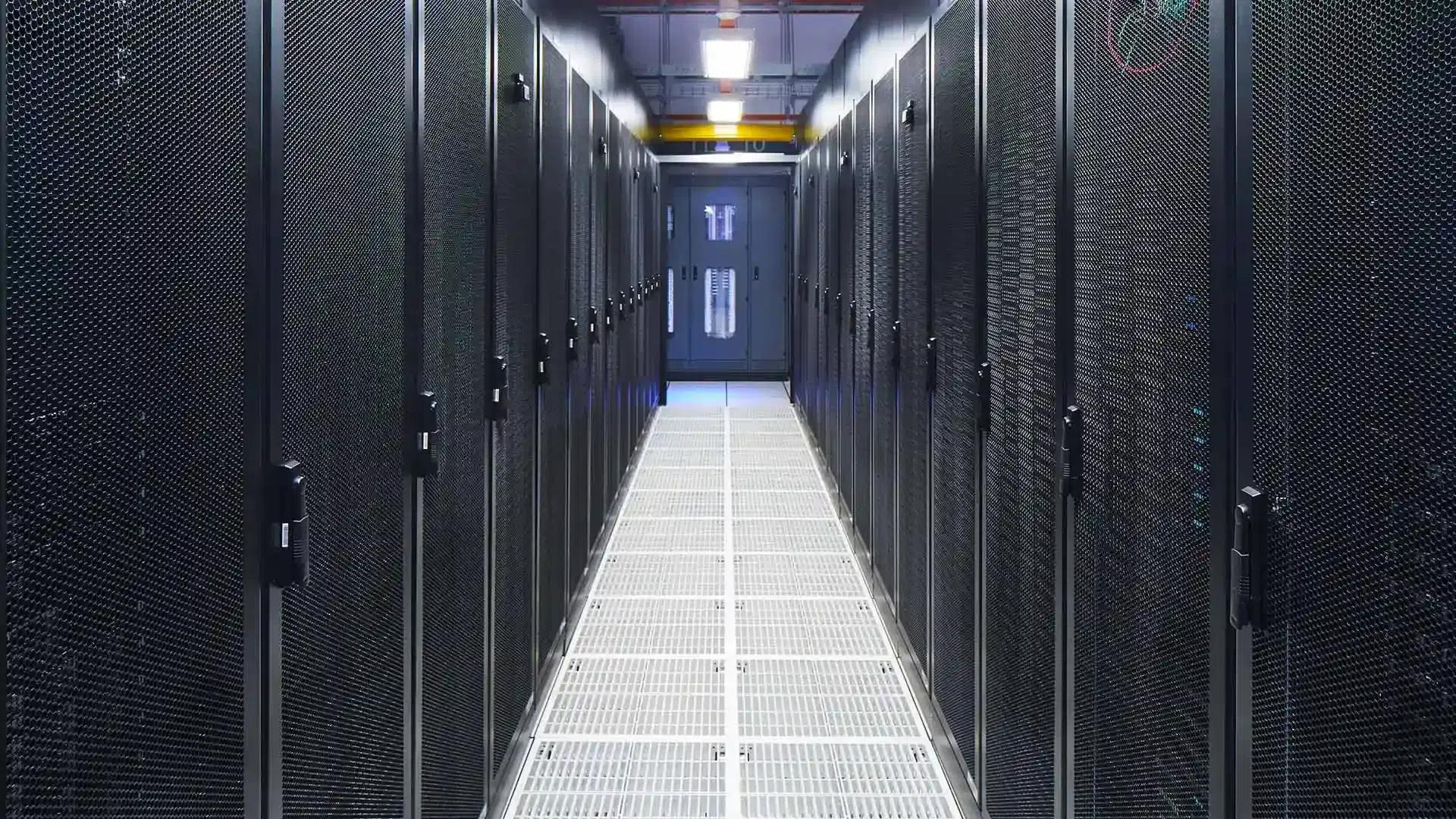
Colocation services provide organizations with physical space within third-party data centers to house their own computing hardware. Unlike fully managed services, colocation represents a hybrid approach where:
- Organizations maintain ownership of their server equipment
- The data center provider supplies power, cooling, physical security, and network connectivity
- Customers retain complete control over their hardware configuration and software stack
- Space is typically leased in rack units, partial cabinets, full cabinets, or cage environments
This model allows businesses to leverage professional data center infrastructure without building their own facilities. Colocation customers benefit from enterprise-grade environmental controls, power redundancy, and physical security while maintaining direct control over their equipment.
Understanding Public Cloud
The public cloud model represents a fundamentally different approach, where computing resources are delivered as services over the internet. Key characteristics include:
- Pay-as-you-go pricing: Resources are billed based on actual consumption
- Rapid provisioning: New resources can be deployed in minutes rather than weeks
- Managed infrastructure: The cloud provider handles all physical hardware maintenance
- Shared underlying infrastructure: Multiple customers share the same physical resources
Public cloud providers offer various service models, including Infrastructure-as-a-Service (IaaS), Platform-as-a-Service (PaaS), and Software-as-a-Service (SaaS), providing different levels of abstraction from the underlying infrastructure.
Cost Comparison: Long-Term Financial Analysis
The financial comparison between colocation and public cloud is more nuanced than many realize:
Public Cloud Cost Structure
- Minimal upfront investment
- Operating expense (OpEx) model with predictable monthly billing
- Costs scale dynamically with usage
- Premium pricing for advanced features and guaranteed performance
- Potential for unexpected costs from data transfer, API calls, and other hidden fees
Colocation Cost Structure
- Significant initial capital expenditure (CapEx) for hardware
- Predictable monthly facility costs
- Hardware refresh cycles typically every 3-5 years
- Costs remain relatively fixed regardless of utilization
- Lower cumulative costs for steady, high-utilization workloads over 3+ years
For most organizations, the crossover point where colocation becomes more cost-effective than public cloud typically occurs at the 3-year mark for steady-state workloads with predictable resource requirements. However, this timeline can vary significantly based on specific requirements and utilization patterns.
Control and Customization Factors
The level of control differs substantially between these approaches:
Colocation advantages:
- Complete hardware configuration freedom
- Direct physical access to equipment
- Custom networking configurations
- Ability to use specialized hardware (GPUs, FPGAs, etc.)
- No forced upgrades or environment changes
Public cloud advantages:
- Rapid deployment and configuration
- API-driven infrastructure management
- Managed services reducing operational overhead
- Continuous platform improvements and new features
- Global region availability without building new facilities
Organizations with specialized performance requirements, security needs, or compliance obligations often value the control provided by colocation environments.
Performance and Scalability Analysis
Performance characteristics differ significantly between these models:
Colocation Performance Attributes
- Consistent, predictable performance
- No resource contention from other customers
- Ability to fine-tune hardware for specific workloads
- Limited by physical hardware capacity
- Expansion requires procurement and installation cycles
Public Cloud Performance Attributes
- Variable performance due to multi-tenant environment
- Virtually unlimited on-demand scalability
- Geographic distribution with minimal effort
- Advanced services available without implementation complexity
- Performance tiers available at different price points
For workloads with highly variable demand patterns or rapid growth trajectories, public cloud often provides superior scalability. However, performance-sensitive applications with steady resource requirements may benefit from the predictable performance of dedicated hardware in colocation facilities.
Security and Compliance Considerations
Security requirements influence infrastructure decisions in significant ways:
- Colocation security advantages
- Physical access controls managed by security professionals
- Complete isolation of computing resources
- Custom security architecture implementation
- Direct control over data storage locations
- Simplified compliance for specific regulated industries
- Public cloud security advantages
- Advanced security services and tools
- Continuous security updates and improvements
- Distributed denial-of-service (DDoS) protection
- Security certifications and compliance programs
- Professional security team monitoring infrastructure
Organizations in highly regulated industries often find that colocation provides clearer compliance pathways, though major cloud providers have made significant strides in addressing regulatory requirements.
Hybrid Approaches: Getting the Best of Both Worlds
Many organizations are moving beyond the binary choice between colocation and public cloud by implementing hybrid architectures:
- Core systems with steady workloads hosted in colocation facilities
- Burst capacity and development environments in public cloud
- Disaster recovery leveraging cloud-based resources
- Data processing at the edge with centralized management
- Cloud connectivity directly from colocation facilities
This approach allows businesses to optimize each workload individually while maintaining a cohesive overall architecture. Modern interconnection services from quality cloud services providers enable high-performance, secure connectivity between colocation facilities and public cloud environments.
Conclusion: Making the Strategic Choice
The decision between colocation and public cloud represents a strategic choice that should align with broader business objectives rather than just technical preferences. When evaluating options, consider:
- Time horizon: Longer-term commitments generally favor colocation economics
- Workload characteristics: Steady, predictable workloads versus highly variable demands
- Financial structure: CapEx versus OpEx preferences and constraints
- Technical expertise: In-house capabilities for infrastructure management
- Business agility requirements: Speed of deployment and geographic expansion needs
For many organizations, the optimal solution involves leveraging both approaches strategically. By aligning infrastructure choices with specific workload requirements and business objectives, IT leaders can create an environment that provides the right balance of cost-effectiveness, performance, control, and agility to support long-term business success.
Rather than viewing colocation and public cloud as competing alternatives, forward-thinking organizations recognize them as complementary tools in a comprehensive infrastructure strategy. The most successful implementations focus on placing each workload in its optimal environment while maintaining consistent management, security, and operational practices across the infrastructure portfolio.