
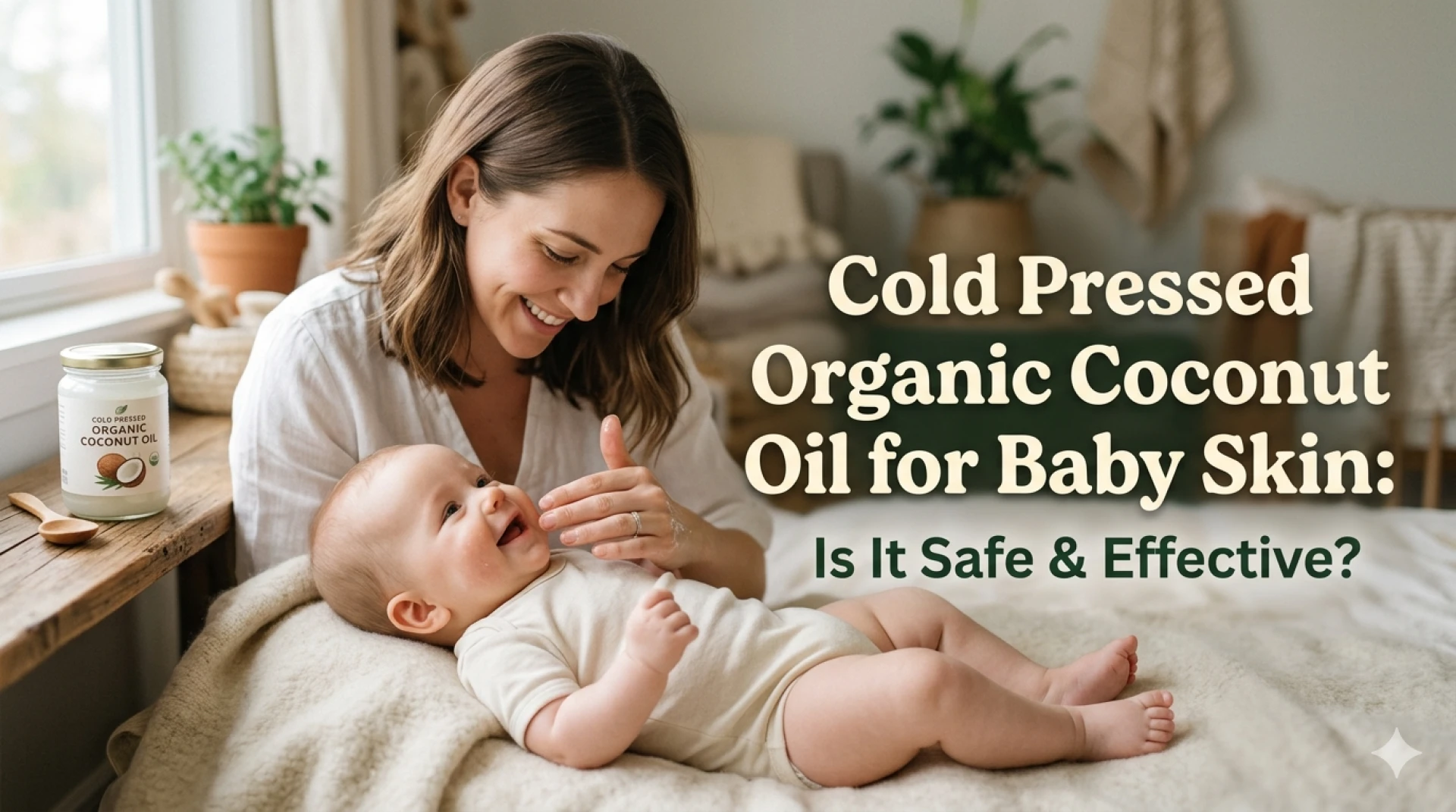
There’s this moment—usually after a bath—when you look at your baby’s skin and think, “Should I put something on this?” It looks soft already, but also… kind of dry? Maybe flaky around the legs. Or those tiny patches on the cheeks. Happens a lot.
Somewhere in that thought spiral, someone suggests coconut oil. Not just any kind, though—cold pressed coconut oil organic varieties, the ones that come in glass jars and smell faintly like real coconuts, not candy. And then the questions start. Is it safe? Is it actually helpful? Or just one of those things people swear by without thinking too much?
Let’s slow down and figure it out, piece by piece.
First, what even is “cold pressed” coconut oil?
Quick pause. Because this part matters more than it sounds.
Cold pressed oil is made without high heat. The coconut meat is pressed… gently, I guess you could say. No aggressive processing, no weird chemicals. The idea is simple—keep the nutrients intact. That’s why you’ll often see people searching for things like organic coconut oil for baby skin or pure cold pressed coconut oil benefits.
And honestly, once you open a jar, you can kind of tell. The smell isn’t overpowering. The texture feels clean. Not greasy in a heavy way.
Is coconut oil safe for babies?
Short answer? Yes. For most babies, it’s considered safe.
But—yeah, there’s always a “but”—every baby’s skin is a little unpredictable. Some are totally fine with natural oils. Others… react to things you wouldn’t expect.
A small patch test is a good idea. Just dab a tiny bit on the baby’s arm and wait a day. No redness? No bumps? You’re probably good to go.
Pediatricians often say coconut oil is okay for external use, especially if it’s unrefined and organic. Which is why is coconut oil safe for newborn skin is such a common search. People want something simple, not loaded with ingredients they can’t pronounce.
Why do parents use coconut oil on baby skin?
Honestly, a lot of it comes from observation.
You try it once. Skin feels softer. You keep using it.
But there are actual reasons behind it too.
1. It helps with dryness
Baby skin loses moisture quickly. Especially after baths. Coconut oil acts like a barrier—locks in hydration without feeling too thick.
It’s one of the reasons coconut oil for baby dry skin shows up everywhere online.
2. It may calm mild irritation
Diaper rash, little red spots, those random patches that show up out of nowhere… coconut oil has mild soothing properties. Not a miracle fix, but it can take the edge off.
3. Massage time (which babies secretly love)
There’s something about oil massage that feels… old-school in a good way. Warm oil, gentle strokes, a quiet room. Babies usually relax into it.
And yeah, coconut oil works well for this. Smooth, light, doesn’t leave a weird residue.
Search terms like baby massage oil coconut organic or which oil is best for baby massage natural come from exactly this habit.
What about sensitive skin or eczema?
This is where things get a bit less straightforward.
Some parents swear coconut oil helped their baby’s eczema. Others say it made it worse.
Skin conditions like eczema are tricky. Coconut oil has antibacterial properties, which sounds helpful, but it doesn’t work the same way for everyone.
If your baby has eczema, it might be worth checking with a doctor before using it regularly. Or at least try it on a small area first.
You’ll often see searches like coconut oil for baby eczema safe or not—and the mixed answers online kind of reflect real-life experiences.
How to use coconut oil on baby skin (without overthinking it)
No complicated routine needed. Really.
- After bath: Apply a small amount on slightly damp skin
- For massage: Warm a little oil between your palms first
- Dry patches: Dab, don’t rub aggressively
And that’s it.
You don’t need to layer it with lotions or mix it with ten other things. In fact, simpler is usually better with babies.
Does “organic” really make a difference?
Short answer… yeah, it does.
Babies have thinner skin than adults. More absorbent. So whatever you apply matters a bit more.
Organic coconut oil means fewer chances of pesticide residues or additives sneaking in. That’s why phrases like organic coconut oil for newborn baby skin care get searched so much.
It’s not about being overly cautious—it’s just one less thing to worry about.
Any downsides?
Let’s not pretend it’s perfect.
- It can clog pores for some babies
- Not ideal for very humid climates if overused
- May not suit acne-prone baby skin (yes, baby acne is a thing)
Also, if the oil smells off or feels sticky in a weird way… don’t use it. Trust your gut on that.
A small real-life moment
I remember a friend telling me she used coconut oil on her baby’s legs during winter. Nothing fancy. Just a tiny bit after bath.
At first, she wasn’t even sure it was doing anything. Then one day she skipped it for a week… and the dryness came back. That’s when she noticed the difference.
Sometimes, it’s not dramatic. It’s subtle. Quietly working in the background.
So… is it worth trying?
If you’re looking for something simple, natural, and widely trusted—cold pressed coconut oil is a pretty good place to start.
Not a magic fix. Not for every baby.
But for many? It works. Gently, without fuss.
And honestly, in a world full of baby products with long ingredient lists… something this simple feels kind of refreshing.