
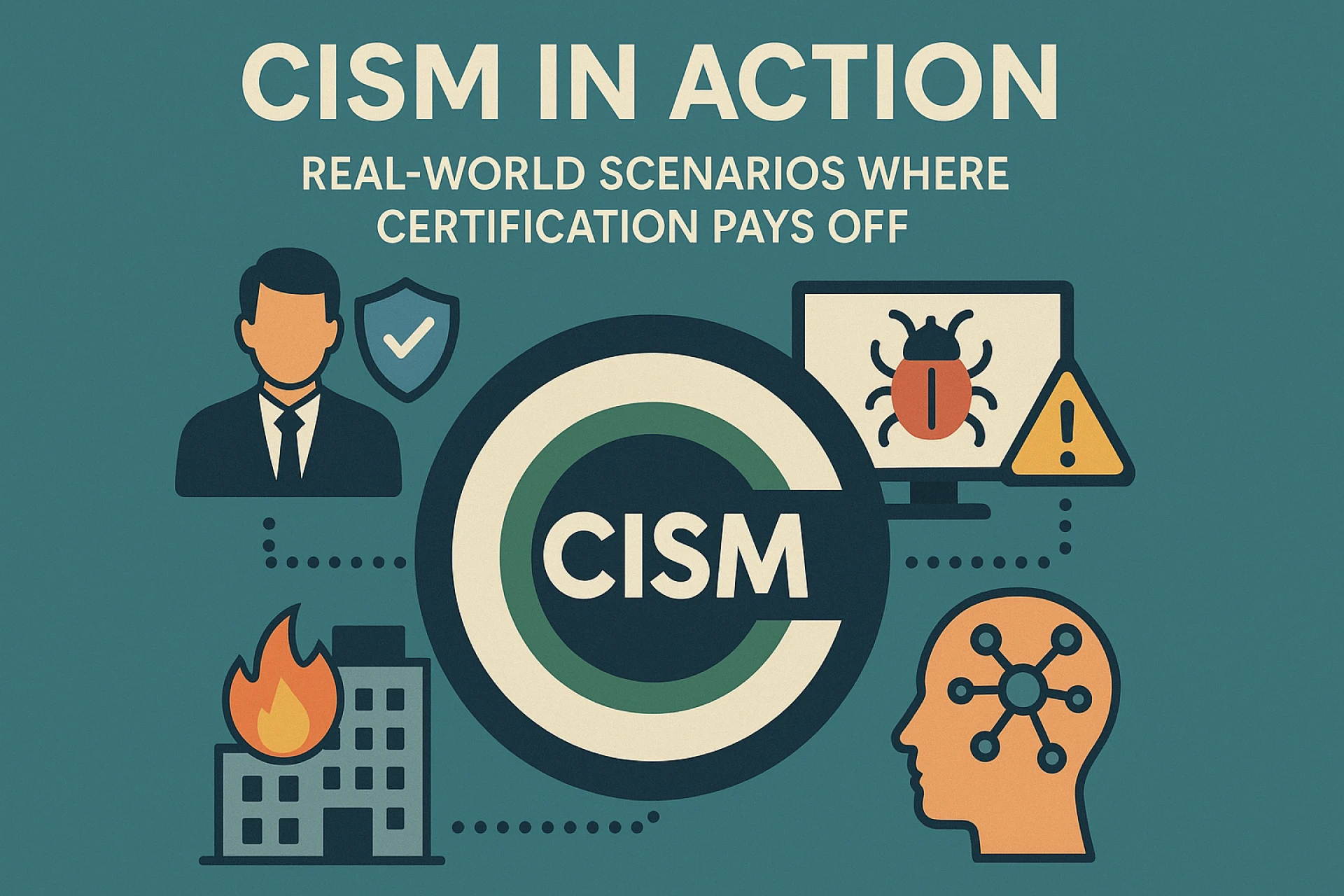
Theory by itself is insufficient in the field of cybersecurity. Organizations are looking for leaders who can think strategically, respond under pressure, and align security initiatives with business goals. The Certified Information Security Manager (CISM) credential excels in this situation.
At Tromenz Learning, we train professionals not just to pass the CISM exam but to apply it in the real world — where the stakes are high, and decisions matter. Here are real-world scenarios where CISM certification makes a powerful difference.
Scenario 1: Responding to a Data Breach — The Calm in the Chaos
The Situation:
A large healthcare organization discovers that a ransomware attack has compromised thousands of patient records.
CISM in Action:
A CISM-certified security manager steps in, quickly activates the incident response plan, coordinates with the legal and communications teams, and reports the breach within required compliance timelines. Their deep understanding of incident management, stakeholder communication, and governance ensures the damage is contained with minimal fallout.
Why It Pays Off:
CISM professionals are trained in building incident response systems before disaster strikes — and that foresight can save millions in regulatory fines and reputational loss.
Scenario 2: Leading Security During a Cloud Migration
The Situation:
A mid-sized fintech company is migrating its operations to the cloud to cut costs and improve scalability.
CISM in Action:
A CISM-certified professional conducts a risk assessment, develops access control policies, ensures compliance with frameworks like ISO/IEC 27001, and collaborates with cloud vendors. They anticipate risks related to data leaks and regulatory compliance.
Why It Pays Off:
CISM isn’t just about tech skills — it’s about managing risks, governance, and aligning security strategies with business goals. That’s what successful migrations require.
Scenario 3: Building a Security Culture Across Teams
The Situation:
A retail company faces ongoing phishing attacks. Employees often click on malicious links, exposing customer data.
CISM in Action:
The security manager, with CISM training, launches a security awareness program, builds regular phishing simulations, and integrates cybersecurity best practices into onboarding and operations.
Why It Pays Off:
Rather than reactive patching, a CISM brings a strategic, preventive approach that builds long-term resilience.
Scenario 4: Compliance with International Regulations
The Situation:
A global software firm must comply with GDPR, HIPAA, and PCI-DSS depending on the region and customer base.
CISM in Action:
The CISM-certified leader ensures proper data handling policies, conducts regular audits, and maintains documentation to demonstrate compliance. They balance legal risk, data protection, and business continuity.
Why It Pays Off:
CISM training helps professionals manage compliance without paralyzing business growth — a key advantage in global markets.
Scenario 5: Justifying Security Budgets to Executives
The Situation:
A security team knows upgrades are needed, but leadership is hesitant to approve new expenditures.
CISM in Action:
A CISM professional presents a business-aligned risk report showing the financial impact of not upgrading (including potential losses from breaches), maps it to key organizational objectives, and gains approval.
Why It Pays Off:
By bridging the divide between executive decision-making and technical security, CISM makes sure security has the backing it needs.
Final Thoughts
A strategic attitude that enables people to lead, influence, and produce outcomes, CISM is more than just a certification. In a world where security threats evolve daily, businesses don’t just need IT experts. They require security managers with a business-like mindset.
At Tromenz Learning, we’ve helped hundreds of professionals prepare for real-world cybersecurity leadership through our expert-led CISM training programs. With practical scenarios, mock exams, and mentorship, we equip you not just to pass — but to lead with confidence.