Choosing a forex broker is one of the first major decisions traders make when entering the online financial markets. With numerous brokers offering different platforms, account structures, instruments, and trading conditions, it can be difficult to know which factors deserve the most attention.
A professional broker assessment should go beyond promotional messages. Traders should examine the complete trading environment and understand how different features could affect their experience. Platform usability, market availability, account conditions, costs, customer support, and risk management are all important areas to consider.
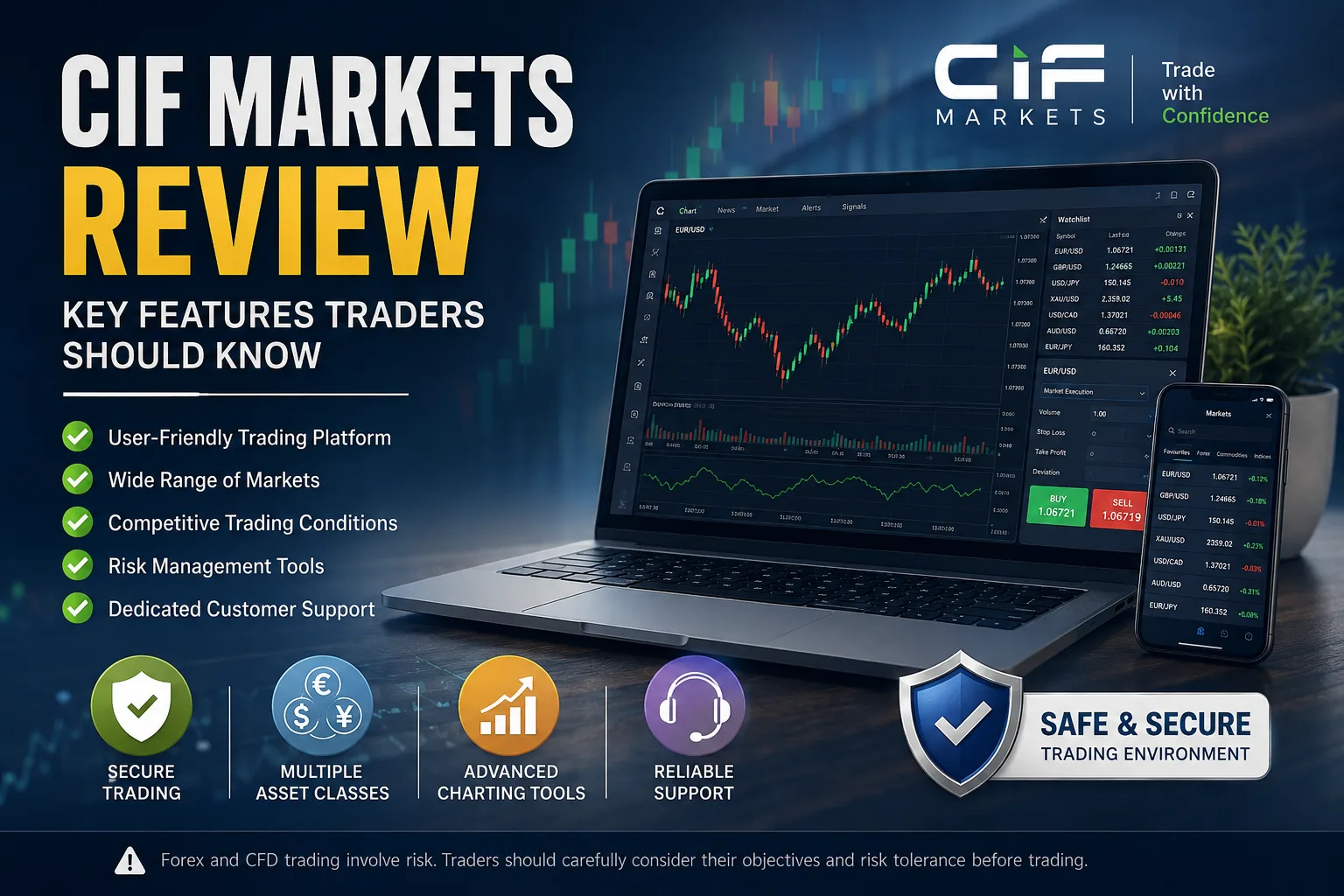
This CIF Markets Review provides a practical overview of the main factors traders can examine when researching CIF Markets. Rather than focusing on a single feature, the article looks at the broader considerations that can help traders make more informed comparisons.
BrokerReviewHub focuses on forex broker analysis and trading education. Its content is designed to help traders understand online trading platforms and the factors that may be relevant when selecting a broker.
Why Choosing a Forex Broker Requires Research
A forex broker provides the infrastructure that allows traders to access financial markets. However, different brokers can offer different account conditions, instruments, platforms, and services.
The right choice depends heavily on the individual trader.
A beginner may want an easy-to-use platform and simple account conditions. An experienced trader may pay more attention to spreads, commissions, execution, market selection, and analytical tools.
Before choosing a broker, traders should consider several basic questions:
- Which markets do I want to trade?
- What type of trading strategy will I use?
- How frequently will I trade?
- What platform features are important to me?
- What trading costs should I consider?
- How much capital can I reasonably risk?
- What company and regulatory information should I verify?
Answering these questions can make broker comparisons more useful.
CIF Markets Trading Environment
The trading environment is an important part of any broker evaluation. Traders need access to tools that allow them to monitor markets, analyze price movements, place orders, and manage positions.
A practical trading platform should be reasonably easy to navigate. Traders should be able to locate important functions without unnecessary difficulty.
For beginners, a clear interface can make the learning process easier. New traders already have many concepts to understand, including spreads, leverage, margin, order types, and position sizing. A complicated platform can add another layer of difficulty.
Experienced traders may have different expectations. They might look for advanced charting features, multiple analysis tools, efficient order management, and convenient access to market information.
When conducting a CIF Markets Review, traders should therefore consider how the overall platform fits their own experience and trading approach.
Exploring Available Trading Markets
Market access is another important consideration when comparing brokers.
Forex traders often focus on currency pairs, while CFD traders may be interested in additional financial markets. The instruments a trader needs will depend on their preferred strategy and objectives.
A large selection of instruments does not automatically make a broker better. What matters is whether the available markets are relevant to the individual trader.
For example, someone who specializes in major currency pairs may have different requirements from a trader who follows several asset classes.
Before opening an account, traders should review the current range of instruments and understand the conditions associated with the markets they intend to trade.
They should also consider trading hours, spreads, leverage, and other applicable conditions for individual instruments.
Understanding Account Conditions
Account conditions deserve careful attention during broker research. Traders should understand the requirements and features of the account they are considering before depositing funds.
Some areas that may require examination include:
- Minimum deposit requirements
- Account types
- Spreads
- Commissions
- Leverage
- Available instruments
- Account currencies
- Deposit methods
- Withdrawal procedures
- Applicable trading conditions
Not every feature will have the same importance for every trader.
For example, a trader who places many short-term trades may focus heavily on transaction costs. Someone who holds positions for longer periods may be more interested in other costs associated with maintaining positions.
A responsible CIF Markets Review should therefore encourage traders to examine the complete account structure instead of focusing on one advertised feature.
Trading Costs and Pricing
Understanding trading costs is essential before starting forex or CFD trading. Transaction costs can influence trading results, particularly when a trader enters and exits positions frequently.
Spreads and commissions are common areas to examine. Depending on the account and instrument, other charges may also apply.
Traders should avoid judging a broker solely by a single advertised spread. Instead, they should look at the broader pricing structure and consider how it relates to their trading strategy.
For example, suppose a trader expects to make numerous transactions each week. In that situation, even relatively small transaction costs could become important over time.
A trader who holds positions for longer periods may have a different cost profile and may need to pay closer attention to other applicable charges.
The goal is to understand the potential total cost rather than concentrating on one number.
The Importance of Trading Platform Tools
Modern forex traders often depend on technology for market analysis and trade management.
Charts can help traders observe price movements and identify potential patterns. Technical indicators may support certain analytical approaches, while market-monitoring tools can help users follow instruments they are interested in.
However, trading tools should not be confused with guarantees of success.
A charting platform can display information, but it cannot predict future market movements with certainty. Financial markets are affected by economic data, interest rates, geopolitical events, market sentiment, and many other factors.
Traders should therefore use platform tools as part of a broader trading plan.
Risk Management Should Be a Priority
Forex and CFD trading involve significant financial risk. Prices can move quickly, and leverage can increase both potential gains and potential losses.
For this reason, risk management should be considered before entering a position.
Position Sizing
Position size is one of the most important aspects of risk management. Traders should avoid taking positions that are too large relative to their available capital.
A consistent approach to position sizing can help limit the effect of individual losing trades.
Stop-Loss Planning
A stop-loss order can be used to establish a predefined exit level for a position. While no risk-management method can eliminate losses completely, planning potential exits can help traders maintain discipline.
Understanding Leverage
Leverage allows traders to control a larger position with a smaller amount of capital. However, increased exposure can also magnify losses.
Traders should understand the risks of leverage before using it and should avoid selecting leverage simply because a higher level is available.
Maintaining Discipline
Emotional decisions can create problems for traders. Fear, greed, and the desire to recover losses quickly can lead to excessive trading.
A written trading plan can help traders remain consistent and avoid impulsive decisions.
Customer Support and Account Assistance
Customer support is another factor that should be considered when researching a broker.
Traders may have questions about account verification, platform functions, deposits, withdrawals, or other account-related matters. Having clear support channels can make it easier to resolve such questions.
When researching CIF Markets, traders should examine the available support options and understand how account-related assistance is provided.
Customer service should be considered alongside other broker features. Strong support cannot eliminate market risk, but it can contribute to a smoother account-management experience.
Security and Company Information
Security should always be part of a trader's broker research process.
Before depositing money, traders should examine the broker's company information, legal documentation, regulatory disclosures, and applicable terms and conditions.
It is also important to understand account verification requirements and transaction procedures.
Traders should rely on current information when evaluating a broker. Company details, services, and trading conditions can change over time.
Users should also be cautious when they encounter claims of guaranteed returns or risk-free profits. Forex and CFD markets involve risk, and no legitimate trading approach can guarantee a particular return.
How to Compare CIF Markets With Your Trading Needs
A useful broker assessment should connect platform features with individual trading requirements.
A day trader may prioritize transaction costs and platform functionality. A swing trader may pay more attention to market selection and costs associated with keeping positions open.
Beginners may focus on simplicity and learning resources, while experienced traders may be interested in advanced tools and specific trading conditions.
This is an important point when reading a CIF Markets Review. A feature is only valuable if it is relevant to the trader using it.
Instead of asking whether a broker has the most features, traders can ask whether its available services are appropriate for their own strategy, experience, and financial circumstances.
A Simple Broker Evaluation Process
Traders can follow a straightforward process when researching a forex broker.
Step 1: Define Your Trading Goals
Determine which markets you want to trade and whether your approach will be short-term, medium-term, or long-term.
Step 2: Review Available Instruments
Check whether the markets and instruments you are interested in are available under the relevant account.
Step 3: Examine Account Conditions
Review minimum requirements, spreads, commissions, leverage, and other applicable conditions.
Step 4: Understand the Platform
Learn how the platform works before committing significant capital. Practice finding charts, placing orders, monitoring positions, and managing trades.
Step 5: Calculate Potential Costs
Consider how trading costs could affect your expected trading frequency and strategy.
Step 6: Verify Broker Information
Read the latest company information, regulatory disclosures, account documentation, and terms.
Step 7: Create a Risk Plan
Decide how much capital you can afford to risk and establish rules for position sizing and potential losses.
This process can help traders make decisions based on research rather than promotional claims.
What Beginners Should Consider
New traders often concentrate on potential profits when choosing a broker. A better approach is to first understand the risks and mechanics of trading.
Beginners should learn about currency pairs, spreads, leverage, margin, order types, stop-loss orders, and position sizing before committing substantial funds.
It is also useful to become familiar with the trading platform through practice or educational material before taking larger positions.
A broker can provide market access and trading technology, but it cannot guarantee profitable results.
What Experienced Traders Should Examine
Experienced traders may have more specific requirements.
They may examine:
- Spread structures
- Commission costs
- Execution conditions
- Available order types
- Market coverage
- Platform tools
- Account flexibility
- Overnight charges
- Risk-management functionality
Experienced traders should also review current broker information periodically. Conditions that were suitable in the past may not remain unchanged.
Final Thoughts
Selecting an online forex or CFD broker should involve careful research. Traders need to look beyond promotional offers and examine the broader trading environment before making a decision.
This CIF Markets Review has discussed several factors that can help traders conduct that research, including trading platforms, available markets, account conditions, pricing, customer support, security information, and risk management.
BrokerReviewHub provides broker analysis and educational content designed to help traders approach broker comparisons with greater awareness. Research cannot remove the risks of financial markets, but it can help traders understand the services and conditions they are considering.
CIF Markets can be researched by traders who want to explore its available trading environment and services. However, every trader should verify the latest information independently and decide whether the platform is appropriate for their experience, strategy, objectives, and risk tolerance.
Ultimately, responsible trading requires more than choosing a broker. Traders should understand the markets, control their exposure, maintain realistic expectations, and never risk more money than they can afford to lose.