
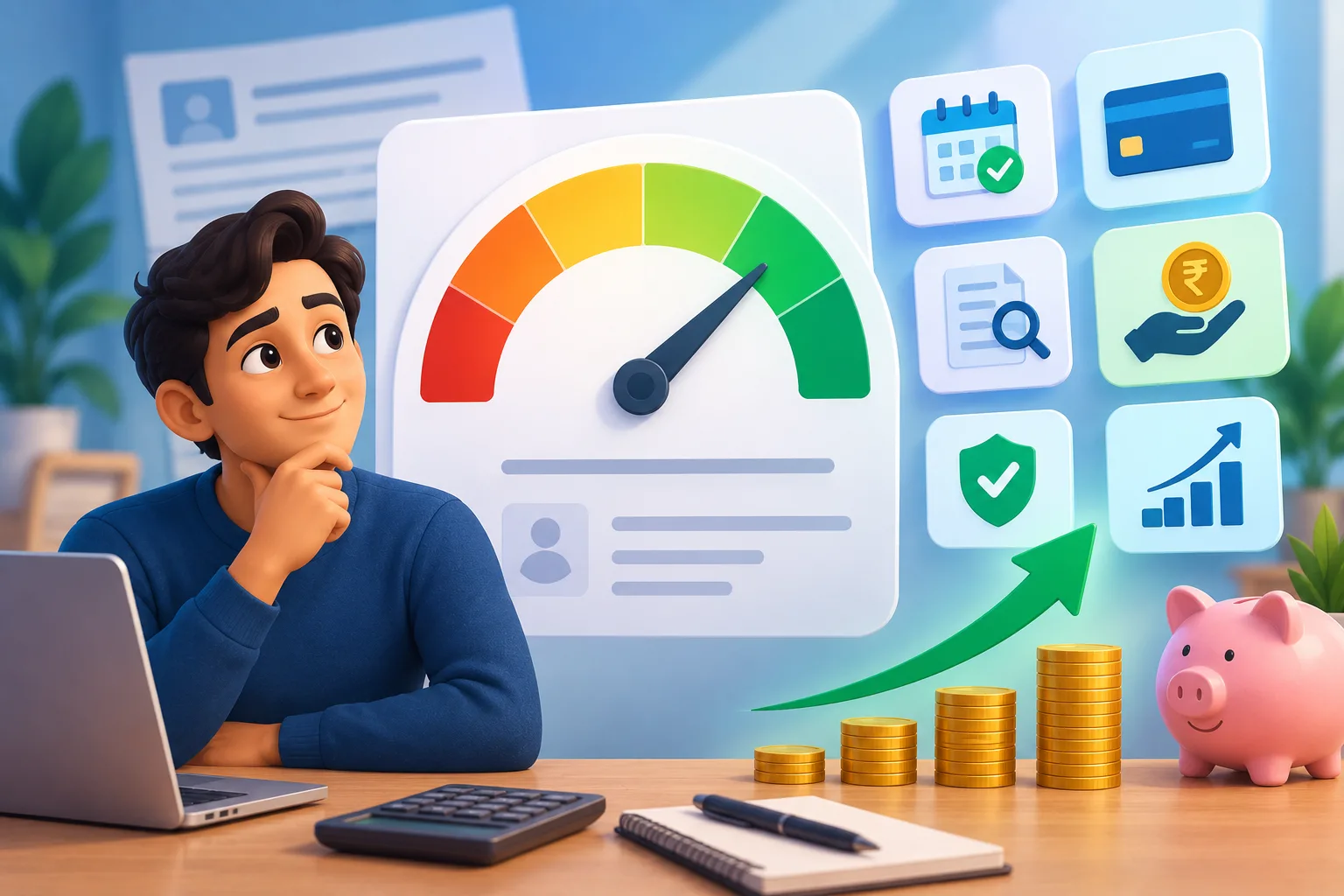
A CIBIL Score is a 3-digit summary of your credit history, ranging from 300 to 900. It is based on information in your CIBIL credit report, including repayment behaviour, credit utilisation, account history and recent credit enquiries. A higher score generally improves your chances of being considered for loans and credit cards, but lenders also evaluate income, existing debt and other eligibility factors.
What Is a CIBIL Score?
The CIBIL Score, provided by TransUnion CIBIL, reflects how you have managed credit over time.
Your CIBIL report can contain information about loans and credit cards, payment history, outstanding balances, active and closed accounts, and lender enquiries. The score helps lenders assess your past credit behaviour when reviewing a new application.
Importantly, CIBIL does not provide consumers with a simple public formula that can be used to calculate an exact score manually. Its scoring algorithm is proprietary.
How Is a CIBIL Score Calculated?
Several major factors influence your CIBIL Score calculation:
1. Payment History
Your payment history shows whether you repay EMIs and credit-card dues on time. Late payments, defaults and overdue amounts can negatively affect your credit profile.
Consistent, timely repayment is therefore one of the most important habits for maintaining a healthy CIBIL credit score.
2. Credit Utilisation
Credit utilisation refers to how much of your available revolving credit you are using.
For example, if your credit-card limit is ₹1,00,000 and your outstanding balance is ₹30,000, your utilisation is 30%.
Consistently using a large portion of your available limit can indicate higher dependence on credit and may negatively affect your profile.
3. Age or Depth of Credit
Your credit history provides lenders with evidence of how you have handled borrowing over time.
A longer history of responsibly managed accounts can help demonstrate stability. CIBIL also considers the duration of existing credit relationships when assessing credit profiles.
4. Credit Mix
Your credit profile may include secured credit, such as an auto or home loan, and unsecured credit, such as a personal loan or credit card.
A responsibly managed credit mix can contribute positively to your profile. However, you should never take a loan simply to create a particular credit mix.
5. New Credit Enquiries
When you apply for a loan or credit card, the lender may access your credit report and create an enquiry.
Multiple applications within a short period can indicate increased demand for credit and may negatively affect your credit profile.
7 Ways to Improve Your CIBIL Score in 2026
1. Pay Every EMI and Bill on Time
Make loan EMIs and credit-card payments before their due dates.
Set reminders or use automatic payment facilities where appropriate. A pattern of timely payments can help build a stronger credit history.
2. Keep Credit Utilisation Under Control
Avoid consistently using most of your available credit limit.
If you have high card balances, reducing them can lower your credit utilisation and improve your overall credit profile.
3. Avoid Multiple Loan Applications
Do not apply to several lenders simply to find out who will approve your application.
Instead, compare eligibility requirements, interest rates, fees and repayment terms first. Then apply selectively.
4. Check Your CIBIL Report for Errors
Review your CIBIL credit report regularly for incorrect account information, payment records, outstanding balances or unfamiliar enquiries.
If you identify an error, raise a dispute with CIBIL and, where appropriate, contact the concerned lender. CIBIL provides a process for reporting inaccuracies.
5. Maintain Older Credit Accounts Responsibly
A longer credit history can provide more information about your borrowing behaviour.
Before closing an old credit account, consider how it may affect your credit profile, particularly if it is one of your oldest accounts.
6. Build a Balanced Credit Profile
Focus on managing your existing credit responsibly rather than opening multiple accounts just to increase your credit history.
The objective should be sustainable borrowing, timely repayment and manageable debt.
7. Give Your Score Time to Recover
There is no legitimate instant method to increase a CIBIL Score.
If your score has fallen because of late payments or high balances, focus on correcting the underlying behaviour. Consistent repayment, controlled balances and accurate credit reporting can strengthen your profile over time.
What Is a Good CIBIL Score in 2026?
CIBIL Scores range from 300 to 900. Generally, a higher score indicates a stronger credit history and can improve your chances of being considered for credit.
However, there is no single good CIBIL Score that guarantees loan approval. Each lender can apply its own policies and may consider income, employment, existing EMIs, loan amount and other risk factors.
Can You Get a Loan With a Low or No CIBIL Score?
A low CIBIL Score can make borrowing more difficult and may result in stricter eligibility requirements, a lower sanctioned amount or less favourable pricing.
Someone with no established credit history is different from someone with a poor score. A new-to-credit borrower may simply have insufficient credit history for traditional scoring.
If your score is low, avoid submitting applications to many lenders. Instead, compare available options and check whether a lender considers additional factors such as income, bank-account behaviour and repayment capacity.
Depending on eligibility, some borrowers may explore no-CIBIL loan options or lenders that assess additional information beyond the traditional credit score. Before accepting any loan, compare the interest rate, fees, EMI, total repayment amount and lender terms.
How Often Should You Check Your CIBIL Report?
Checking your own CIBIL Score does not negatively affect your score. CIBIL recommends regularly monitoring your credit information so that you can identify errors or potential issues.
CIBIL currently provides one free CIBIL Score and Report per calendar year.
Final Takeaway
Improving your CIBIL Score in 2026 is mainly about consistent financial behaviour rather than quick fixes.
Pay your EMIs and credit-card bills on time, keep credit utilisation under control, avoid unnecessary loan applications, manage older accounts responsibly and check your CIBIL report for errors.
If you need a loan while rebuilding your credit profile, compare your available options carefully and focus on affordability. A loan should fit your repayment capacity, not simply be approved because you qualify.