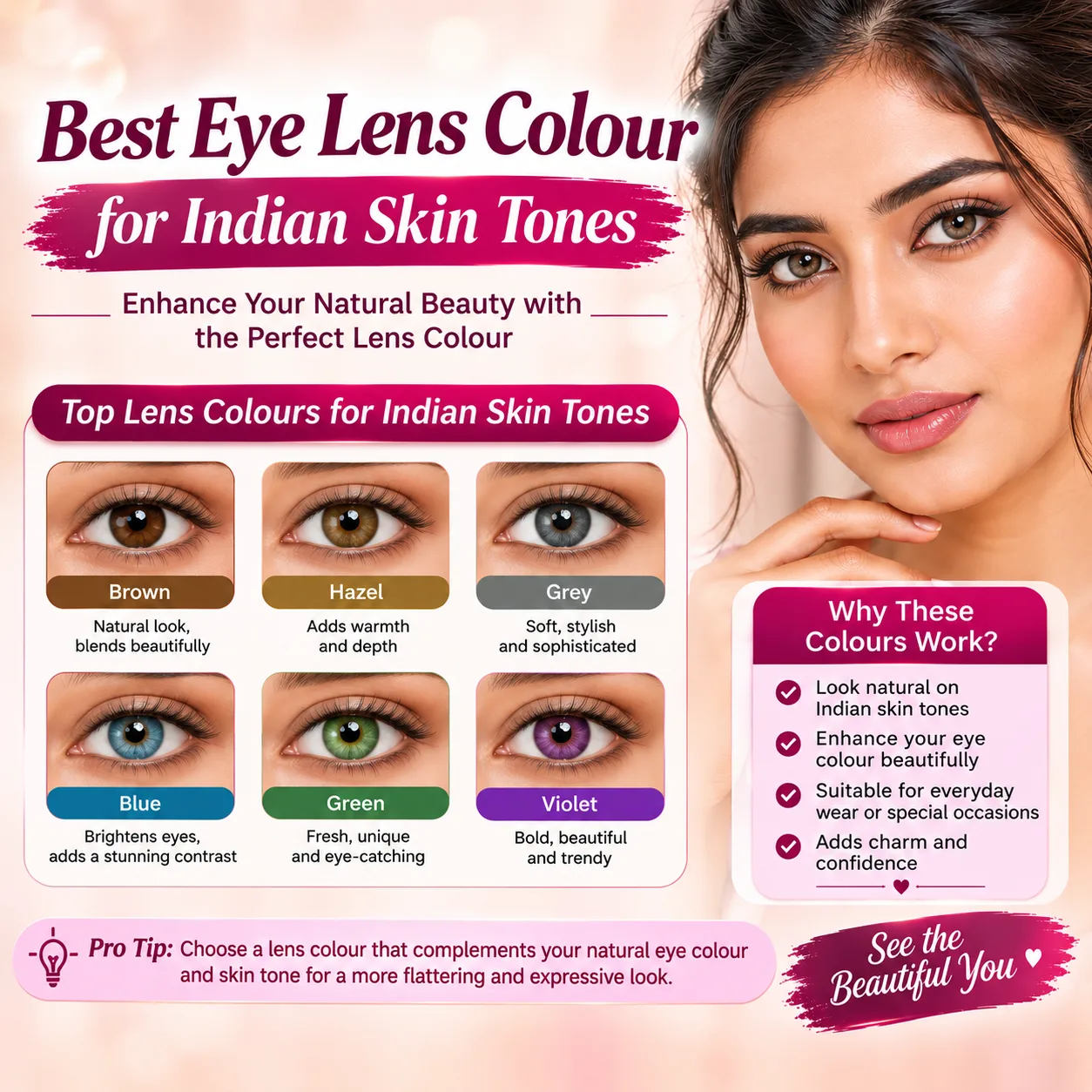
Coloured contact lenses have become a popular way to subtly transform one's appearance, but not every shade suits every complexion in the same way. For Indian skin tones, which range widely from fair to deep, and carry warm, cool, or neutral undertones, choosing the right lens colour requires a little more thought than simply picking a trending shade. This article looks at how skin undertone, eye shape, and personal style can guide a more informed choice.
Why Skin Tone Matters When Choosing Lens Colour
The relationship between skin tone and eye colour works similarly to how certain clothing colours complement or clash with a complexion. A lens shade that looks vibrant and natural on one person may appear jarring or artificial on another, simply because of how it interacts with the surrounding skin tone, hair colour, and even makeup preferences.
Indian skin tones are commonly grouped into a few broad categories: fair with warm or cool undertones, wheatish or medium with warm undertones, and deep or dusky tones, which often carry rich warm or neutral undertones. Understanding where one's complexion falls within this spectrum is a useful starting point before selecting a lens shade.
Understanding Undertones
Before choosing a colour, it helps to identify whether the skin has a warm, cool, or neutral undertone.
Warm undertones typically have golden, yellow, or peachy hues and are common across many Indian skin tones. People with warm undertones often find that earthy and warm lens colours blend more naturally with their complexion.
Cool undertones carry pink, red, or bluish hues beneath the skin. These tones tend to pair well with cooler, more muted lens shades.
Neutral undertones are a balance of both and offer more flexibility, as they tend to suit a broader range of lens colours without looking out of place.
A simple way to identify undertone is to check the veins on the inner wrist in natural light: greenish veins generally indicate a warm undertone, bluish or purplish veins suggest a cool undertone, and a mix of both often points to a neutral undertone.
Lens Colours That Complement Fair Skin Tones
For fair skin with warm undertones, shades such as honey, hazel, and light brown tend to look natural, as they echo tones already present in many Indian eye and hair colours. Cooler fair tones often pair well with grey or soft blue, which can create a striking yet believable contrast without appearing overly artificial.
Lens Colours That Complement Wheatish or Medium Skin Tones
Wheatish skin tones, which are among the most common across India, generally pair well with warmer lens shades such as hazel, amber, and chestnut brown. These colours tend to blend smoothly with the natural warmth of the complexion rather than standing out starkly. For those looking for a bolder change, deep green can also work well, offering contrast without feeling mismatched.
Lens Colours That Complement Deep or Dusky Skin Tones
Deep and dusky skin tones often carry rich undertones that pair beautifully with bold, saturated lens colours. Shades such as deep violet, rich green, and true grey tend to stand out elegantly against darker complexions, creating a striking visual contrast. Warmer ambers and honey tones also work well for a subtler, more natural-looking enhancement.
Considering Eye Shape and Natural Eye Colour
Beyond skin tone, the wearer's natural eye colour also plays a role. Lighter lens shades, such as grey or light blue, tend to appear more natural on individuals whose natural eye colour is already on the lighter brown spectrum, as the transition looks less abrupt. Those with very dark natural eyes may find that richer, more saturated colours like hazel, amber, or deep green offer a noticeable yet believable change, since these shades have enough depth to show through darker irises without looking artificial.
Occasion and Personal Preference
While skin tone offers a useful guideline, personal preference and the occasion also matter. A subtle honey or grey tone might suit everyday wear or office settings, while more vivid shades like violet or turquoise may be reserved for festive occasions, photoshoots, or special events where a bolder look feels appropriate.
A Few Practical Reminders
Regardless of which colour is chosen, it is worth remembering that lens quality and eye health should never be secondary considerations. Lenses should be sourced from reliable sellers with proper certification, fitted correctly to the individual's eye measurements, and used with proper hygiene practices. An eye examination before first use is advisable to confirm that the eyes are suitable for contact lens wear.
Final Thoughts
There is no single "best" lens colour that works universally for Indian skin tones, but understanding one's undertone, natural eye colour, and the occasion at hand can make the selection process far more intuitive. Ultimately, the best eye lens colour for Indian skin feels natural to the wearer, complements their complexion, and is worn safely with attention to lens quality and proper eye care.