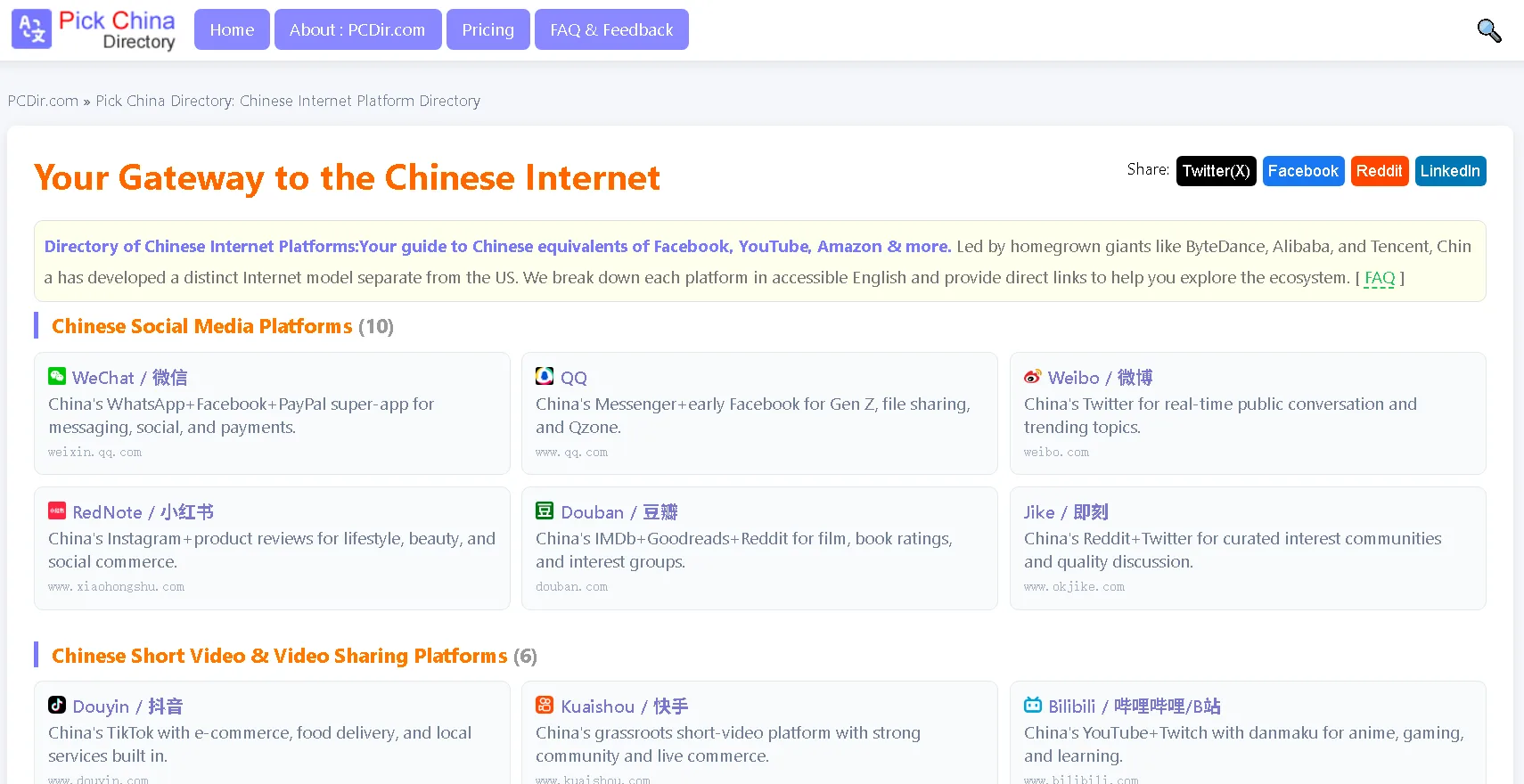
China's internet looks familiar at first glance and behaves differently once you use it. The apps cover the same daily needs as their American counterparts — chatting, shopping, watching video, paying bills — yet they grew up inside a separate market with its own rules, and that history shaped products that have no exact Western twin. A practical way to orient yourself is to map each major Chinese platform to the American service it most resembles, then note where the analogy breaks. Search, news, travel, and fintech each add their own twist, so a single familiar label rarely tells the whole story, and checking real usage always beats guessing from logos.
Why a Parallel Ecosystem Emerged
The largest United States social and search platforms do not operate in mainland China, so domestic companies filled every gap. Early clones gradually diverged as competition, regulation, and language pushed them in new directions. The smartphone boom accelerated the split: with mobile adoption outpacing desktop, firms built app-first experiences and treated websites as secondary. Some merchants now run their entire business inside a chat application and maintain no standalone site at all.
Messaging First, Everything Else Inside
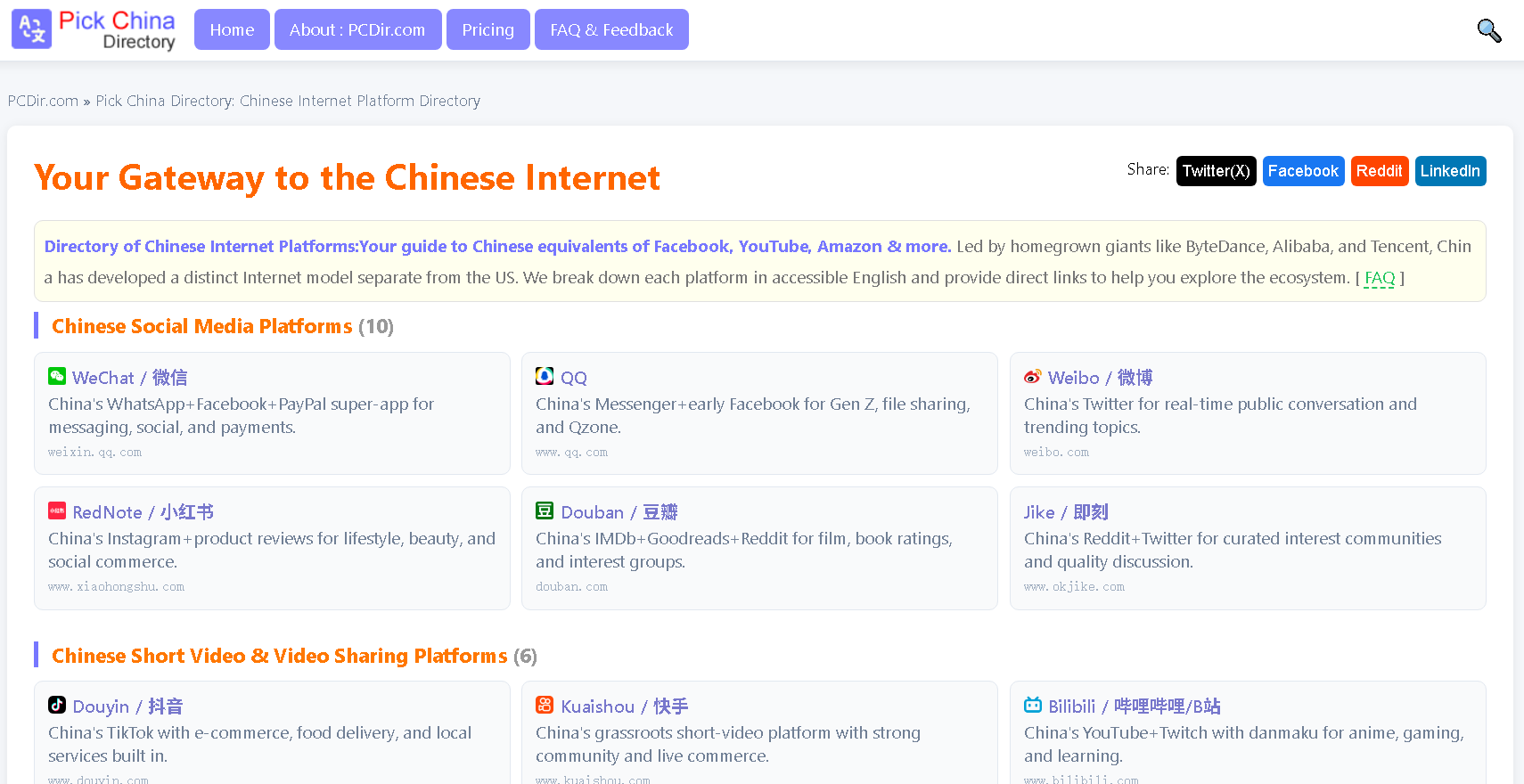
The clearest example is WeChat, often compared to WhatsApp but far broader in scope. Beyond messaging it hosts payments, official accounts from media outlets, appointment booking, and millions of mini-programs that replace standalone apps. A visitor who expects a simple chat tool is surprised to find an operating layer for daily life. For a structured overview of which services occupy each niche, Pick China Directory pairs each Chinese platform with its closest American equivalent so newcomers can place unfamiliar names within seconds.
Shopping, Video, and the App-First Habit
E-commerce shows the same pattern of familiar need and unfamiliar form. Taobao and JD serve the role Amazon plays in the United States, while Pinduoduo added team-based discount buying that turned shopping into a social game, complete with shared carts and countdown deals that reward inviting friends. Payments close the loop: Alipay and WeChat Pay handle street vendors and subway fares alike, so cash and cards feel redundant to younger shoppers. Short video belongs to Douyin, whose international sibling TikTok shares the format but not the content pool, the live-commerce plugins, or the deep tie-ins with product listings. Long-form video splits across iQiyi, Tencent Video, and Bilibili, each mixing licensed dramas with creator communities and fan commentary in proportions that differ from YouTube or Netflix. Music and podcast apps, gaming portals, web-novel platforms, and AI assistants each follow the same script: a recognizable category, populated by local leaders with features tuned to domestic habits.
How to Explore Without Getting Lost
Two contrasts are worth keeping in mind. First, several categories have multiple Chinese answers to one American question: the counterpart of YouTube is several platforms rather than one, and the same holds for news, search, and travel booking, where Meituan, Ctrip, and Amap each dominate a slice. Second, the surviving desktop websites are often clunkier than their apps, because development effort follows users onto phones, and some firms have retired their sites entirely. News gathering leans on Toutiao recommendations, search queries route through Baidu with heavier advertising density, and travel planning lives inside super-apps rather than on the open web. Anyone researching the market should therefore test the mobile version first, walk through more than twenty categories from social media to fintech, and confirm which app locals actually open each day rather than trusting brand recognition alone. That habit turns a confusing list of names into a usable map, and it keeps your expectations aligned with how people in China actually go online.