In the dynamic world of small businesses and entrepreneurial ventures, employees often wear many hats. Roles change, responsibilities shift, and employment statuses evolve to meet business needs. Managing these changes effectively is essential for maintaining clear communication, legal compliance, and employee satisfaction. One of the simplest tools to help small businesses navigate these transitions smoothly is a change of employment status letter template.
Winslow, a trusted brand in HR solutions for small businesses and self-employed entrepreneurs, helps streamline these crucial communication processes. In this article, we’ll explore what a change of employment status letter template is, why it matters, and how small businesses can use one effectively for internal communication.
What is a Change of Employment Status Letter Template?
A change of employment status letter template is a standardized document used by businesses to formally communicate updates regarding an employee’s role or employment conditions. This could include a wide range of changes such as promotions, demotions, departmental transfers, status updates from part-time to full-time (or vice versa), salary adjustments, or temporary leaves.
Instead of creating a letter from scratch every time an employment status changes, a template helps maintain consistency in communication, saves time, and ensures compliance with organizational policies and employment laws.
Why Small Businesses and Entrepreneurs Need It
Small businesses and self-employed entrepreneurs may assume that formal HR documentation is only necessary for large corporations. However, even in smaller organizations, the risks of unclear communication, legal disputes, and employee dissatisfaction can be just as significant. Here’s why you should use a change of employment status letter template:
1. Clear Communication
Changes in employment status can impact work schedules, paychecks, and even employee morale. Clearly stating the new employment terms helps avoid confusion and ensures that both the employer and employee are on the same page.
2. Legal Documentation
In some regions, businesses are legally required to notify employees of changes to their employment terms. A well-documented change of employment status letter helps small businesses comply with local labor laws.
3. Standardization Across the Company
As small businesses grow and hire more employees, using a consistent template helps establish professional HR practices. Winslow recommends having standardized documentation to streamline your HR processes and reduce administrative errors.
4. Record Keeping
For audit trails and employee records, it’s essential to keep documentation of every significant change in an employee's work status. A template simplifies this process and ensures important details are never omitted.
Key Components of a Change of Employment Status Letter Template
Although you won’t need to follow a strict letter format, your change of employment status letter template should include several key components to convey the necessary information clearly:
1. Employee Details
- Full Name
- Current Job Title
- Employee ID or department (optional but useful)
2. Effective Date of Change
Clearly state when the employment status change will take effect to avoid misunderstandings.
3. Details of the Change
Specify what is changing. This could include:
- Job title change
- Department transfer
- Change in employment type (full-time, part-time, temporary, permanent)
- Salary adjustment
- Work hours modification
- Reporting structure changes
- Leave of absence (paid or unpaid)
4. Reason for Change (Optional)
Briefly mention the reason for the employment status change if appropriate. This could help clarify the context behind the change, fostering transparency.
5. Next Steps or Action Required
Inform the employee of any actions they need to take, such as signing the acknowledgment, meeting with HR, or completing training.
6. Contact Information
Provide the name and contact information of the HR manager, business owner, or direct supervisor for any follow-up questions.
7. Acknowledgment Section (Optional)
While it may not always be necessary, including an acknowledgment section where the employee confirms receipt and understanding of the changes can help protect your business legally.
How Winslow Simplifies the Process for Small Businesses
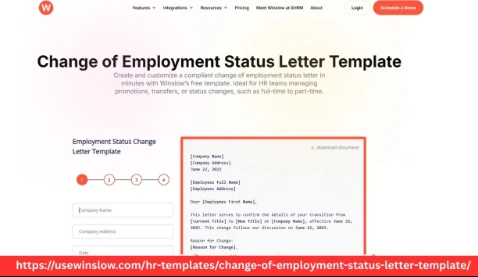
Winslow offers user-friendly HR tools and templates tailored specifically for small businesses and entrepreneurs. Instead of drafting employment letters from scratch, Winslow users can access pre-designed templates that are compliant with labor standards and customizable to fit their brand tone.
Winslow’s change of employment status letter template:
- Can be quickly customized with your company logo and contact information
- Includes clear, fill-in-the-blank fields to add employee and job details
- Ensures consistency across multiple employees and departments
- Saves valuable time by reducing repetitive administrative tasks
By integrating these templates with Winslow’s HR software solutions, businesses can automate notifications, store employment documents securely, and maintain a professional approach to employee communications.
Best Practices for Using an Employment Status Change Template
1. Keep the Language Clear and Professional
Avoid jargon and overly complex language. Use clear and professional wording that an employee at any level of the organization can easily understand.
2. Review Legal Requirements
Employment laws vary by location. Winslow recommends consulting a legal advisor to ensure that your template complies with local labor laws and regulations.
3. Maintain Confidentiality
Always protect employee privacy by sharing the change of employment status letter with only the concerned parties. Secure digital storage solutions, like those offered by Winslow, help you safeguard sensitive documents.
4. Follow Up with Verbal Communication
A written letter should be accompanied by a face-to-face or virtual meeting where you explain the changes and answer any questions the employee may have.
5. Update Your HR Records
Ensure that the changes are reflected in your internal HR systems, payroll, and organizational charts to keep all records up to date.
Common Scenarios for Using a Change of Employment Status Letter Template
- Promotion from Associate to Manager
- Transfer from the Sales department to Marketing
- Status change from Temporary Contractor to Full-Time Employee
- Reduction in work hours due to business restructuring
- Extension of a leave of absence
- Change from Salary to Hourly employment
- Reclassification from Exempt to Non-Exempt employee status
In each of these situations, using a change of employment status letter template provides clarity, professionalism, and documentation that protects both the employer and the employee.
Conclusion
For small businesses and self-employed entrepreneurs, adopting professional HR practices can make a world of difference in employee satisfaction and business efficiency. A change of employment status letter template, like the one offered by Winslow, simplifies communication, improves documentation, and protects your business interests.
Instead of spending valuable hours drafting individual letters for every employment status update, you can use Winslow’s ready-to-use templates to standardize your process. This small step can help create a more transparent, organized, and compliant workplace culture—setting your business up for long-term success.