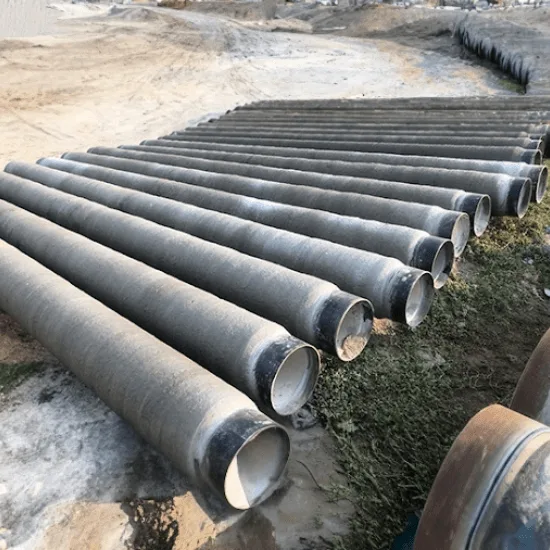
Water infrastructure requires reliable piping solutions that can withstand continuous water flow, internal corrosion, and demanding operating conditions. Cement lined steel pipes have become an important choice for municipal water supply networks, treatment plants, and large-scale distribution projects. Choosing a trusted Cement Lined Steel Pipe Supplier helps infrastructure developers obtain pipes designed for durability, consistent performance, and long-term water transportation requirements. Their protective cement mortar lining provides an internal barrier that helps reduce direct contact between water and the steel pipe surface.
1. Water Treatment Plants
Water treatment facilities require piping systems capable of transporting untreated and treated water through different processing stages. Cement lined steel pipes are used in suitable water treatment applications because their internal cement mortar lining helps protect the steel surface from corrosion.
These pipes can be incorporated into raw water intake systems, filtration units, sedimentation facilities, and treated water transfer networks, depending on the project's design requirements. Their structural strength also makes steel pipes suitable for installations where larger diameters and specific pressure ratings are required.
By selecting appropriate pipe dimensions, lining specifications, and installation methods, treatment plant developers can establish dependable water transportation infrastructure.
2. Municipal Water Distribution Networks
Municipal water distribution systems connect treatment plants, reservoirs, pumping stations, and residential areas. These networks often cover extensive distances and operate continuously to meet the water requirements of growing populations.
Cement lined steel pipes are suitable for various municipal water distribution applications because they combine the mechanical strength of steel with the protective properties of cement mortar lining. The lining helps minimize internal corrosion and supports the long-term performance of pipelines when properly manufactured and installed.
For urban infrastructure projects, working with an experienced Cement Lined Steel Pipe Supplier can help project contractors source pipes according to specified diameters, wall thicknesses, pressure requirements, and lining standards.
3. Drinking Water Transmission Pipelines
Safe drinking water transportation is an essential requirement for residential communities, commercial developments, and public infrastructure. The internal condition of a pipeline can influence water quality, making suitable pipe protection an important consideration during project planning.
Cement mortar lining creates a protective internal surface that helps reduce corrosion of the steel substrate. Properly manufactured and cured lining can also provide a suitable hydraulic surface for water transportation.
For potable water applications, project designers should verify that the cement lining materials, manufacturing procedures, and finished pipes comply with the applicable drinking water requirements and relevant standards.
This makes cement lined steel pipes a valuable option for appropriately designed drinking water transmission systems.
4. Industrial Water Supply Systems
Industries such as power generation, manufacturing, mining, and chemical processing require dependable water supply infrastructure for operational activities. Their water transportation requirements can involve high flow rates, specific pressure conditions, and extensive pipeline networks.
Cement lined steel pipes can be used in suitable industrial water applications, including cooling water circulation, process water transportation, and utility water distribution.
The steel pipe structure offers mechanical strength, while the cement mortar lining provides internal protection against corrosion under suitable operating conditions. However, the water chemistry, temperature, and operating environment should always be evaluated before selecting the lining system.
5. Raw Water Intake and Pumping Stations
Raw water intake systems transport water from rivers, lakes, reservoirs, and other sources to treatment facilities. These pipelines may require large diameters and sufficient structural strength to handle project-specific hydraulic and installation conditions.
Cement lined steel pipes can support raw water transportation between intake structures and pumping stations. Their suitability depends on factors such as water characteristics, flow velocity, pressure, and pipeline design.
At pumping stations, these pipes may also be used in selected suction and discharge pipeline arrangements. Correct engineering specifications and suitable joint protection are essential for reliable operation.
6. Irrigation and Agricultural Water Distribution
Agricultural infrastructure depends on efficient water transportation to support irrigation networks, reservoirs, and distribution channels. Large-scale irrigation projects often require pipelines that can transport substantial water volumes across agricultural regions.
Cement lined steel pipes provide a practical option for selected irrigation applications because of their structural strength and internal corrosion protection. They can be incorporated into main water transmission lines, pumping systems, and distribution networks.
Their selection should consider soil conditions, water quality, installation depth, operating pressure, and maintenance accessibility. Properly designed pipelines can contribute to dependable agricultural water distribution.
7. Wastewater and Reclaimed Water Transportation
Water reuse and wastewater management infrastructure require piping systems that can accommodate specific chemical and hydraulic conditions.
Cement lined steel pipes may be considered for certain wastewater conveyance and reclaimed water applications, provided the transported fluid is compatible with the cement mortar lining. Aggressive wastewater containing high concentrations of chemicals or sulphates may require alternative or specially designed protective systems.
Therefore, engineers should evaluate fluid composition, pH levels, temperature, and exposure conditions before finalizing the pipe material and lining specifications.
8. Reservoir Connections and Long-Distance Water Transmission
Water reservoirs help maintain storage capacity and regulate supply across municipal and industrial networks. Connecting these storage facilities with treatment plants, pumping stations, and distribution systems requires dependable transmission pipelines.
Cement lined steel pipes can be used in reservoir inlet and outlet connections, bulk water transmission networks, and other large-scale infrastructure applications.
Their availability in project-specific diameters and wall thicknesses makes them useful for engineered pipeline systems. Proper jointing, installation, pressure testing, and maintenance practices further support pipeline reliability.
How to Select the Right Cement Lined Steel Pipes
Choosing suitable pipes involves more than comparing dimensions and prices. Project owners and contractors should evaluate several technical and commercial factors before procurement.
Important considerations include:
- Pipe specifications: Check the required outside diameter, wall thickness, steel grade, and pressure rating.
- Lining requirements: Confirm cement mortar composition, lining thickness, application method, and curing requirements.
- Quality standards: Verify compliance with relevant project specifications and applicable industry standards, such as AWWA C205 where appropriate.
- Inspection procedures: Review dimensional checks, lining inspection, testing records, and quality documentation.
- Project requirements: Consider transportation distance, installation conditions, water characteristics, and delivery schedules.
Partnering with a dependable Cement Lined Steel Pipe Supplier helps contractors and infrastructure developers coordinate their procurement requirements with the technical needs of their projects.
Conclusion
Cement lined steel pipes play an important role in modern water infrastructure, supporting applications ranging from treatment plants and municipal distribution networks to industrial water supply and long-distance transmission pipelines. Their combination of steel strength and internal cement mortar protection makes them a suitable choice for many water transportation requirements.
For infrastructure developers, selecting the right Cement Lined Steel Pipe Supplier is an important step toward obtaining pipes that meet project specifications and performance expectations. Karoli Pipes offers cement lining-related solutions for industrial piping requirements. Explore its cement lined steel pipe supplier solutions to learn more about its product offerings and discuss your project requirements.
Other Recommendations: MS Plate Suppliers In Hyderabad