The demand for cement rarely exists in isolation. Wherever a new housing project begins, a commercial complex rises, a highway expands, or industrial infrastructure develops, cement becomes one of the first materials to enter the supply chain. Behind every successful construction project is a distribution network that ensures material reaches the site on time and in the right condition.
This is one of the reasons a cement dealership continues to attract entrepreneurs looking to enter the building materials sector. The business is closely linked to construction activity, infrastructure investment, and regional development. However, operating a dealership involves much more than stocking cement bags and serving customers.
Manufacturers expect dealers to maintain proper documentation, adequate storage facilities, and efficient logistics systems. Contractors expect consistent availability. Builders expect timely deliveries. Retail customers expect reliable service. Meeting these expectations requires operational readiness from day one.
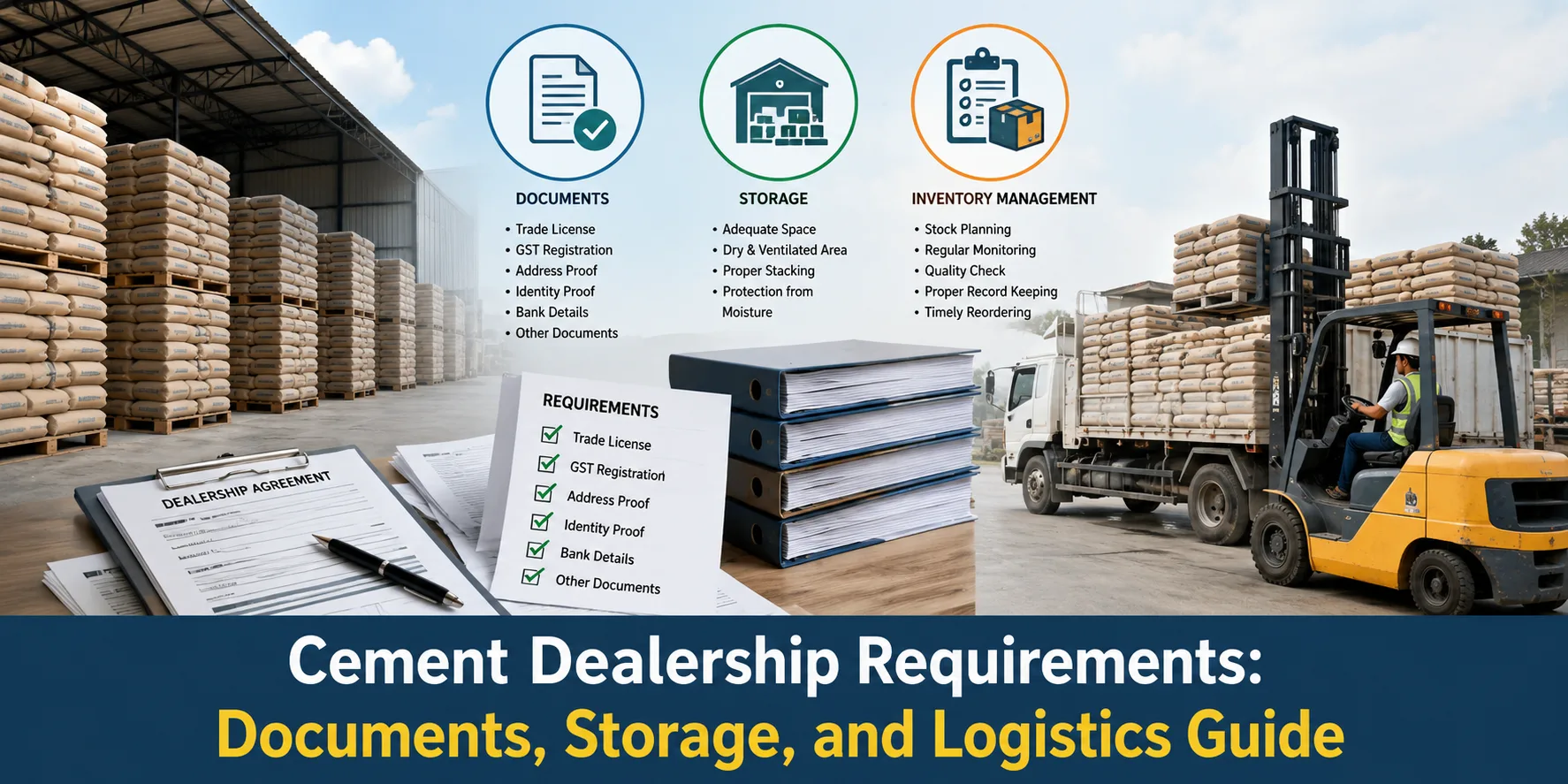
Before applying for a dealership, it is important to understand the requirements that support long-term business success. Documents establish credibility, storage protects product quality, and logistics ensure uninterrupted supply. Together, these three elements form the foundation of a sustainable cement dealership operation.
Understanding What Manufacturers Look for in a Cement Dealership
When a cement company appoints a dealer, it is not simply expanding its sales network. It is selecting a business partner that will represent the brand in a particular market.
Manufacturers evaluate whether an applicant has the financial capability, infrastructure, storage capacity, and operational systems required to manage inventory effectively. They also assess whether the dealership can maintain a reliable supply chain and support customer demand in the region.
For this reason, dealership approval is typically based on operational preparedness rather than interest alone.
Documents Required to Establish Business Credibility
The documentation process is one of the first steps in securing a cement dealership. These documents help manufacturers verify the legal, financial, and operational status of the applicant.
Identity and Address Verification
Every dealership application begins with basic verification requirements. Manufacturers need to establish the identity of the applicant and confirm the business location.
Commonly required documents include government-issued identity proof, address proof, and PAN-related documentation.
This step forms the basis of dealership registration and future business transactions.
Business Registration Documents
If you intend to operate the dealership through a registered business entity, supporting registration documents become necessary.
Depending on the business structure, these may include proprietorship records, partnership documentation, LLP registration certificates, company incorporation certificates, and GST registration details.
These records demonstrate that the business is legally established and capable of conducting commercial operations.
Financial Documentation
Cement distribution requires significant working capital. Inventory procurement, transportation expenses, labour costs, and operational overheads must all be managed efficiently.
As a result, manufacturers frequently request financial documents such as bank statements, financial records, and income tax filings. These documents help assess whether the applicant can maintain inventory levels and support ongoing business operations.
Why Storage Infrastructure Is a Critical Requirement
Many prospective dealers focus primarily on obtaining approval. In reality, storage infrastructure plays an equally important role in the success of a cement dealership.
Unlike some building materials, cement is highly sensitive to storage conditions. Exposure to moisture can affect its quality and usability. This means the warehouse is not simply a storage area; it is a facility responsible for preserving product performance until delivery.
Adequate Storage Capacity
A dealership must be capable of maintaining inventory levels that support local market demand.
Storage capacity should be planned based on projected sales volume, seasonal fluctuations, and future expansion requirements. Insufficient storage can lead to stock shortages, while poorly planned inventory management can increase operational costs.
Manufacturers generally prefer dealers who can demonstrate adequate warehousing capability before appointment.
Protection Against Moisture and Environmental Exposure
One of the primary objectives of cement storage is preventing moisture ingress.
Warehouse facilities should provide proper roofing, effective drainage systems, elevated flooring, and sufficient protection against water exposure. Cement bags should never come into direct contact with the ground because moisture migration can compromise product quality.
Maintaining appropriate storage conditions protects inventory value and reduces avoidable losses.
Inventory Handling and Warehouse Management
Efficient storage is not only about space availability. It also involves inventory movement and stock control.
Organized stacking systems, clear access routes, inventory rotation practices, and regular stock monitoring improve operational efficiency. These practices reduce product damage while ensuring older inventory is dispatched before newer stock.
For a growing cement dealership, warehouse management becomes a key contributor to profitability and customer service.
Logistics Determines How Efficiently the Business Operates
Even with strong sales demand and adequate inventory, a dealership cannot function effectively without a reliable logistics system.
Construction projects operate according to schedules. Delayed deliveries can affect project timelines, contractor productivity, and customer relationships. This makes logistics one of the most important operational functions within a dealership.
Transportation Planning
Cement is a high-volume, heavy-construction material that requires efficient transportation management.
Whether deliveries are handled through owned vehicles or third-party transport providers, the objective remains the same: ensuring products reach customers safely and on schedule.
A structured transportation strategy helps reduce delays, optimize delivery routes, and improve overall service quality.
Inventory Replenishment and Supply Continuity
One of the most important responsibilities of a dealer is maintaining a balance between inventory availability and working capital utilization.
Excessive stock increases storage costs and locks up capital. Insufficient stock creates supply disruptions and lost sales opportunities.
Successful dealerships continuously monitor stock movement patterns, sales trends, and replenishment schedules to maintain consistent product availability.
Last-Mile Delivery Performance
The final stage of the supply chain directly influences customer satisfaction.
Builders and contractors depend on timely deliveries to maintain project progress. A dealership that consistently delivers on schedule develops stronger customer relationships and improves retention rates.
In many markets, operational reliability becomes a significant competitive advantage.
Final Thoughts
Entering the cement distribution industry requires more than securing a dealership appointment. It requires building the operational systems necessary to support inventory management, product protection, and efficient delivery.
For anyone planning to establish a cement dealership, understanding the requirements related to documents, storage, and logistics is the first step toward creating a stable and scalable business. A dealership that combines regulatory compliance with strong operational infrastructure is better positioned to meet market demand, build customer trust, and achieve long-term success in a highly competitive industry.