
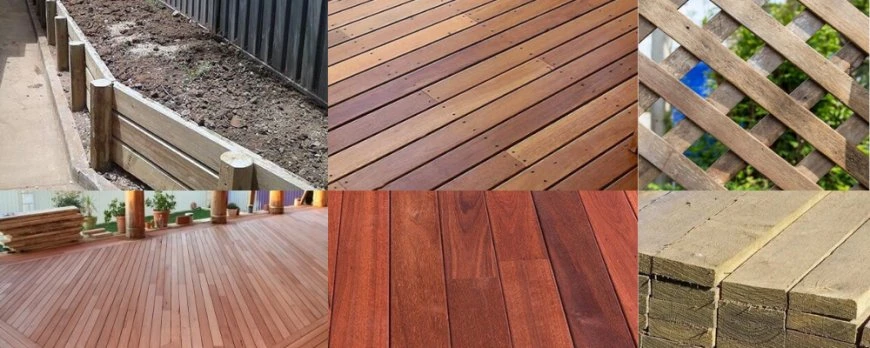
Homeowners planning deck construction on their property have a major question: whether treated pine will hold up outdoors or if they should go with hardwood sleepers for landscaping. The truth lies between these two names, and the right selection comes down to treatment type, durability, and how the timber will be used in real Australian conditions. The performance of treated pine relies heavily on CCA and ACQ treatments, and the treatment also decides the way the timber will handle challenging outdoor conditions in Australia. Once adequately treated, pine stops behaving like softwood and no longer struggles in challenging weather conditions. It converts into structural timber that builders and landscapers can trust for processes like deck construction, retaining wall construction, and fencing installations, regardless of region, weather conditions, or climate type.
WHY TREATED PINE BECAME SO POPULAR IN AUSTRALIA?
Australian builders, landscapers, and homeowners often select durable materials without considering price or appearance. For them, durability matters particularly when selecting raw materials for outdoor construction, because climate conditions are always harsh and challenging. This is where treated pine ticks all the requirements like –
· Widely available across Australia
· Significantly cheaper than most hardwood species
· Easy to cut, nail and install
· Consistent sizing and grading
· Resistant to termites and fungal decay once treated
Treated pine suppliers have this material available in a wide range of sizes and treatment classes. This further makes it easier to source material for pergolas, retaining walls, fencing installations, and, most importantly, treated pine dating. The real difference lies in the type of treatment used, as without it, pinewood rarely survives the harsh outdoor conditions.
UNDERSTANDING CCA TREATED PINE
CCA stands for COPPER CHROME ARSENATE and it is a preservative mixture used in Australia for decades to protect timber from insects, rotting, decaying, and moisture-borne damage. The name may sound intimidating, but CCA treatment remains the most widely accepted and used in Australia, particularly for timber used in outdoor applications.
KEY CHARACTERISTICS OF CCA TIMBER
· Excellent resistance to termites and borers
· Long lifespan in outdoor environments
· Strong performance in structural landscaping
· Lower cost compared with many hardwoods
CCA treatment penetrates deeply into the timber fibre to deliver protection that needs to perform reliably in situations where untreated timber rots within a couple of seasons. Common applications of CCA-treated pine include the following.
· Retaining wall sleepers
· Structural landscaping
· Fence posts
· Garden edging
· Pergola framing
Australia regulates treated timber under strict standards set by THE AUSTRALIAN PESTICIDES AND VETERINARY MEDICINES AUTHORITY (APVMA) to ensure a safe treatment level for timber used in construction processes. For landscaping projects in particular, CCA-treated pine is considered the best, as it is a perfect balance of durability and affordability.
WHAT MAKES ACQ TREATED PINE DIFFERENT?
ACQ stands for ALKALINE COPPER QUATERNARY, and it is a new preservative developed as an alternative to CCA for some particular settings. ACQ-treated timber relies heavily on copper-based compounds to resist decay, rot, and damage from insects and pests. There are no arsenic compounds, and this makes it suitable for areas where people come into contact with timber frequently.
TYPICAL USES FOR ACQ-TREATED TIMBER
· Treated pine decking
· Outdoor furniture structures
· Handrails and balustrades
· Children's play equipment
According to treated pine suppliers, ACQ-treated timber performs exceptionally well above-ground where moisture exposure remains moderate. This is why ACQ-treated pine is the first choice when it comes to constructing treated pine decking because there is a balance of durability and safety needed in the residential environment.
One important factor to consider is that ACQ treatment may require corrosion-resistant fasteners. The copper content in ACQ can react with standard steel screws and nails over time, accelerating corrosion. Treated pine suppliers therefore recommend stainless steel or galvanised fixing and screws while installing treated pine decking using ACQ-treated pine.
HARDWOOD: STRENGTH COMBINED WITH A HIGHER PRICE TAG
Hardwood is the top choice among many landscapers, builders and renovators. Species such as spotted gum and ironbark offer excellent strength and natural durability.
However, there are some trade-offs associated with hardwood that landscape and builders are fully aware of.
ADVANTAGES OF HARDWOOD TIMBER
· Extremely strong and dense
· Naturally durable in outdoor environments
· Attractive grain patterns
· Long lifespan when maintained properly
DOWNSIDES COMPARED WITH TREATED PINE
· Significantly higher cost
· Heavier and harder to work with
· Often requires pre-drilling
· Availability varies depending on the region
Despite these drawbacks, hardwood remains a perfect raw material for premium projects, where appearance has a major role. For example, outdoor decking and featured landscaping are constructed using hardwood for its strength, durability and visual appeal. For larger structural applications like retaining walls and framing, treated pine emerges as a better, more value-driven product. THE FOREST AND WOOD PRODUCTS AUSTRALIA (FWPA) also clarifies that treated softwood products are a sustainable building material because plantation pine regenerates quickly compared to hardwood species used in Australia.
TREATMENT LEVEL IS MORE IMPORTANT THAN THE TIMBER TYPE
A common mistake that homeowners make is that they choose timber without understanding the treatment level, type and the process. Australia uses hazard classes to indicate how well timber resists environmental exposure.
COMMON TREATED PINE HAZARD RATINGS
· H2 – interior framing, termite resistance
· H3 – exterior above-ground use (fencing, decking)
· H4 – ground contact applications
· H5 – heavy structural and marine environments
Treated pine decking usually falls in H3 category and this means the timber exposed to weather conditions will remain protected, but constant soil contact will cause faster wear down and structural breakdown. Similarly, retaining wall sleepers, the right hazard level is more important than the type of timber chosen.
COST COMPARISON: TREATED PINE VS. HARDWOOD
Budget can influence material decisions really strongly, particularly in outdoor structures like treated pine decking. Across Australia, treated pine is 70% less expensive than hardwood, but this depends on the species and the supplier. The difference becomes substantial in larger structures, and a typical backyard retaining wall will require dozens of sleepers. Hardwood, if chosen, will likely push the budget into the thousands of dollars, compared to treated pine.
Builders frequently choose treated pine in these situations because:
· Structural performance remains reliable
· Replacement costs stay manageable
· Timber remains easy to source locally
A quick discussion with reputable treated pine suppliers often reveals the best treatment class for the job.
INSTALLATION AND MAINTENANCE DIFFERENCES
Timber performance rarely depends on the timber alone, and installation and maintenance play a huge role.
TREATED PINE
· Easier to cut and shape on-site
· Accepts stains, oils and paints well
· Requires sealing for best longevity in exposed areas
· May warp slightly during drying if not fixed correctly
HARDWOOD
· Requires more effort to drill and fix
· Holds structural shape well
· Needs regular oiling to maintain colour
· Higher upfront installation costs
HOW TO SELECT THE RIGHT TIMBER FOR YOUR PROJECT?
Every outdoor project has different requirements in terms of timber, and you can use this simple guide when contacting treated pine suppliers.
CHOOSE TREATED PINE WHEN:
· Budget matters
· You need large quantities of timber
· The project involves framing or structural landscaping
· Easy installation is important
CHOOSE HARDWOOD WHEN:
· Visual appeal matters most
· The project involves feature decking or high-end landscaping
· You want extremely dense timber with natural durability
For many Australian properties, treated pine handles the majority of outdoor construction tasks without pushing budgets too far.
FAQs
IS TREATED PINE SAFE FOR RESIDENTIAL DECKS?
· When correctly treated and installed, treated pine meets Australian building standards.
· ACQ-treated pine is used for residential decking and outdoor structures.
HOW LONG DOES TREATED PINE LAST OUTDOORS?
· Properly treated pine can last 15–40 years.
· This depends on hazard class, installation method and exposure to moisture.
DOES TREATED PINE NEED SEALING?
· Applying oil or sealant improves moisture resistance.
· It helps prevent cracking or warping in harsh Australian weather.
IS HARDWOOD STRONGER THAN TREATED PINE?
· Most hardwood species are naturally denser and stronger.
· Treated pine still performs very well in structural landscaping and construction.
WHICH TIMBER IS BETTER FOR RETAINING WALLS?
· H4 or H5 treated pine sleepers usually work well.
· Hardwood sleepers also perform strongly but cost significantly more.