
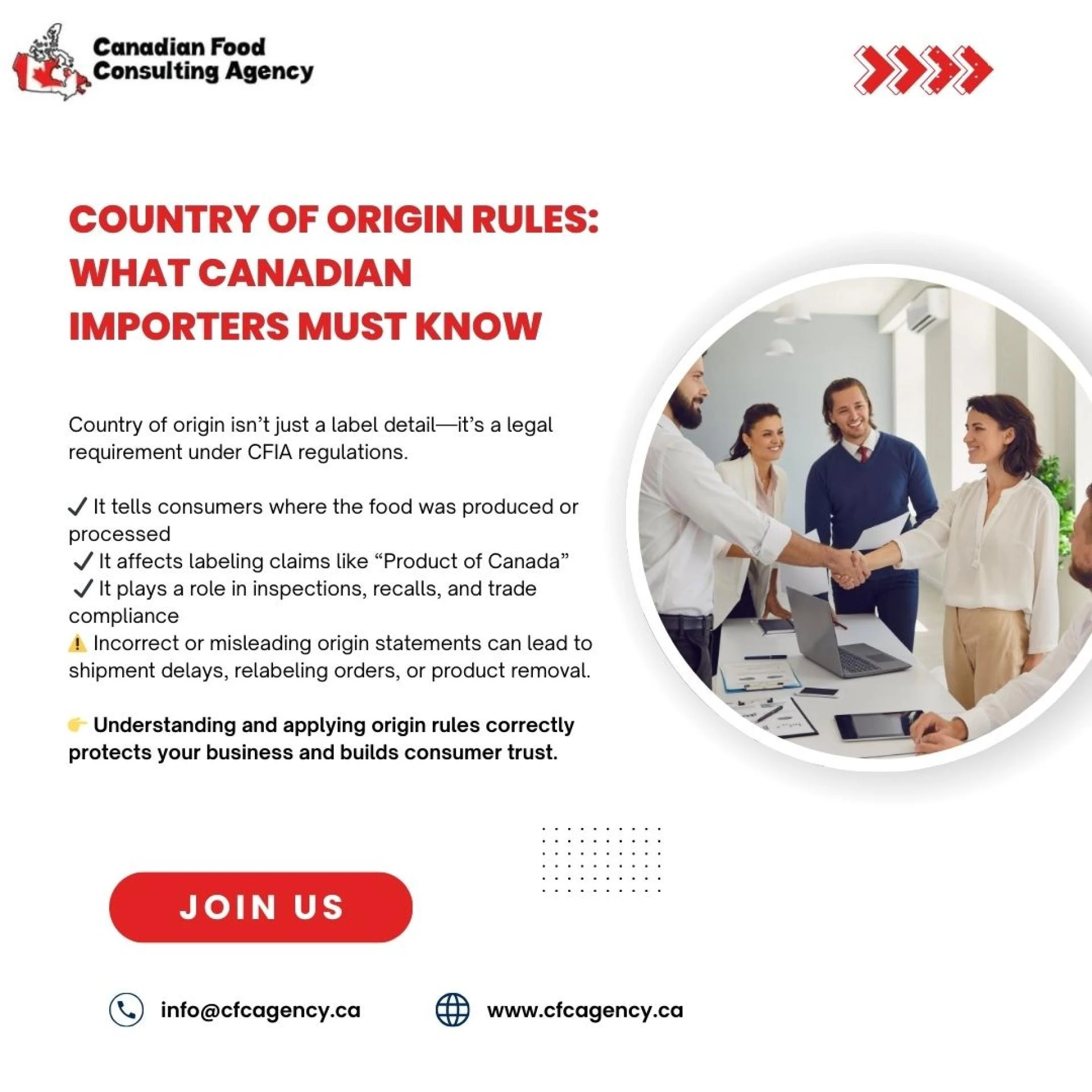
The Canadian food market is one of the most robust and highly regulated in the world. For international manufacturers and local businesses looking to bring products across the border, the landscape is governed by the Safe Food for Canadians Act (SFCA) and the Food and Drugs Act (FDA). Navigating these complex legal frameworks requires precision, as non-compliance can lead to costly shipment delays, product seizures, or total market expulsion. This is where the expertise of a food import consultant becomes a critical asset for your supply chain.
In this article, we explore the fundamental requirements for importing food into Canada and how professional consultancy helps businesses maintain a seamless relationship with the Canadian Food Inspection Agency (CFIA).
Understanding the Safe Food for Canadians Regulations (SFCR)
Since its full implementation, the SFCR has fundamentally changed how food is imported. It shifted the focus from reactive inspections to proactive prevention. Every importer must now be able to demonstrate that the food they bring into the country has been produced under the same level of safety requirements as food produced within Canada.
A food import consultant works to bridge the gap between foreign production standards and Canadian legal requirements. The core of this transition involves three main pillars: Licensing, Preventive Control Plans, and Traceability.
1. The Importance of the SFC License
The first step for any importer is obtaining a Safe Food for Canadians (SFC) license. Unlike previous years where registration was only required for specific commodities like meat or dairy, the SFC license is now mandatory for almost all food imports. A consultant ensures that your business activities are correctly categorized during the application process to avoid licensing gaps that could halt your operations at the border.
2. Developing a Robust Preventive Control Plan (PCP)
The PCP is perhaps the most vital document in your compliance portfolio. It is a written document that demonstrates how hazards (biological, chemical, and physical) are identified and controlled. For an importer, this plan must also include a "Supplier Verification" component.
A food import consultant assists in auditing your foreign suppliers’ processes. Since you cannot personally inspect every facility abroad, a consultant helps establish the necessary documentation—such as certificates of analysis, process flow charts, and sanitation SOPs—to prove to the CFIA that your products are safe before they ever reach a Canadian port.
3. Traceability: The "One Step Back, One Step Forward" Rule
In the event of a food safety incident, the ability to track a product's movement is a legal mandate. Importers must keep records of who supplied the food to them and to whom they sold it (excluding retail consumers). Consultants help implement digital or manual systems that ensure this data is accessible within the 24-hour window usually required by the CFIA during an investigation.
Navigating Labeling and Ingredient Compliance
One of the most common reasons for food shipments being detained is "Technical Non-Compliance," which usually refers to labeling errors. Canadian labeling laws are unique, particularly regarding bilingual requirements (English and French) and the specific formatting of the Nutrition Facts Table (NFT).
Bilingual Requirements and Mandatory Information
All mandatory information, including the common name of the food, net quantity, and ingredient list, must be in both official languages. Furthermore, certain ingredients that are legal in the US or Europe may be prohibited or restricted in Canada. For example, specific food colors or fortifying vitamins have different maximum dosage levels under the Canadian Food and Drugs Regulations.
A food import consultant performs a "label gap analysis." They review your existing packaging against Canadian standards to identify necessary changes in font size, allergen declarations, and nutrient claims (such as "low fat" or "high fiber"), ensuring the product is market-ready.
The Role of CFIA Inspections and Investigations
Even with the best preparation, the CFIA may choose to inspect a shipment or audit an importer’s Preventive Control Plan. These interactions can be stressful for business owners who may not be familiar with the technical language used by federal inspectors.
Consultants often act as direct representatives. Because many consultants at agencies like CFCA are former CFIA inspectors themselves, they understand the internal protocols of the agency. They can help interpret "Corrective Action Requests" (CARs) and assist the business in implementing the necessary changes to satisfy the inspector’s requirements without disrupting the entire business model.
Managing Recalls and Risk
No company wants to face a recall, but being prepared for one is a legal necessity. Under the SFCR, every importer must have a written recall procedure in place and must conduct "mock recalls" periodically to test the system's effectiveness.
A food import consultant helps draft these procedures, ensuring that if a risk is identified, the business can quickly notify the CFIA, remove the product from the shelves, and protect the public. This proactive planning not only ensures safety but also protects the brand's reputation and long-term financial stability.
Conclusion: Why Expertise Matters
The Canadian food industry offers immense opportunities, but the barrier to entry is high regarding safety and documentation. Attempting to navigate these regulations without specialized knowledge often leads to expensive trial-and-error.
By partnering with a food import consultant, businesses gain peace of mind. Whether it is ensuring that a new organic product meets the Canadian Organic Standards or verifying that a foreign manufacturing plant follows HACCP-based principles, professional guidance ensures that your journey from the global farm to the Canadian fork is safe, legal, and efficient.
For those looking to establish a footprint in the Canadian market, visiting resources like the Canadian Food Consulting Agency can provide the specific regulatory insights needed to thrive in this highly competitive environment.