Running with a pushchair is one of the easiest ways to get outside, clear your head and keep fit while your little one comes along for the ride. For many parents, it’s the only way a run fits into the day at all.
Before you set off, though, there are a few things worth knowing. Not every pushchair is built for running, and not every baby is ready for it. This guide covers the basics: when it’s safe to start, what to look for in a buggy, and how to make your first runs enjoyable.
Can You Run With a Pushchair?
Yes, but only with the right pushchair. A standard everyday buggy isn’t designed for the speed, vibration and changes of pace involved in running, and it can be unstable or unsafe.
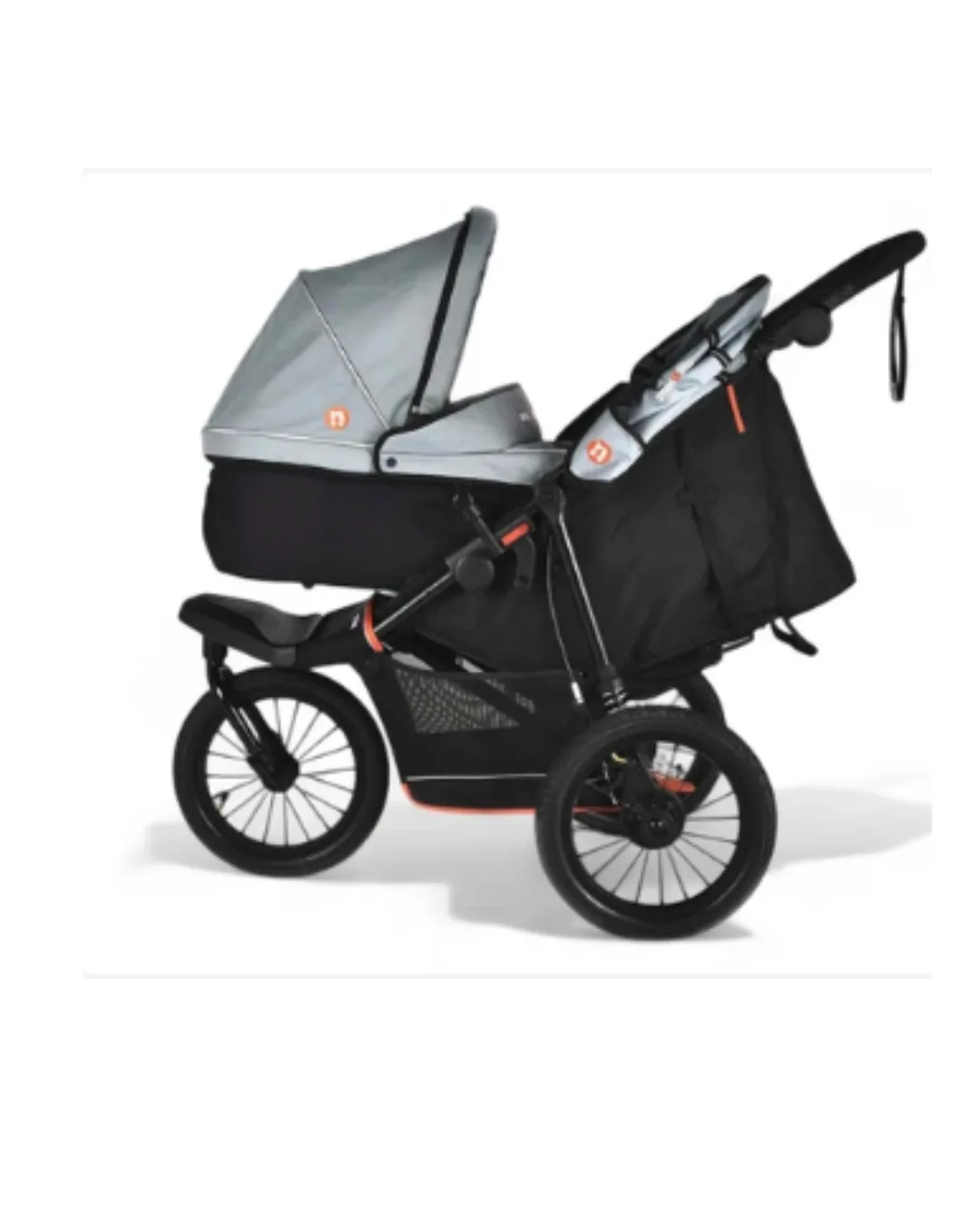
If most of your runs will be on pavements and paths, a running pushchair built for smooth surfaces will give you the most stable and comfortable ride. These buggies usually share a few features:
- A stable frame and wheelbase
- Larger wheels with good suspension
- A secure harness and a wrist strap
- A brake you can reach and use easily
- A front wheel that can be locked in a straight line
If you’re not sure whether your pushchair qualifies, check the manufacturer’s guidance or user guide. If it doesn’t say it’s suitable for running, don’t assume it is.
What Age Can a Baby Go Running in a Pushchair?
This is usually the first question parents ask, and the answer matters.
A newborn’s neck, head and spine are still developing. The constant movement and vibration of running isn’t suitable for very young babies, even in a pushchair with a reclining seat or carrycot.
The general guidelineMost running pushchair manufacturers recommend waiting until your baby is around 6 months old. By then, most babies have:
- Good head and neck control
- The ability to sit up with support
- Stronger core and back muscles
Some brands set a higher minimum age, and some babies need a little longer. Always follow the age and weight guidance for your specific buggy, and speak to your health visitor or GP if you’re unsure about your baby’s development.
What about toddlers and older children?Once your child is comfortable and well supported, you can keep running for as long as they fit within the buggy’s weight limit. Many parents carry on with toddlers and pre-schoolers, and some use a double for two children. Always check the maximum weight the pushchair is rated for, including both children if you’re using a double.
And for parents?If you’ve recently had a baby, wait until you feel ready and have been given the all-clear by your GP or midwife before you start running again. Postnatal recovery varies from person to person, and there’s no rush.
Road Running vs Trail Running With a Pushchair
The surface you run on changes both the kit you need and how the run feels.
Road and pavement runningSmooth, flat surfaces are the easiest place to start. Paths, parks and quiet roads are predictable, which lets you build up your pace and confidence gradually.
Trail and off-road runningTrails are more demanding. Roots, mud, gravel and uneven ground all affect how the buggy handles, so you’ll need to slow down and stay alert. For muddy tracks and rough ground, an off-road pushchair with good suspension and larger wheels makes a big difference to both comfort and control.
If you’re new to trails, start on firm, wide paths before tackling anything technical, and build up from there.
How to Choose a Pushchair for Running
When you’re comparing buggies, these are the features that matter most.
A lockable front wheelA swivel front wheel is brilliant for steering round shops and school gates, but at running pace it can wobble. Choose a buggy where you can lock the front wheel straight for running and unlock it for everyday use.
Running certificationLook for clear information about whether a pushchair has been tested or certified for running. At Out ’n’ About, the running-certified models are the Nipper V6 Plus, the Nipper Compact and the Nipper Double V6 Plus.
Wheel size and tyresBigger wheels roll more smoothly over bumps and cracks, which makes for a more comfortable ride for your child and less effort for you. Air-filled tyres also absorb shocks better.
Weight and foldingA lighter buggy is easier to push, and a good fold makes it easier to get into the boot. If you’re driving to your running route, this matters more than you might expect.
One child or twoIf you have two children, a side-by-side double is worth considering. Check that it’s rated for running and that it’s narrow enough to fit the paths you plan to use.
Safety Tips for Running With a Pushchair
Once you’ve got the right buggy, a few habits will keep every run safe.
Before you set off- Check the tyres. Make sure they’re properly inflated.
- Check the brakes. Test that they hold firmly before you start.
- Lock the front wheel if your pushchair has a swivel option.
- Fasten the harness snugly, and check your child is sitting comfortably.
- Attach the wrist strap so the buggy can’t roll away if you let go.
- Keep a steady pace. Avoid sudden stops, sharp turns and fast downhills.
- Slow down on rough ground. Bumps are felt far more by a small passenger.
- Take extra care on hills. Use the brake on descents and keep control.
- Stay visible. Wear bright or reflective clothing, especially in autumn and winter when light fades early.
- Watch the weather. Keep your child warm, dry and shaded as needed.
Give the buggy a quick check. Wipe down the frame, look over the wheels and tyres, and make sure nothing is loose. Replace worn parts promptly so the buggy stays safe and lasts for years.
Running Technique: Getting Comfortable With a Pushchair
Running behind a pushchair feels different from running on your own. These tips help it feel natural.
- Use one hand or two. Many people alternate hands to even out the effort. Keep your arms relaxed.
- Stay close to the buggy. Running too far back puts strain on your shoulders and back.
- Keep your posture tall. Don’t hunch over the handlebar.
- Start slowly. Your first few runs will probably be slower than your usual pace, and that’s fine.
- Build up gradually. Begin with shorter distances and add more as you get used to the extra effort.
Kit That Makes Running With a Pushchair Easier
You don’t need much, but a few extras can make runs more comfortable for both of you.
- A rain cover and sun shade for changing weather
- A footmuff or blanket for colder days
- A drinks holder or storage bag for water and snacks
- Reflective gear for early starts or evening runs
- A good pair of trainers suited to your terrain
Frequently Asked Questions
Can I use my normal pushchair for running?Only if the manufacturer says it’s suitable. Everyday buggies aren’t designed for the forces involved in running and can be unsafe.
Is it safe to run with a baby under 6 months?Most manufacturers advise waiting until around 6 months, once your baby has good head and neck control. Always follow the guidance for your specific pushchair, and ask a health professional if you’re unsure.
Can I run with a double pushchair?Yes, as long as the double is designed and rated for running. Check the combined weight limit for both children.
Do I need a special pushchair for trail running?A buggy with good suspension, larger wheels and a stable frame will handle trails much better than a standard one.
Final Thoughts
Running with a pushchair can be a great way to stay active as a family, as long as your buggy is built for it and your baby is old enough. Wait until your little one is ready, choose a pushchair designed for running, and build up slowly. Whether you’re on pavements or muddy trails, the right kit makes every run safer and more enjoyable.