Yes, professional water mitigation services are specifically designed to eliminate musty odors after a leak. The key is that they don't just cover up the smell; they attack its source. That musty, earthy odor is a direct result of excess moisture creating a breeding ground for mold and bacteria. Mitigation specialists use a combination of rapid water removal, advanced drying techniques, and sanitization to stop this microbial growth, which in turn permanently removes the odor. Simply spraying an air freshener or opening a window won't solve the underlying problem.
This article, drawing on extensive industry knowledge, will break down exactly how these services work to get rid of stubborn, damp smells and what homeowners should know about the process.
The True Source of Musty Odors
That unpleasant smell after a water leak isn't just the smell of "dampness." It's primarily caused by microbial volatile organic compounds (MVOCs), which are gases released by mold and bacteria as they grow and multiply. When materials like drywall, carpet padding, and wood framing get wet and stay wet, they become an ideal food source for these microorganisms. Within 24 to 48 hours, this growth can begin, and the odor is often the first sign that a problem is developing, even if you can't see any visible mold.
Ignoring this smell is a mistake. It’s a clear warning that the indoor environment is compromised. The presence of these microbes can affect indoor air quality and, if left unchecked, can lead to more significant structural issues over time.
How Water Mitigation Directly Targets Odors
Water mitigation is a systematic process. Each step is designed to address both the water and the potential for microbial growth, which is the root of the odor problem.
Rapid Water Extraction
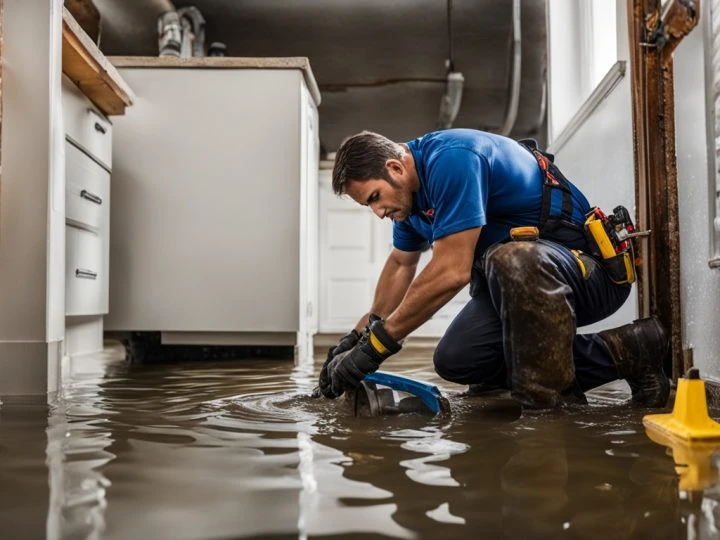
The first step is always to remove any standing water. Professionals use powerful, truck-mounted or portable extraction units to pull large volumes of water out of carpets, floors, and other surfaces quickly. Removing the bulk of the water immediately halts the absorption process and is the first move in preventing further odor development.
Thorough Structural Drying
This is the most critical phase for odor elimination. Technicians set up specialized equipment to create an ideal drying environment.
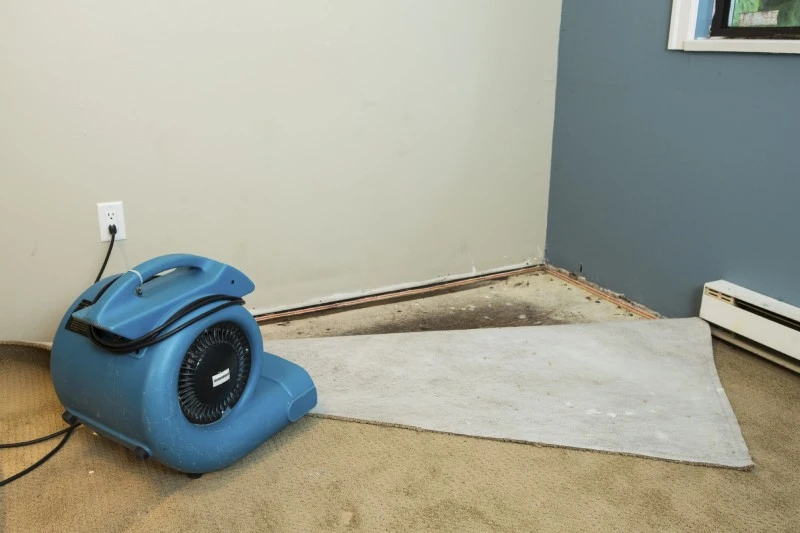
- High-Velocity Air Movers: These are not simple fans. They are strategically placed to promote evaporation by sweeping moist air away from the surface of wet materials.
- Dehumidifiers: Industrial-grade dehumidifiers, particularly Low-Grain Refrigerant (LGR) models, pull the moisture that the air movers have evaporated out of the air. This process drastically lowers the indoor humidity, making it impossible for mold and bacteria to survive.
Cleaning and Sanitizing
After the area is confirmed to be dry, technicians will often clean the affected surfaces with antimicrobial agents. This step kills any remaining bacteria or mold spores and helps prevent them from returning. For porous materials that couldn't be saved, like soaked carpet padding or drywall, they are removed and disposed of properly.
Bonus Tip: A common homeowner mistake is turning off the drying equipment too early because a surface "feels" dry. Moisture can be trapped deep within materials, and only professional moisture meters can confirm when a structure is truly back to its normal dry standard.
Masking an Odor vs Eliminating It
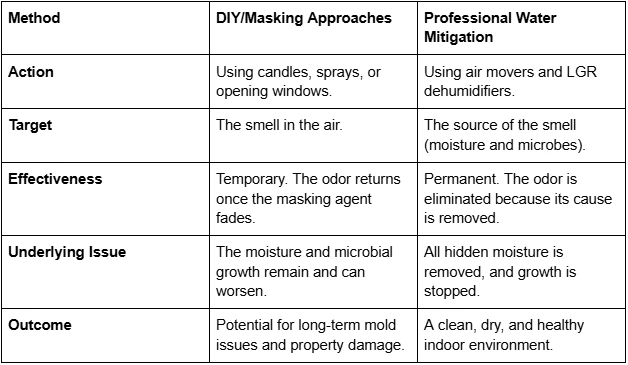
Many people try to handle a musty smell on their own, but these methods are only a temporary fix. Professional mitigation provides a permanent solution by addressing the cause.
Things to Consider Before Hiring a Service
When your goal is to eliminate an odor for good, choosing the right company matters. Here are some factors to think about.
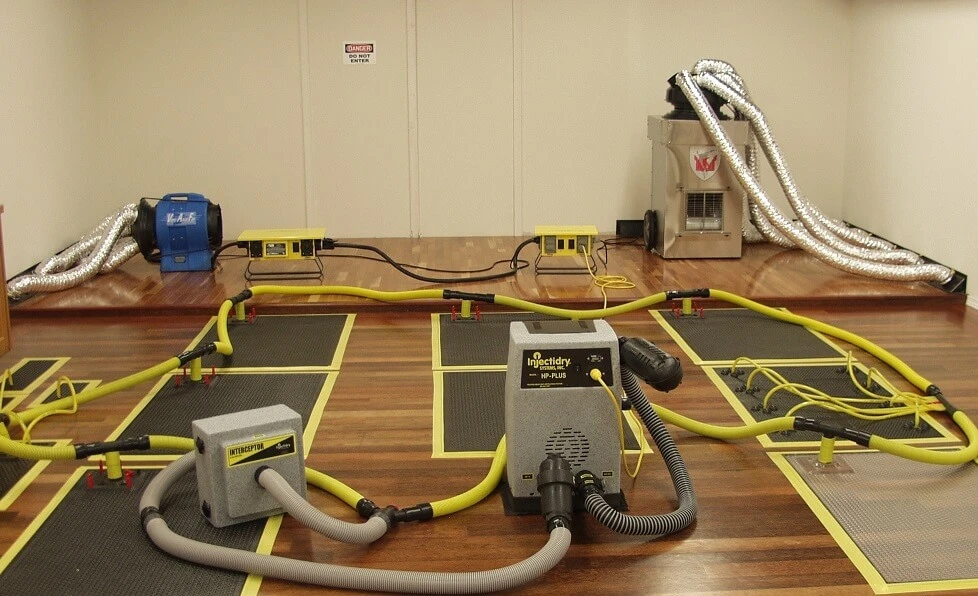
- Their Drying Process: Ask the company to explain their drying methodology. A reputable firm will talk about creating a balanced drying system, monitoring moisture levels daily, and using specific equipment for the job.
- Certifications: Look for technicians certified by the Institute of Inspection, Cleaning and Restoration Certification (IICRC). This is the leading standard in the industry and ensures they are trained in the proper procedures.
- Equipment Quality: A company using modern, well-maintained LGR dehumidifiers and commercial air movers will be far more effective than one using basic fans and household dehumidifiers.
- Regional Expertise: In climates with high natural humidity, like the Pacific Northwest, simply opening a window can actually make things worse by letting more moisture in. A local company understands these unique environmental challenges and will rely on a closed drying system to effectively dry out the structure.
Bonus Tip: Ask a potential contractor if they provide documentation of the drying process. Many professionals use software to log daily moisture readings, which gives you clear proof that the job was done correctly.
Questions People Ask About Lingering Smells After a Leak
How long does it take for mitigation to get rid of the musty smell?
Once the drying process begins, most homeowners notice a significant improvement in the odor within the first 24 hours. The smell should be completely gone by the time the equipment is removed and the area is confirmed to be dry, which typically takes 3 to 5 days for a standard residential leak.
Can I just use my own dehumidifier instead of hiring someone?
A household dehumidifier is not powerful enough to remove moisture from saturated structural materials. It can lower the humidity in a room, but it lacks the capacity to pull deep, trapped moisture out of drywall, wood, and concrete effectively.
What if the musty smell comes back after the job is done?
If a musty odor returns, it's a sign that not all the moisture was removed or there is another leak. A professional company with a service guarantee should return to investigate and resolve the issue.
Are the antimicrobial products used for sanitizing safe?
Professional restoration companies use EPA-registered products that are designed for use in homes. Technicians are trained in their proper application. If you have concerns about sensitivities, you can discuss them with the project manager, who can provide safety data sheets for the products being used.
Does my homeowner's policy cover services for odor removal?
Most homeowner's policies cover the cost of water mitigation if the source of the water was sudden and accidental (like a burst pipe). Because odor is a direct result of the water damage, the processes to eliminate it are typically included as part of the covered claim.
Moving Forward With a Fresh Start
A musty odor after a leak is more than a nuisance; it's a signal that your home's health is at risk. Water mitigation services provide the only reliable way to eliminate these smells for good. By focusing on the root cause of the problem, professionals don't just restore your property, they also restore your air quality and peace of mind. Acting quickly and hiring a qualified team ensures that a small leak doesn't turn into a lingering problem.
Getting Professional Help for Water Damage
If you're dealing with the aftermath of a leak and are concerned about musty odors, getting a professional assessment is a smart next step. An experienced team can identify hidden moisture and create a plan to dry your property properly. Companies that specialize in this work, such as Prestige NW Restoration, have the right equipment and training to handle the job effectively. For a consultation or to ask questions about your specific situation, you can reach their team at (360) 334-3624 or by sending an email to [email protected].
Reviewer: Matthew Moore brings over 15 years of experience in residential renovation marketing. The review provided helped shape this content to better connect with homeowners seeking reliable, high-quality restoration and home improvement services.