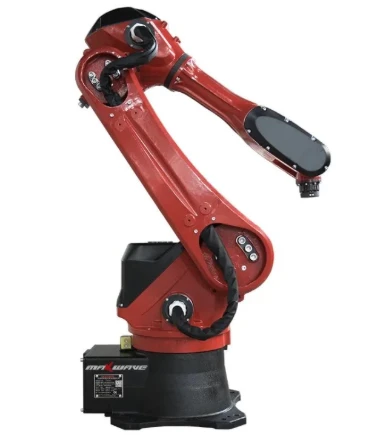
In the ever-evolving landscape of modern manufacturing, automation has carved out a significant place for itself, especially in tasks that demand high precision and consistency. Among the many technologies transforming the factory floor, the welding robot arm stands as a revolutionary innovation. With industries striving for faster production cycles, reduced errors, and consistent quality, this robotic tool has grown in both popularity and application.
But can a welding robot arm truly replace the years of craftsmanship and experience possessed by skilled human welders—especially when it comes to complex, high-stakes welding tasks? That’s the core of the debate currently stirring across industries that rely heavily on welding—automotive, aerospace, shipbuilding, and metal fabrication, just to name a few.
Understanding the Welding Robot Arm
A welding robot arm is a programmable mechanical device designed to perform welding operations with accuracy and consistency. Controlled by a system of software and sensors, the robot arm is capable of performing repetitive welding tasks, often in challenging environments. These robotic arms are engineered to work continuously with high precision and minimal supervision, a trait that has drawn attention from industries aiming to scale up production while maintaining quality.
Whether it’s arc welding, spot welding, or TIG welding, robotic systems can be configured to perform a wide variety of tasks, adapting to multiple environments with the right customization and calibration.
The Human Element in Welding
Welding is far more than just fusing metal. It’s an art, especially when dealing with difficult angles, complex materials, or non-standard parts. Skilled welders bring something to the table that no algorithm or mechanism can mimic—intuition. Experienced welders can recognize minor imperfections, adjust techniques on the fly, and assess the structural integrity of their work with just a glance. This human factor is often critical in industries like shipbuilding and aerospace, where each weld must withstand intense stress over long periods.
The Rise of the Welding Robot Arm in Manufacturing
Despite the artistry involved in manual welding, the industry is experiencing a massive shift. Companies are rapidly integrating robotic systems to meet the growing demands of high-volume production. A welding robot arm excels in this space, bringing stability to the workflow.
Let’s consider the automotive industry, where tens of thousands of welds are performed daily. In such high-throughput environments, a welding robot arm doesn't fatigue, doesn’t slow down, and doesn’t make inconsistent welds due to human error. These arms work on chassis frames, exhaust systems, and structural reinforcements with unwavering consistency, all day long.
The adaptability of a welding robot arm also plays a significant role. With the right setup, it can switch between different welding processes and adjust to new product lines with minimal reconfiguration. This flexibility is what makes the technology attractive across industries dealing with multiple products and frequent changeovers.
Skill Shortage and Technological Transition
Another reason welding robot arms are gaining traction is the growing shortage of skilled welders. The welding industry is facing a labor gap due to an aging workforce and a decreasing number of apprentices entering the trade. For many companies, this gap makes the transition to robotic welding not just a choice, but a necessity.
Instead of completely replacing human welders, welding robot arms are often introduced to handle the repetitive and physically demanding parts of the job, leaving skilled professionals to focus on the more intricate and specialized tasks. In this way, humans and machines can coexist, each handling what they do best.
Integration into Complex Manufacturing
Integrating a welding robot arm into a complex manufacturing setup requires careful planning, precision programming, and high-quality components. It’s not as simple as buying a machine and turning it on. The welding environment needs to be suitable for automation. The materials must be uniform, the parts accurately fixtured, and the programming must be meticulous.
Companies often hire robotic integration specialists who tailor the entire workflow around the robot arm. From designing the fixture that holds the parts to mapping the exact path the torch should follow, everything must be optimized.
When done right, the result is not just productivity. It's repeatable quality. Every weld, every pass, every bead comes out just as planned. And that’s what sets the welding robot arm apart—its ability to replicate perfection at scale.
Quality Assurance and Monitoring
Contrary to popular belief, robotic systems are not “set and forget.” Welding robot arms are paired with real-time monitoring tools, sensors, and quality control systems. These add-ons check weld penetration, heat input, and alignment in real-time. If something deviates from the expected path, the system can shut down or alert an operator instantly.
This level of control is invaluable in industries where a faulty weld could lead to catastrophic failure. In aerospace, for instance, every seam must be within tight tolerance. Welding robot arms, backed by data monitoring systems, provide the consistency and documentation needed to meet those standards.
Training the Next Generation for Robotic Welding
As robotic systems become more widespread, a new generation of workers is emerging—those trained not in traditional stick welding, but in robotic arm programming, maintenance, and diagnostics. Technical schools and certification programs are beginning to emphasize this shift, preparing students for a future where robotic systems are central to the welding process.
Interestingly, many of these students still learn the fundamentals of manual welding before moving on to automation. This hybrid education ensures that they understand the physics of welding before managing complex robotic systems.
Cost Dynamics in Long-Term Planning
While the initial investment in a welding robot arm might seem steep, many manufacturers see a return within the first couple of years. With 24/7 operation, reduced rework, and less material waste, the economics begin to shift in favor of automation. For manufacturers producing consistent, high-volume parts, a welding robot arm is more than a tool—it becomes a cornerstone of their production strategy.
Moreover, modern systems are modular and upgradable. As new welding techniques or components become available, the robot arms can be adapted without being replaced entirely, offering longevity and scalability for growing businesses.
Real-World Applications and Expansion
Let’s look at some real-world examples. In shipyards, robotic welding systems are used to perform long, continuous welds in hull construction. In the rail industry, they are used to assemble freight cars and high-speed train frames. Even in the art world, sculptors working with metal often collaborate with robot arms to bring intricate designs to life with perfect welds.
The widespread adoption of welding robot arms is no longer limited to major conglomerates. Small and medium-sized enterprises (SMEs) are also joining the movement thanks to affordable, compact robotic welding cells that don’t require massive infrastructure changes.
Final Thoughts
While the welding robot arm may not fully replace the nuanced skills of a human welder in every context, it is undeniably changing the dynamics of modern manufacturing. Its precision, repeatability, and scalability make it an invaluable asset on the production floor. As the technology continues to evolve and integrate into even more complex applications, the role of the welding robot arm will only grow stronger.
It’s not a question of machine versus man, but rather, how both can work together to build the future—faster, safer, and with unmatched precision. For any manufacturing operation looking to scale intelligently and consistently, exploring the potential of a welding robot arm is not just recommended—it’s essential.