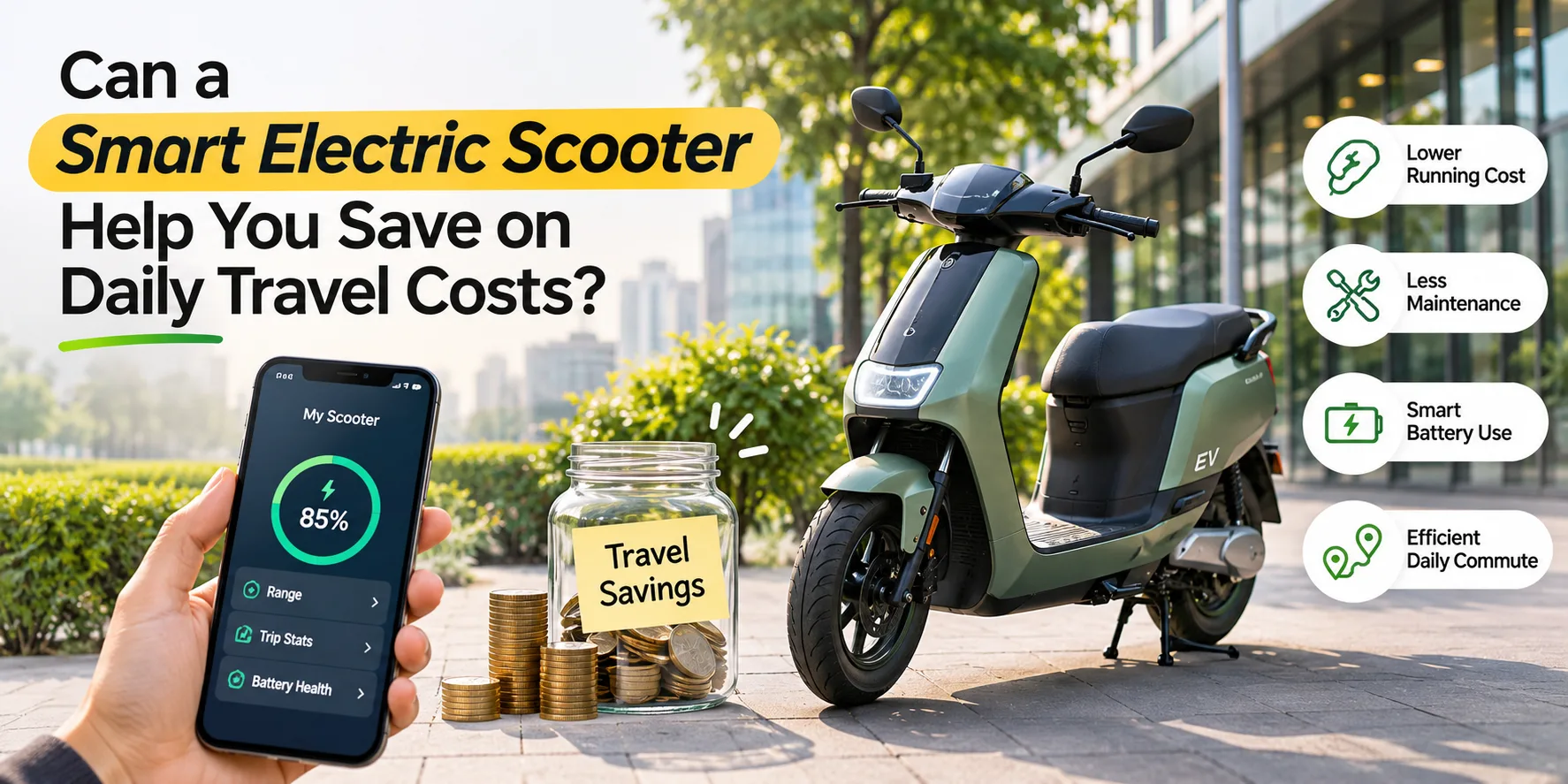
It's the end of the month, and you're checking where your salary went. Fuel expenses, parking charges, regular servicing, and small repairs have quietly taken a considerable share of your budget. Your daily office commute may seem inexpensive when you look at individual trips, but the monthly total can tell a different story.
That's why more commuters are considering alternatives to traditional petrol-powered two-wheelers. A smart electric scooter can help reduce certain everyday travel expenses through electric charging and potentially lower routine maintenance requirements. However, the actual savings depend on your travel habits, electricity costs, scooter specifications, and ownership expenses.
1. Understand How Much You Currently Spend on Commuting
Before deciding whether an electric scooter can save money, calculate your existing monthly travel expenses. Many people consider fuel costs but overlook smaller expenses that add up over time.
Start by checking:
- Monthly petrol expenses.
- Regular servicing and maintenance charges.
- Oil changes and replacement parts.
- Parking fees, where applicable.
- Unexpected repair expenses.
- Daily commuting distance.
For example, if you travel 20 kilometres every working day, your monthly distance can reach approximately 440 kilometres over 22 working days.
Knowing this figure makes it easier to compare the running costs of your current vehicle with an electric scooter. It also helps you understand whether switching vehicles would offer meaningful savings.
2. Compare Electricity Costs With Petrol Expenses
One of the main financial advantages of electric scooters is their ability to run on electricity instead of petrol. Charging costs can be lower than petrol expenses for comparable travel distances, although the actual difference depends on local electricity rates and vehicle efficiency.
To estimate your charging expenses, consider:
- Battery capacity in kilowatt-hours.
- Electricity tariff in your area.
- Charging frequency.
- Charging efficiency and energy losses.
- Distance travelled per full charge.
For example, suppose a scooter has a 2 kWh battery and your electricity tariff is ₹8 per unit. A full charge would require approximately ₹16 worth of electricity before accounting for charging losses.
This is only an illustration. Actual consumption depends on the battery, charger, and charging conditions.
Compare this amount with what you currently spend on petrol for the same commuting distance. That comparison gives you a more realistic estimate of potential savings.
3. Look at Battery Performance and Long-Term Replacement Costs
A smart electric scooter may offer convenient battery monitoring and charging information, depending on its features. However, battery performance also affects how much you spend over the vehicle's lifetime.
Before buying, check the following:
- Battery capacity and expected riding range.
- Battery warranty duration.
- Charging cycles and recommended usage.
- Replacement battery availability.
- Estimated replacement cost.
- Warranty exclusions and conditions.
Battery replacement can become a significant expense, so it should be included in your ownership calculations.
Explore electric scooter battery options to understand the importance of battery specifications, compatibility, and support when comparing models.
Avoid choosing a scooter based only on its advertised maximum range. Your actual riding distance may vary with traffic, speed, rider weight, road conditions, and weather.
4. Consider Whether Smart Features Can Improve Everyday Efficiency
Technology can make an electric scooter easier to monitor and manage. Some models offer digital displays, smartphone connectivity, battery information, or ride statistics.
These features may help riders understand their usage patterns and plan their journeys more effectively.
Depending on the model, useful features may include:
- Battery level and estimated remaining range.
- Digital instrument displays.
- Smartphone connectivity.
- Riding statistics and trip information.
- GPS tracking or location services.
- Ride modes and performance information.
For example, monitoring battery levels before leaving home can help you avoid unexpected charging interruptions during your commute.
However, smart features do not automatically reduce electricity consumption. Their value depends on how they help you manage your riding habits and vehicle usage.
Check the actual specifications before assuming that every smart electric scooter includes GPS tracking, mobile applications, or advanced security features.
5. Understand the Maintenance Savings
Electric scooters generally have fewer moving mechanical components than conventional petrol scooters. They do not require engine oil changes or regular engine-related maintenance.
This can reduce certain servicing requirements, but electric scooters still need periodic inspection and maintenance.
You may need to spend money on:
- Tyre replacement and maintenance.
- Brake inspection and replacement.
- Suspension-related repairs.
- Electrical component servicing.
- Battery and charger checks.
- Other mechanical repairs.
The exact maintenance cost depends on the model, riding conditions, and service requirements.
Ask the seller for a recommended maintenance schedule and estimated servicing charges. This will help you compare long-term ownership expenses rather than focusing only on the initial purchase price.
6. Check Charging Convenience Before Making the Switch
Electricity costs are important, but charging convenience also affects everyday ownership. If charging your scooter requires significant planning, it may become inconvenient during a busy working week.
Before purchasing, consider:
- Whether you have a suitable charging point at home.
- How long the battery takes to charge.
- Whether the charger is included.
- Whether the charger is compatible with the battery.
- Whether your workplace offers charging facilities.
Review available electric scooter charging solutions to understand the importance of compatible charging equipment.
Follow the manufacturer's charging instructions and avoid using unsuitable chargers. A convenient charging arrangement can make regular commuting easier to manage.
7. Calculate the Total Cost Before Choosing a Scooter
Lower running costs do not automatically mean that every electric scooter is financially worthwhile. The initial purchase price, financing charges, insurance requirements, battery replacement, and maintenance expenses all affect the final calculation.
Before purchasing, consider:
- The scooter's complete purchase price.
- Monthly charging expenses.
- Insurance and applicable registration costs.
- Routine servicing requirements.
- Battery replacement expenses.
- Warranty coverage and after-sales support.
You should also compare the scooter's total ownership cost with your existing petrol vehicle. If you travel longer distances regularly, the potential savings may be different from those of someone who uses a scooter occasionally.
When comparing an electric scooter dealership, ask for clear product specifications, warranty information, and service details. This helps you make a decision based on the actual ownership experience rather than attractive promotional claims.
Final Thoughts
A smart electric scooter can help reduce daily travel costs, particularly when you regularly commute short or moderate distances. Lower charging expenses and fewer engine-related maintenance requirements can make electric mobility an attractive alternative to petrol-powered travel.
However, the real savings depend on your commuting distance, electricity tariff, battery performance, and total ownership expenses. Calculate these costs before making a purchase instead of relying on general savings claims.
If you want to explore available electric scooter options or understand their features and specifications, you can contact On Time Power for further information.