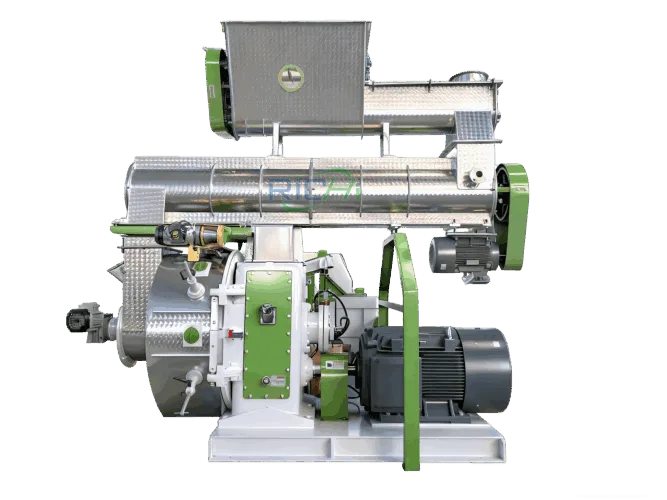
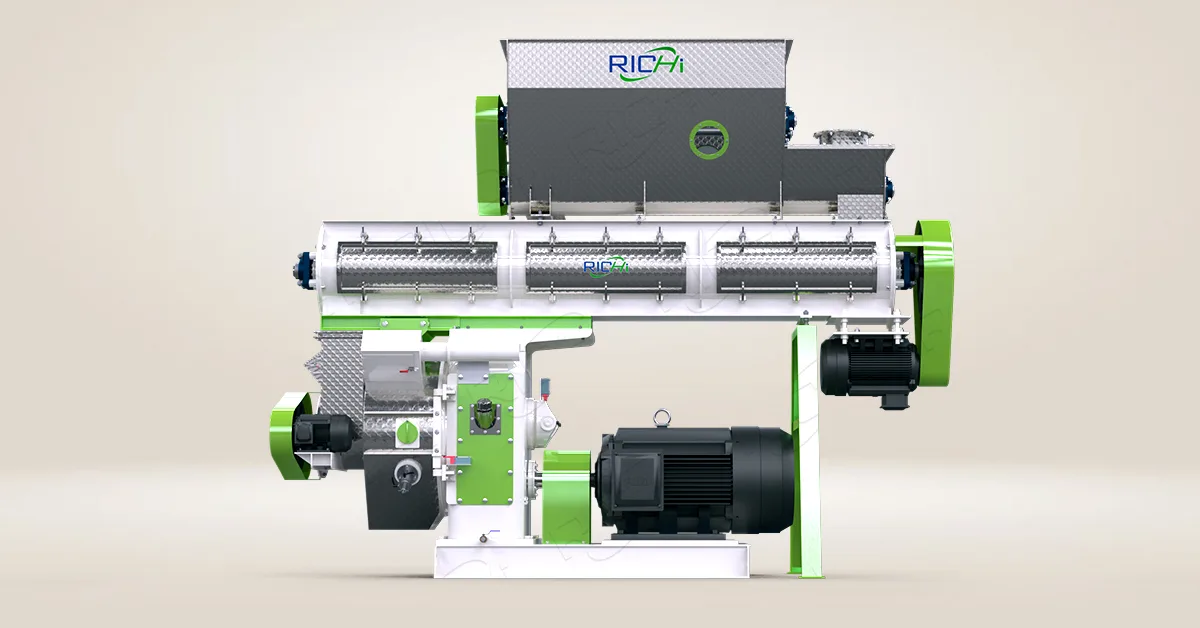
Most goat farmers who decide to make their own feed start with the same search. They look for a goat feed pellet making machine, compare prices, and pick the one that fits the budget. It seems straightforward. A press is a press, after all. But that assumption is the reason so many operations end up with equipment that clogs, wears out, or produces pellets their goats refuse to eat.
Goat feed is not like poultry or swine feed. It is high in fiber, often built around alfalfa, beet pulp, and hay. It may contain copper and other abrasive minerals. These ingredients put unique demands on a machine. They resist compression. They wear down dies. They absorb moisture unevenly. A press designed for softer, grain-based rations will struggle from the first batch. The die clogs. The rollers flatten. The motor strains under loads it was never built to handle. The operator compensates by slowing production or adding moisture, which creates new problems downstream. Eventually, the machine fails. The farm goes back to buying bagged feed, convinced that pelleting is not worth the trouble.
The truth is that pelleting works. It reduces waste, improves feed conversion, and gives the producer control over formulation. The problem is rarely the concept. It is the equipment selection. A pellet press built for the job can run for years with routine maintenance. It uses hardened dies, heavy-duty bearings, and a drive system that handles shock loads without flexing. It includes accessible maintenance points so operators can change wear parts without dismantling the entire unit. These details determine whether the machine becomes an asset or a liability. They matter more than horsepower or throughput ratings on a spec sheet.
Capacity is the next consideration. Too small, and the press becomes a bottleneck during peak demand. Too large, and you pay for throughput you never use. For many working farms, the sweet spot is a machine that produces enough to supply the herd and sell surplus to neighbors. That usually means a few hundred kilos per hour to a few tons per hour, depending on flock size and market. The right capacity keeps the press running at its optimal load without constant start-stop cycles that wear out components faster. It also leaves room to grow without requiring a complete replacement.
But the press is only one part of the process. Grinding, mixing, conditioning, cooling, and screening all affect the final product. If the grinder produces too many fines, the press struggles. If the cooler is undersized, pellets mold in storage. If the screener is neglected, dust ends up in the bag. A balanced line integrates every stage, sizing each component to match the next. That balance is what keeps production steady and pellet quality consistent. When the line works together, the bottleneck never moves from one machine to another.
Related articles:https://pelletizerextruder.com/livestock-feed-pellet-machine/
Durability matters more than price. A cheap machine that breaks down during peak season costs far more than its purchase price in lost production and emergency feed purchases. A well-built machine costs more upfront but runs cooler, lasts longer, and produces consistent pellets with less downtime. Over five years, the total cost of ownership favors quality every time. The same logic applies to every component in the line. A cheap cooler that rusts out in two years is not a bargain. It is a recurring expense.
The financial case is straightforward once the system is running. Commercial goat feed carries a premium because it is a specialty product. Producing pellets on-site eliminates processing, packaging, transportation, and the mill's margin. It also gives the producer control over formulation—more protein for growing kids, more energy for late gestation, balanced minerals for breeding stock. Many farms report payback periods of less than two years, especially when they already have access to raw ingredients at volume prices.
Before committing to any equipment, visit a farm that already runs a pelleting line. Watch it operate for a full shift. Ask the operator what breaks, what wears out, and what they wish they had known. The answers will tell you more than any brochure. Goat feed pelleting is not complicated, but it is specific. The machine must match the material, the scale, and the goals of the operation. Choose wisely, and the press pays for itself. Choose poorly, and it becomes a lesson in false economy.