
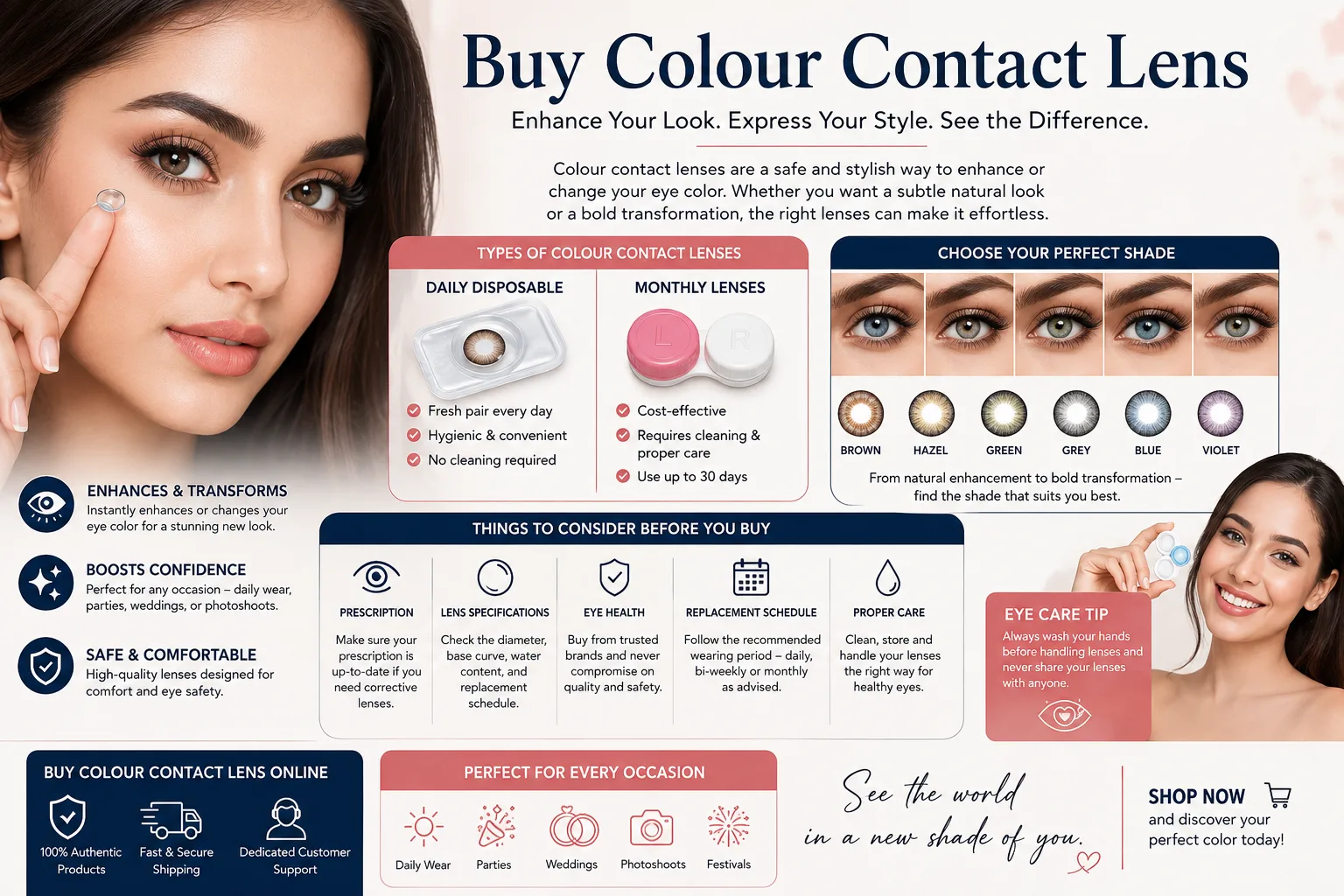
Colour contact lenses are an increasingly popular way to enhance or subtly change the appearance of the eyes while complementing different makeup styles, outfits, and occasions. Whether you are looking for a natural enhancement or a more noticeable transformation, choosing the right lenses involves more than simply selecting a shade that looks attractive in a product photo.
If you plan to buy colour contact lens products online, it is important to consider factors such as lens type, fit, wearing schedule, colour, prescription requirements, and proper eye-care practices. A thoughtful approach can help you find lenses that suit your preferences while keeping eye comfort and safety a priority.
Understanding Colour Contact Lenses
Colour contact lenses are designed to alter or enhance the visible colour of the iris. They are available in a wide range of shades, including brown, hazel, green, blue, grey, and more distinctive tones.
Some lenses are designed to create a very natural effect, while others provide a more dramatic appearance. The final result can vary depending on your natural eye colour, lighting conditions, makeup, and the lens design itself.
Colour lenses may also be available as plano lenses, which have no vision correction, or as prescription lenses for people who require vision correction. If you need corrective lenses, your prescription and professional fitting requirements should be taken into consideration before making a purchase.
What to Consider Before You Buy Colour Contact Lens Products
1. Choose the Right Lens Type
Colour contact lenses can have different replacement schedules. Common options include daily disposable lenses and lenses intended for longer replacement periods, such as monthly lenses.
Daily lenses can be convenient because a fresh pair is used each day, while monthly lenses require appropriate cleaning, storage, and replacement according to the manufacturer's instructions.
Always check the recommended wearing and replacement schedule rather than assuming that all colour lenses can be worn in the same way.
2. Consider Your Natural Eye Colour
The same colour lens can look different on different eyes. For example, a soft brown lens may create a subtle enhancement on dark brown eyes, whereas a lighter or more opaque design may produce a more noticeable transformation.
People with brown eyes often explore shades such as honey, hazel, green, grey, and blue. Those with naturally lighter eyes may prefer blended or translucent designs for a softer effect.
Looking at customer images can be useful, but remember that lighting, camera settings, makeup, and editing can influence how a colour appears.
3. Pay Attention to Lens Specifications
When shopping online, look beyond the colour name. Check the lens diameter, base curve, replacement schedule, material, and whether the lens is intended for cosmetic or vision-correction purposes.
A professional eye-care consultation can help determine whether a particular lens is suitable for your eyes. This is especially important if you have never worn contact lenses before.
4. Think About the Occasion
Your preferred lens colour may depend on how and where you intend to wear it.
For everyday use, natural shades such as brown, hazel, or soft grey can provide a subtle enhancement. For weddings, parties, photoshoots, or creative makeup looks, more distinctive colours may create a stronger visual impact.
The best choice is ultimately one that complements your personal style rather than simply following a trend.
Safety Matters When Buying Online
When you buy colour contact lens products online, convenience should never come at the expense of eye health. Contact lenses sit directly on the surface of the eye, so quality, fit, hygiene, and proper usage matter.
Purchase lenses from a reputable seller and check that the packaging is properly sealed and clearly labelled. Avoid products with unclear specifications or questionable sourcing.
If you experience persistent redness, pain, unusual sensitivity to light, excessive watering, or blurred vision while wearing lenses, remove them and seek professional eye-care advice promptly.
How to Care for Colour Contact Lenses
Proper lens care is essential, particularly for reusable lenses. Always wash and dry your hands before handling contacts. Use the recommended contact-lens solution and follow the manufacturer's cleaning and storage instructions.
Do not use tap water or saliva to clean lenses, and avoid sharing lenses with another person. Contact lenses should also not be worn beyond their recommended replacement period.
If you use makeup, putting your lenses in before applying makeup can help reduce the possibility of transferring cosmetic particles onto the lens. Similarly, remove your lenses before removing eye makeup.
Finding a Colour That Looks Natural
If your goal is a natural appearance, consider shades that are close to or harmonize with your natural eye colour. Blended designs can create a gradual transition between the lens and the iris, producing a softer finish.
For a more noticeable effect, contrasting colours can make the eyes stand out. However, choosing a colour based solely on its appearance in an online photograph may not produce the same result in real life.
It can be helpful to consider your skin undertone, hair colour, everyday makeup preferences, and wardrobe when selecting a shade.
Final Thoughts
The process to buy colour contact lens products online should combine style with informed decision-making. Start by determining whether you need plano or prescription lenses, then consider the lens type, replacement schedule, specifications, colour, and suitability for your eyes.
Most importantly, choose products from trustworthy sources and follow proper lens-care practices. Colour contact lenses can be an effective way to enhance your appearance, but they should always be treated as eye-care products rather than ordinary fashion accessories.
With the right information and responsible usage, you can find a colour and lens type that fits your personal style while making eye comfort and safety part of the decision.