In an era where digital products and platforms define market leadership, software has become the primary engine of business growth. Companies no longer compete only on price or reach—they compete on speed, reliability, integration capability, and the ability to adapt quickly to change. Whether it is a startup launching a SaaS platform or an established enterprise modernizing legacy systems, the challenge is the same: building software that scales without becoming fragile, expensive, or outdated.
Many organizations invest heavily in development but still struggle with systems that slow them down over time. Features take longer to release, integrations break unexpectedly, infrastructure costs rise unpredictably, and security risks increase as complexity grows. These problems are rarely caused by a lack of effort. More often, they stem from short-term development decisions that ignore long-term scalability.
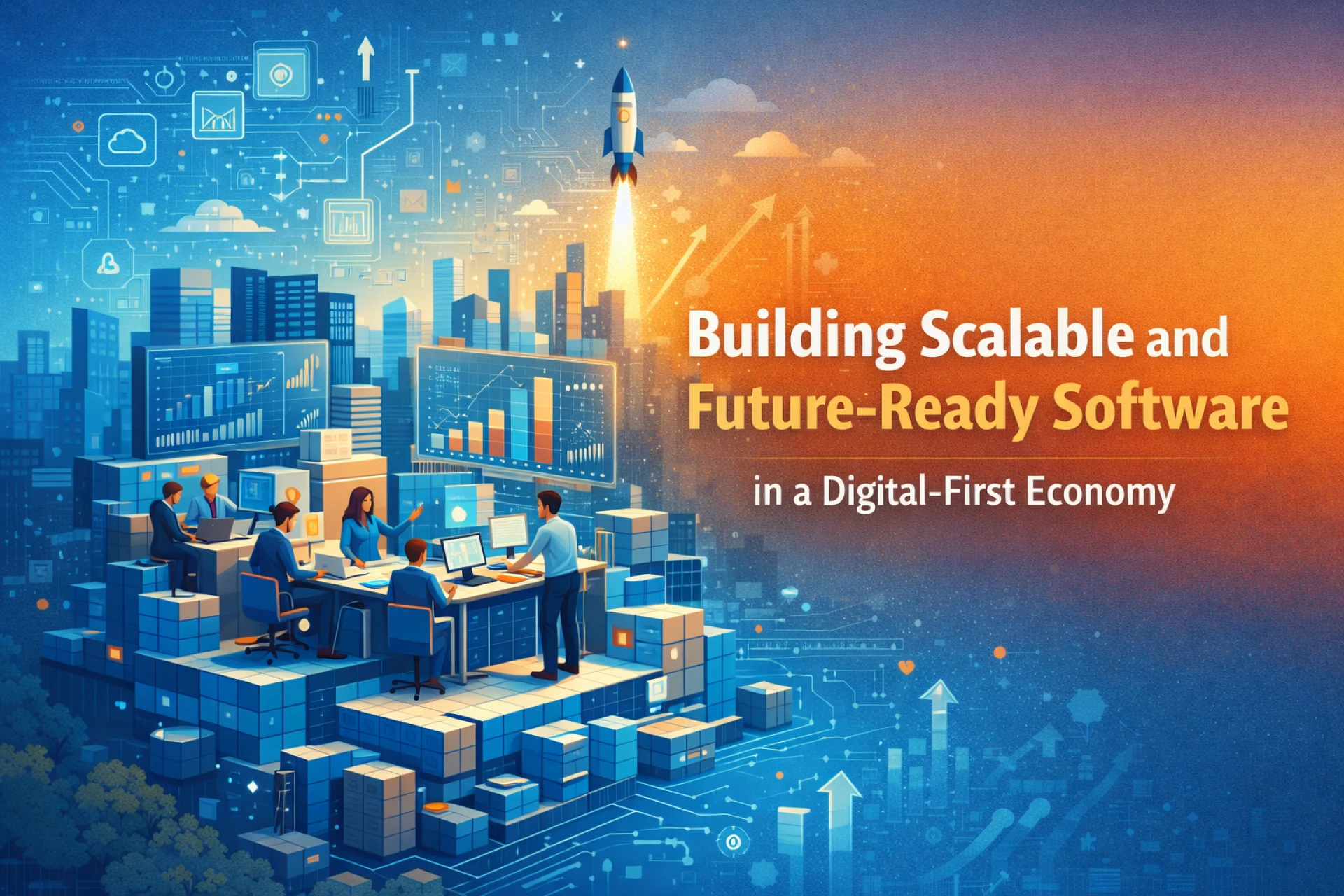
Building scalable and future-ready software requires a deliberate approach—one that combines sound strategy, thoughtful architecture, API-first design, cloud infrastructure, and disciplined DevOps practices. This article explores how businesses can approach scalable software development realistically, why modernization is critical, and how experienced partners like API DOTS help organizations build technology that supports long-term growth.
Software as a Core Business Asset
Software is no longer a supporting tool operating quietly in the background. It is the foundation of how modern businesses operate, interact with customers, and deliver value. From customer portals and mobile applications to internal platforms and analytics systems, software touches nearly every part of an organization.
This shift has changed expectations dramatically. Software must now be:
- Always available
- Secure by design
- Easy to integrate with other systems
- Flexible enough to support new business models
As a result, businesses increasingly rely on custom software development services rather than generic, off-the-shelf tools. Custom solutions allow organizations to align technology with their specific processes, customers, and growth plans. However, custom development also carries responsibility. Without proper architectural planning, custom systems can become just as restrictive as outdated legacy platforms.
Understanding Scalability Beyond Performance
Scalability is often misunderstood as the ability to handle more users or traffic. While performance is important, true scalability is broader and more strategic.
Scalable software must support growth across several dimensions:
Technical scalability ensures the system can handle increased load without major redesign.
Operational scalability allows teams to deploy, monitor, and maintain systems efficiently as complexity grows.
Organizational scalability enables multiple teams to work in parallel without constant coordination issues.
Business scalability supports new markets, products, and revenue streams without breaking existing systems.
When scalability is ignored early, businesses often face painful rewrites later. Systems become brittle, development slows, and innovation suffers. Investing in scalability from the beginning is not over-engineering—it is risk management.
The Importance of Software Architecture
Architecture determines how software components interact, how data flows, and how change is managed. Poor architecture creates hidden constraints that surface only when systems grow.
Common architectural problems include:
- Tightly coupled components
- Monolithic codebases that are hard to modify
- Direct database dependencies between services
- Hard-coded integrations
These issues make systems difficult to scale, test, and secure. Modern web app development services increasingly focus on modular and service-oriented architectures that reduce these risks.
Good architecture creates clear boundaries. It allows teams to update one part of the system without affecting others. It also enables better testing, monitoring, and security controls.
At API DOTS, architecture is treated as a long-term investment rather than a short-term convenience. Systems are designed to evolve alongside the business, not restrict it.
API-First Architecture as a Growth Enabler
APIs have become the backbone of modern software ecosystems. An API-first architecture prioritizes designing APIs before implementing internal logic. This approach creates systems that are easier to integrate, extend, and maintain.
API-first design enables:
- Independent development by multiple teams
- Seamless integration with third-party platforms
- Easier mobile and frontend development
- Faster partner onboarding
Today, API integration services are essential for businesses operating in connected digital environments. E-commerce platforms integrate with payment gateways, logistics providers, and analytics tools. SaaS platforms integrate with CRMs, identity providers, and marketing systems. Fintech and healthcare platforms rely on secure APIs to exchange sensitive data.
By treating APIs as stable contracts, businesses gain flexibility. Systems can change internally without breaking external integrations, which is critical for long-term scalability.
Cloud Infrastructure and Scalable Deployment
Cloud computing has fundamentally changed how software is built and delivered. Instead of investing heavily in physical infrastructure, businesses can leverage cloud platforms to scale resources on demand.
A properly designed cloud server for small business or enterprise platform offers:
- Elastic scalability
- High availability
- Global reach
- Managed services that reduce operational overhead
However, simply moving software to the cloud does not guarantee scalability. Poorly designed applications can become expensive and unstable when deployed in cloud environments. Effective cloud architecture requires:
- Stateless application design
- Automated infrastructure provisioning
- Cost-aware scaling strategies
- Strong security and access controls
This is where DevOps consulting becomes essential. DevOps practices ensure that infrastructure, deployment, and monitoring scale together with the application.
DevOps as a Foundation for Sustainable Growth
DevOps is more than a set of tools—it is a mindset focused on collaboration, automation, and continuous improvement. Modern DevOps professional services help organizations deliver software faster while maintaining reliability.
Key DevOps principles include:
- Continuous integration and continuous delivery (CI/CD)
- Automated testing and quality checks
- Infrastructure as code
- Real-time monitoring and alerting
As systems grow, manual processes become bottlenecks. Automated pipelines reduce risk by making changes smaller and more predictable. They also allow teams to respond quickly to issues and customer feedback.
Organizations that invest in DevOps early are better prepared to scale without sacrificing stability.
SaaS and Product-Driven Scalability
Many modern businesses operate SaaS or product-based platforms. SaaS product development services require special attention to scalability because growth can be rapid and unpredictable.
Scalable SaaS platforms must handle:
- Multi-tenant architectures
- Secure data isolation
- Frequent feature updates
- Global user bases
Poor architectural decisions in early stages often lead to performance issues and customer dissatisfaction later. Building SaaS products with scalability in mind allows companies to onboard new customers without increasing operational complexity.
API DOTS supports SaaS companies by designing architectures that balance speed, security, and long-term maintainability.
Legacy Systems: The Hidden Barrier to Growth
Despite the push toward modern platforms, many businesses still rely on legacy systems that support critical operations. These systems often use outdated technologies and were never designed for today’s integration and scalability requirements.
Legacy software maintenance keeps these systems running but does not address long-term risks. Over time, legacy platforms become harder to secure, integrate, and modify.
Effective legacy system modernization services focus on gradual transformation rather than risky “rip-and-replace” approaches. Common strategies include:
- Exposing legacy functionality through APIs
- Incrementally refactoring high-risk components
- Migrating workloads to modern platforms
- Reducing dependency on obsolete technologies
This approach allows businesses to modernize without disrupting daily operations.
Security and Compliance at Scale
As software systems grow, so does their attack surface. Security cannot be added after the fact—it must be embedded into architecture and development workflows.
Scalable security practices include:
- Centralized identity and access management
- Secure API gateways and rate limiting
- Automated security testing
- Compliance monitoring
This is especially important in regulated industries such as fintech app development and enterprise healthcare software, where data protection and compliance are critical.
A secure system builds trust with customers and partners, which is essential for long-term success.
AI, Automation, and Intelligent Systems
Modern software increasingly incorporates AI and automation to improve efficiency and user experience. From intelligent analytics to automated operations, AI is becoming a core capability.
However, scalable AI systems require:
- Reliable data pipelines
- Robust deployment strategies
- Continuous monitoring of models
- Ethical and regulatory oversight
A software development firm specializing in AI solutions understands that AI must evolve alongside the platform, not exist as an isolated feature.
Choosing the Right Development Partner
Scaling software successfully often depends on choosing the right partner. Beyond technical skills, the right partner provides strategic guidance and long-term support.
When evaluating an IT services provider for small businesses or enterprises, consider:
- Experience with scalable architectures
- Expertise in APIs, cloud, and DevOps
- Ability to modernize legacy systems
- Commitment to long-term maintenance
API DOTS operates as a technology consultant and product development software agency, helping businesses design, build, and maintain systems that support growth at every stage. As an experienced offshore development company, it combines technical depth with cost-effective delivery models.
Maintenance as a Long-Term Strategy
Scalable software requires continuous care. Without regular updates, refactoring, and monitoring, even well-designed systems degrade over time.
Software maintenance services for legacy systems and modern platforms ensure:
- Performance remains consistent
- Security vulnerabilities are addressed
- Technical debt is managed proactively
- Systems stay aligned with business goals
Maintenance is not a cost to minimize—it is an investment in stability and scalability.
Final Thoughts
Building scalable, future-ready software is not about chasing trends or adopting every new technology. It is about making deliberate, informed decisions that allow systems to grow without becoming fragile or expensive.
By focusing on strong architecture, API-first design, cloud infrastructure, DevOps practices, and thoughtful modernization, businesses can build platforms that support innovation rather than limit it.
With the right strategy and the right partner—such as API DOTS—organizations can transform software from a constraint into a powerful engine for long-term growth.