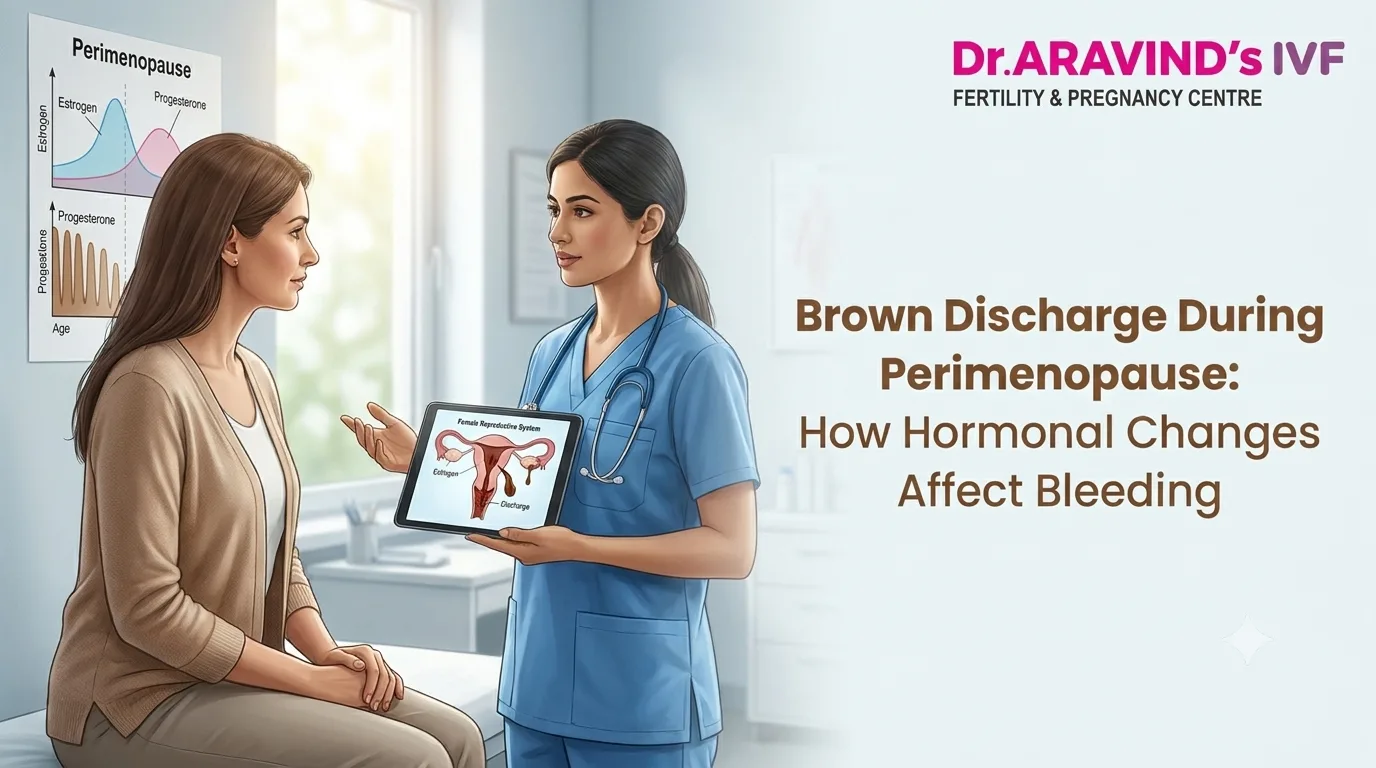
Noticing brown discharge during perimenopause can be confusing, especially if your periods have already become irregular. It may be light spotting, old blood mixed with vaginal fluid, or a sign of another change in your cycle. If you are trying to understand perimenopause brown discharge or need guidance on unusual bleeding, speaking with the best fertility doctor in Chennai can help you get clear, personalised advice.
The colour and amount of discharge can vary from person to person. Brown discharge during perimenopause often happens when a small amount of blood mixes with vaginal fluid and takes longer to leave the uterus. This can give it a darker, brownish shade. However, the timing, flow, and accompanying symptoms matter more than colour alone.
What Is Brown Discharge During Perimenopause?
Brown discharge during perimenopause is vaginal fluid mixed with a small amount of blood that has oxidised. Oxidation happens when blood is exposed to air, which can turn it from bright red to brown or dark brown.
It can appear as a light smear, spotting, or a thicker discharge. Some women notice it just before or after a period, while others may see it at other times in the cycle.
Brown discharge during perimenopause is not always a sign of a problem. In many cases, it is a normal variation in the menstrual cycle. However, if it is new, persistent, or accompanied by other symptoms, it is worth discussing with a doctor.
When Brown Discharge During Perimenopause Is Usually Normal
Brown discharge during perimenopause is often related to light brown spotting before menopause. At this time, estrogen and progesterone levels fluctuate, which can affect the uterine lining and cause light bleeding between periods.
This is often called perimenopausal spotting. It is usually light, short-lived, and may be accompanied by mild pelvic discomfort or a change in vaginal discharge.
Perimenopausal spotting is not a cause for concern if it is light and settles quickly. However, if it is heavy, recurrent, or accompanied by other symptoms, it is worth discussing with a doctor.
Other Possible Causes of Brown Discharge During Perimenopause
While brown discharge during perimenopause is often related to hormonal changes, it can also occur for other reasons:
- Hormonal changes: Fluctuations in estrogen and progesterone can affect the uterine lining and cause spotting.
- Hormonal contraception: Birth control pills, implants, or injections can cause light bleeding between periods, especially in the first few months of use.
- Cervical irritation: Sex, a pelvic exam, or a cervical procedure can sometimes cause light bleeding.
- Infection: Vaginal or cervical infections can cause unusual discharge, sometimes with odour, itching, or discomfort.
- Polyps or fibroids: These growths can cause irregular bleeding or spotting in some women.
- Endometrial changes: Changes in the uterine lining can cause irregular bleeding and may need medical assessment.
- Cervical or uterine conditions: Less commonly, persistent bleeding can be linked to structural or cellular changes that need medical evaluation.
When Brown Discharge During Perimenopause Needs Attention
You should consult a doctor if brown discharge during perimenopause is new, persistent, or accompanied by other symptoms.
Seek medical advice if:
- The discharge has a strong or unpleasant odour
- You have itching, burning, or pelvic pain
- You have fever or feel unwell
- You have heavy bleeding or pass large clots
- You have bleeding after sex or between periods
- You have bleeding after menopause
- You are trying to conceive and have unusual bleeding or fertility concerns
A gynaecologist or fertility specialist can assess symptoms, rule out other causes, and recommend appropriate treatment.
At Dr. Aravind’s IVF Center, women receive confidential guidance on vaginal health, fertility evaluation, and reproductive care. The focus is on helping patients understand their bodies and make informed decisions.
Why Choose Dr. Aravind’s IVF in Chennai?
Dr. Aravind’s IVF Center provides supportive, confidential care for women who have questions about vaginal health, fertility, and reproductive wellbeing. A specialist can help you understand whether brown discharge during perimenopause is related to hormonal changes, pregnancy, or another cause.
Final Thoughts
Brown discharge during perimenopause is often related to hormonal changes, but it can also occur with infections, polyps, or other conditions. While a single episode is often normal, persistent or unusual discharge deserves attention. If you have concerns about vaginal health or fertility, consulting a trusted fertility doctor in Chennai can help you understand the cause and plan appropriate care.
FAQs
1. Is brown discharge during perimenopause always normal?
No. It is often related to hormonal changes, but it can also occur with infections, polyps, or other conditions.
2. When is brown discharge during perimenopause normal?
It is often normal around the time of a period, especially if it is light and short-lived.
3. When should I worry about brown discharge during perimenopause?
Consult a doctor if the discharge is persistent, has a strong odour, or comes with itching, pelvic pain, fever, or heavy bleeding.
4. Can brown discharge during perimenopause be a sign of pregnancy?
Light brown spotting can occur in early pregnancy, but it is not a reliable sign. A pregnancy test is needed to confirm pregnancy.
5. When should I seek urgent care for brown discharge during perimenopause?
Seek urgent care if you have heavy bleeding, severe pain, dizziness, or bleeding after menopause, as these can signal a more serious condition.