
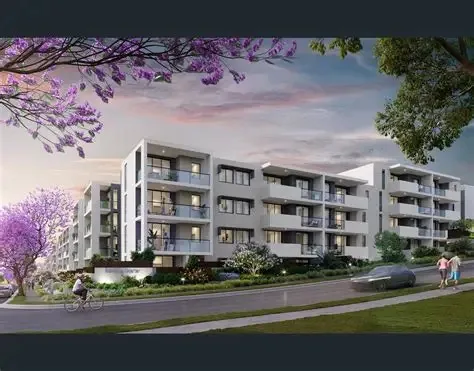
Rouse Hill has become one of Sydney's most talked-about suburbs for new apartments. But before you jump in, it's worth understanding what's actually happening on the ground, who's building what, and whether it's the right fit for you.
The Metro Changed Everything
Let's start with the obvious: the Sydney Metro Northwest has been a game-changer for Rouse Hill. The driverless trains connect residents to Chatswood and the CBD in under 40 minutes, making the suburb genuinely viable for city commuters. For anyone who remembers the pre-metro days of battling Windsor Road traffic, this is a significant upgrade.
One local described Rouse Hill as "a vibrant and rapidly expanding suburb" with "modern amenities, family-friendly environment, and well-planned infrastructure". Another called it the "heart of convenience," noting that from the right location, you can walk to the town centre, metro station, schools, and regional park.
What's Actually Available Right Now
Several brand new developments are either completed or in the pipeline.
The Freecity Tempus Street project is perhaps the most significant. Approved as a State Significant Development, it will deliver 548 new rental homes right opposite Rouse Hill Metro station. The mix is interesting: 332 build-to-rent apartments (studio to three-bedroom) and 216 co-living studios targeted at young professionals.
Three towers of 11, 18, and 23 storeys will rise above a podium with retail, commercial, and wellness spaces, plus a rooftop bar and kitchen. The design by Architectus focuses on a "modern urban village" concept with a central courtyard acting as a communal town square.
What's innovative here is the construction method. Freecity is using volumetric modular construction—apartment modules built in a factory while the podium and basement are constructed on-site. This cuts delivery times, reduces waste, and improves quality. They're targeting 5 Star Green Star, 5 Star NABERS, and WELL certifications.
Sanctuary Quarter is another boutique community of six four-storey buildings with 339 apartments, including studios and one, two, and three-bedroom layouts. It's about a 3-minute drive to Tallawong Metro and 5 minutes to Rouse Hill Town Centre. Features include Fisher & Paykel appliances, timber-look hybrid flooring, and landscaped communal gardens with BBQ areas. A new public school is set to open opposite these apartments in 2027.
For immediate move-in options, apartments at 5 Amytis Street are available now, walking distance to the Metro. A two-bedroom apartment at 4B Hasluck Street is just a 2-minute walk to Tallawong Station, featuring designer finishes and a private balcony.
But Here's What Some Locals Are Saying
Not everyone is thrilled about the transformation. Some long-term residents feel the suburb has lost its appeal.
One review from September 2024 paints a concerning picture: "After living in Rouse Hill for many years, I have watched Rouse Hill transform into a suburb where unfortunately the negatives now outweigh the positives and have now decided to relocate".
The issues raised include:
Overcrowding and infrastructure strain. The metro carparks are now full by 7am on weekdays, and Windsor Road traffic has significantly increased, with average speeds dropping to 20km/h in the morning peak. One resident noted that the suburb transformed "from nice, quietish well connected suburb with a lot of potential, to overcrowded" within just four years.
Building quality concerns. Multiple reviews warn about quality issues in apartment buildings. One local said: "The apartment complexes here have been built very cheaply, everyone who lives in different units have the same complaints in regards to doors not closing properly and ventilation being poor". Another echoed this: "Dwellings have been built quickly and haphazardly... It is important to perform proper due diligence when purchasing, as many are riddled with issues. This is particularly evident in apartment buildings".
Limited food options. Despite the growth, the dining scene is described as lacking variety and quality, with fast food and food court options dominating.
Metro behaviour has deteriorated. One resident noted that what was once a "civil and orderly process of boarding the metro now involves people pushing in, blocking entrances, trying to get on before others can get off, and fighting for seats".
The Shopping Centre Is Expanding
The GPT Group recently began construction on the second stage of Rouse Hill Town Centre, adding more than 10,000 square metres and at least 50 new shops, cafes, and leisure facilities. They originally planned to include 218 apartments in this expansion but are focusing solely on retail for now, with plans to "future-proof" for residential later.
This expansion is being driven by the suburb's massive growth. Hills Shire Council estimates 329,000 residents will live in the local government area within 15 years, up from over 200,000 currently—a 71 per cent increase.
A Major Shift in Development Strategy
Here's an interesting development: in May 2026, NEX Property acquired a DA-approved 520-apartment development site on Schofields Road for around $40 million. But instead of proceeding with apartments, they're planning to pivot to low-density housing, including detached and semi-detached homes with some terraces.
CBRE, which handled the sale, noted this reflects a "broader trend emerging across Western Sydney, where developers are increasingly reassessing apartment projects in favour of lower-density housing outcomes that offer improved deliverability and align more closely with evolving market conditions".
The key takeaway? Even with planning approvals in place, higher-density apartment projects are becoming harder to make work financially. Construction costs are challenging feasibility, and buyers are favouring housing options with more space and amenity.
The Market Numbers
As of 2026, the median unit price in Rouse Hill is **$665,000**, based on 285 sales in the past year—a 3% decrease. The median attached dwelling price sits around $650,000. Houses, by contrast, have seen much stronger growth, with the median house price at $1,747,500 and an 82% increase over the past decade.
This price difference is something to consider. Units in Rouse Hill have actually seen a 17.7% decrease in median price over the last 10 years, while houses have grown 82%. Holding periods also tell a story: houses are held for a median of 10.9 years, while attached dwellings are held for just 3.4 years, suggesting less long-term commitment from unit owners.
Who Should Consider It?
First-home buyers are a key demographic. Entry-level apartments are available under $700,000, and the suburb offers proximity to good schools and parks.
Professionals who want a reliable train commute to the city or Macquarie Park can benefit from the Metro connection.
Investors might find the rental demand attractive, especially with the new co-living and build-to-rent models coming online. But the data suggests attached dwellings haven't shown the same growth as houses, so it's worth crunching the numbers carefully.
The Verdict
Rouse Hill offers genuinely convenient transport and a growing range of amenities. The new apartments coming through are thoughtfully designed, with premium finishes and resort-style features.
But the suburb is experiencing real growing pains. Infrastructure isn't keeping up with population growth, traffic is worsening, and there are genuine concerns about building quality in some developments.
If you're considering a brand new apartment in Rouse Hill, do your homework. Check strata reports thoroughly, visit at different times of day and week, and talk to current residents. And pay close attention to location—being near the Metro is a huge advantage, but proximity to major roads and flight paths might affect your enjoyment.
It's a suburb with genuine potential, but it's also one where careful due diligence will make all the difference.