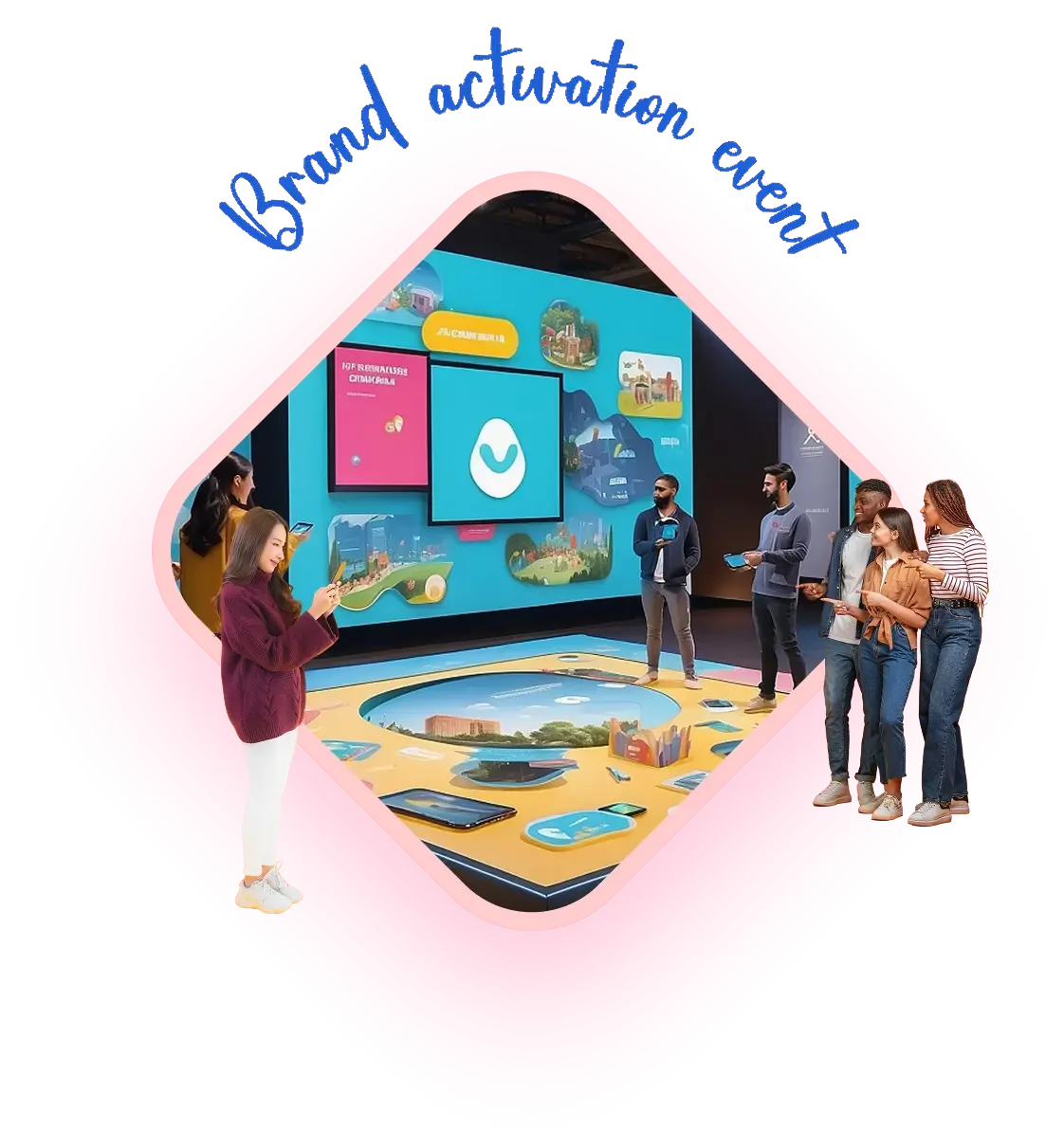
A game gets people to your booth. A draw keeps them there. Most activations only plan for the first half.
Quenth sells these as two experiences, and they share the same backbone: a QR form on the guest's phone, something to play or wait for, a reveal on the big screen, then WhatsApp or email. Run them in sequence and the crowd has a reason to arrive, a reason to compete and a reason to stay.
What a brand activation game does
Quenth's brand activation game starts with a QR scan and a registration form that takes under 30 seconds. Each player gets a unique game code, plays in the format you chose, and watches a live leaderboard update on screen. The winner is announced to the whole room.
There are six formats: Brand Knowledge Quiz, Trivia Battle, Spin & Win, Lightning Round (10 questions in 60 seconds), Team Challenge and Prediction Game. Matching format to footfall matters. Spin & Win suits retail and BTL, where every registrant gets a spin. Lightning Round suits exhibition booths and conferences. Team Challenge suits offsites, where colleagues compete on cumulative scores.
Quenth reports a 94% participation rate across 120+ activations, and three times the dwell time of a standard booth.
What the lucky draw cloud reveal adds
Entries stack up in a pool on screen, and each guest holds a numbered ticket. At reveal time, spinning orbs slow down digit by digit until the winning number lands. Nobody looks away. That's the whole design. The lucky draw cloud reveal is built around that single moment, and Quenth says 99% of the crowd watches it.
You get three draw modes. A single grand draw suits launches and galas. Multiple rounds, run as 3, 5 or 10 draws, suit malls and exhibitions, and non-winners go back into the pool automatically. A tiered draw reveals prizes from third place up to the grand prize, which suits award nights.
Multiple rounds is the mode most activations should pick. Someone who lost round one is still in round two, so they stay. Quenth also reports five times more entries than paper draws.
How to run them together
Both open with the same QR form, so guests already know the routine by the second round. Every registrant lands on a live dashboard you can export to CSV, which means every player and every entrant is a lead, not just a name in a prize bucket.
A simple running order: open the game at doors, let the leaderboard build through the day, then close with the draw when the room is fullest. One brand activation manager described a mall campaign with a queue all day and a draw reveal that drew loud reactions from the crowd.
Setting it up
Set the questions, prize rules, colors and logo before the event. Quenth says a live game takes under two hours to set up. Choose the format by footfall, choose the draw mode by how long your event runs, and schedule the reveal for the busiest hour.
If you'd like to see both on one floor, book a demo with Quenth.