Bookkeeping for a construction company is essential for family-owned construction businesses that want to stay organized, profitable, and financially stable. Many family-run construction companies manage projects, labor, and finances together, which can make financial tracking complicated. Without proper bookkeeping, costs can be unclear, cash flow can become unstable, and long-term planning becomes difficult.
Strong bookkeeping gives family-owned construction businesses clear financial control. It helps track project costs, manage payroll, handle taxes, and support future growth across generations.
Understanding Bookkeeping for a Construction Company
Bookkeeping for a construction company focuses on tracking income and expenses by project. Each construction project has its own budget, labor cost, material expense, and timeline. Proper bookkeeping ensures all financial activities are recorded accurately and linked to the correct project.
Construction bookkeeping typically includes:
- Job costing for each project
- Labor and payroll tracking
- Material and equipment expense tracking
- Progress billing and payment tracking
- Retention tracking
- Expense and income reporting
For family-owned businesses, bookkeeping also helps separate personal and business finances, which improves clarity and compliance.
Why Family-Owned Construction Businesses Need Proper Bookkeeping
Family-run construction companies often operate differently from large corporate firms. Financial decisions may be shared among family members, and roles can overlap. This makes accurate bookkeeping even more important.
Multiple Roles Within the Family
Family members may manage operations, finances, and supervision together. Bookkeeping helps track payments, roles, and compensation clearly.
Separation of Personal and Business Finances
Family businesses sometimes mix personal and business expenses. Bookkeeping creates clear boundaries and prevents confusion.
Informal Financial Decisions
Many family businesses rely on trust and experience. Proper bookkeeping provides real financial data for better decisions.
Long-Term Ownership Planning
Family businesses often pass ownership to the next generation. Accurate records make transitions smoother.
Stable Cash Flow
Construction income changes from project to project. Bookkeeping helps manage these changes and maintain stability.
Reduced Financial Risks
Clear financial records reduce misunderstandings and protect family relationships.
Common Financial Challenges in Family-Owned Construction Companies
Family-owned construction businesses face several financial challenges that bookkeeping can solve.
Unclear Job Profitability
Without proper tracking, it is difficult to know if a project is profitable. Job costing shows the real profit or loss of each project.
Irregular Cash Flow
Payments may be delayed while expenses continue. Bookkeeping helps monitor incoming and outgoing cash.
Labor Cost Confusion
Tracking wages for family and non-family workers can be complex. Proper payroll records ensure accuracy.
Changing Material Costs
Material prices often fluctuate. Tracking expenses helps keep project budgets accurate.
Tax Errors
Incorrect or late tax filings can lead to penalties. Organized bookkeeping supports accurate tax reporting.
Limited Financial Reports
Many small family businesses rely only on bank balances. Detailed reports provide better insight into financial health.
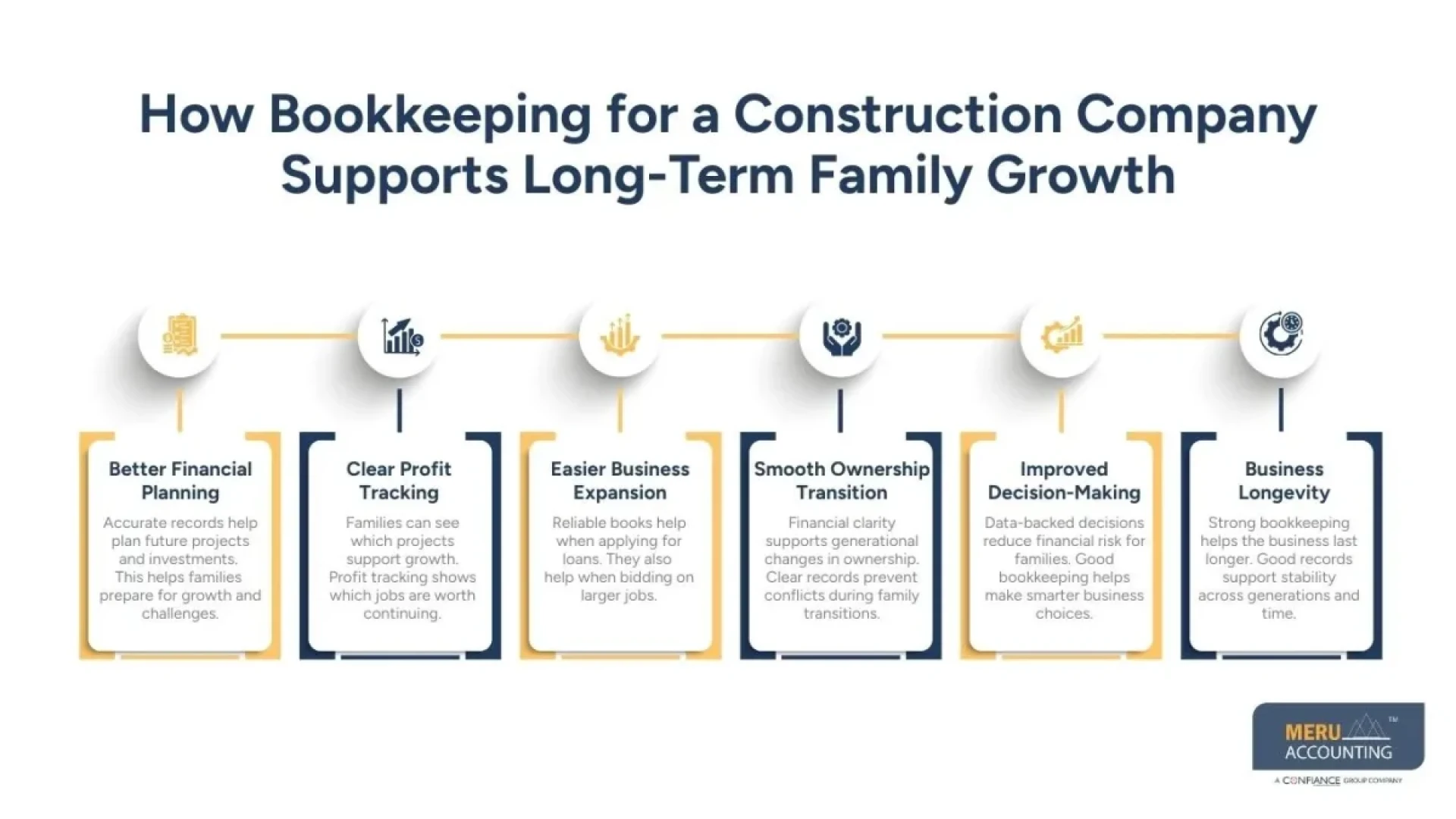
How Bookkeeping Supports Long-Term Family Growth
Bookkeeping for a construction company does more than track daily expenses. It helps family businesses grow and remain stable.
Better Financial Planning
Accurate records support planning for future projects and investments.
Clear Profit Tracking
Owners can see which projects generate the most profit.
Easier Business Expansion
Strong financial records help when applying for loans or bidding for larger projects.
Smooth Ownership Transitions
Clear financial records support succession planning and reduce conflicts.
Improved Decision-Making
Reliable data allows smarter business decisions.
Long-Term Stability
Good bookkeeping supports steady growth and business continuity.