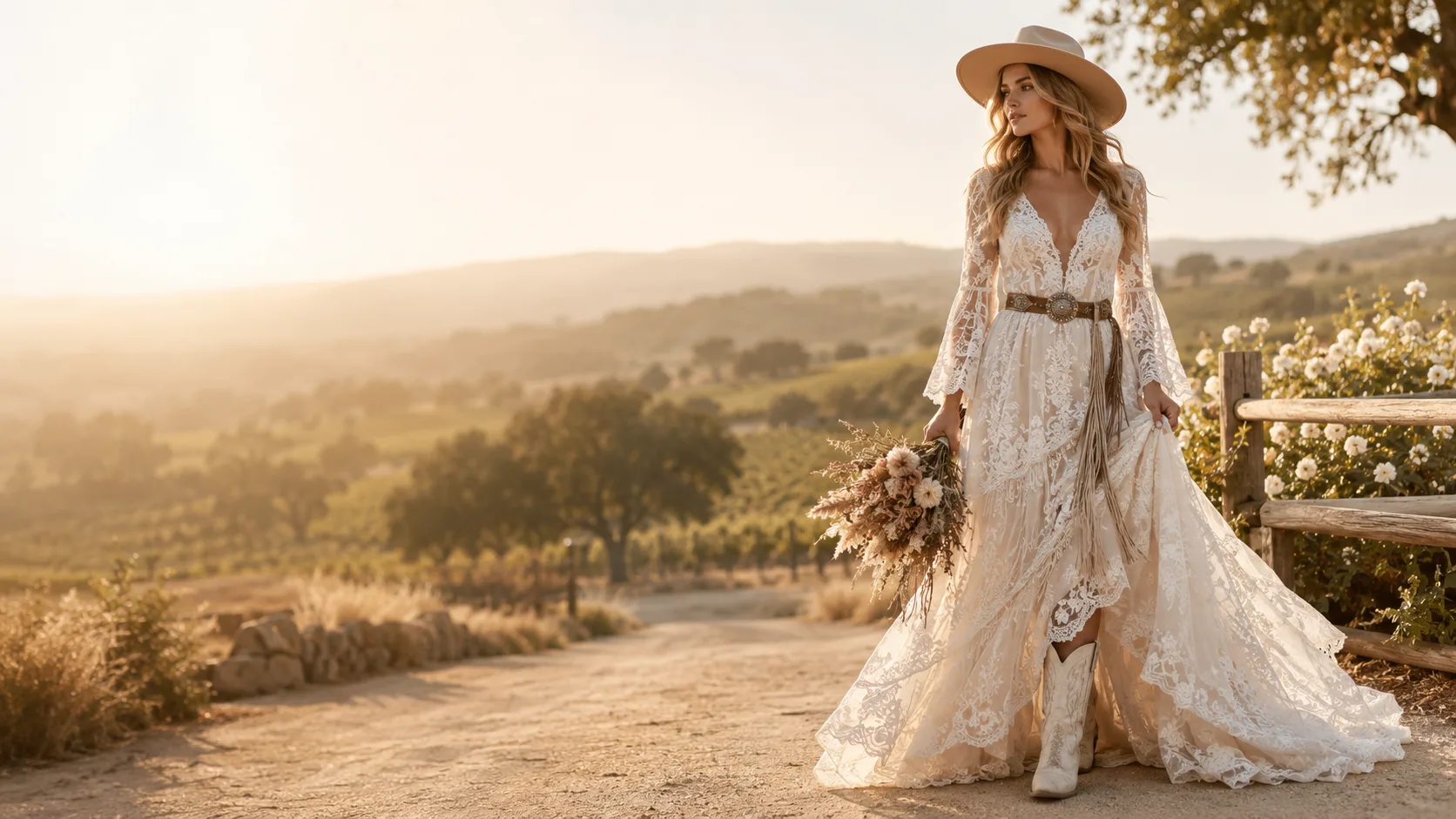
Boho and western bridal styles grew up separately, one rooted in flowing, free-spirited silhouettes and the other in ranch weddings, denim, and leather. Somewhere along the way, brides started blending them, and the combination has become one of the most requested looks for outdoor and destination weddings. A boho western wedding dress takes the relaxed, romantic shapes of boho style and pairs them with the earthy, rugged textures associated with western fashion.
The result is a dress that feels intentional rather than costume-like, which is exactly where most brides want to land with this style.
Defining Features of a Boho Western Wedding Dress
A few elements show up consistently in this style. Flowing, lightweight skirts with movement, often in chiffon or a soft crepe, form the base. Lace detailing tends to be looser and more organic than traditional bridal lace, with floral or vine-like patterns rather than symmetrical, formal designs, a look designers like Lillian West are known for. Fringe, whether on the sleeve, hem, or as an accent on a belt, is one of the clearest signals of the western influence. Necklines often skew toward off the shoulder or square cuts, which read as more relaxed than a traditional sweetheart neckline.
Did you know? The rise of ranch and vineyard wedding venues across California has been one of the biggest drivers behind this style's popularity, since the dress needs to hold up visually against a natural, outdoor backdrop rather than a formal ballroom.
Fabric and Detail Choices That Set the Tone
Fabric choice matters more in this style than in most others, since the wrong fabric can push the dress too far toward either pure boho or pure western. A soft, slightly textured lace over a flowing skirt keeps the boho feel intact. Suede-inspired trims, leather-look belts, and fringe accents bring in the western element without overwhelming the dress. Many boho western gowns also use a slightly undone, textured finish rather than a polished, glossy satin, which fits the relaxed mood the style is going for. If terms like basque waist or bishop sleeve come up during a fitting, our wedding dress glossary breaks each one down in plain language.
Pro tip: If you love the boho western look but are getting married somewhere more formal, ask about a detachable overskirt or a fringe shawl. It lets you wear the dramatic western elements for photos and remove them for a more traditional reception look.
Boots, Belts, and Other Styling Choices
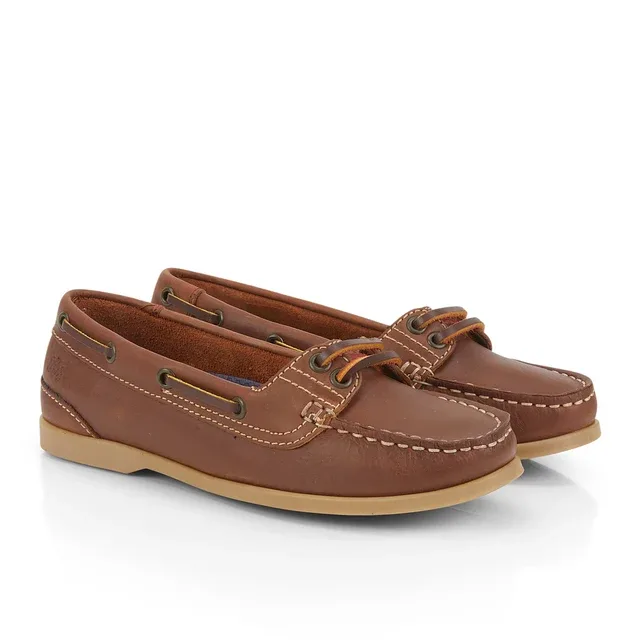
Styling finishes the look as much as the dress itself. Western boots, whether classic leather or a more polished bridal-white pair, are a common choice under a flowing boho skirt. A wide belt, sometimes with a subtle buckle detail, defines the waist in a way that feels different from a traditional bridal sash. Loose, textured hair with minimal jewelry tends to complement this style better than a sleek updo with a formal tiara, since the whole look leans toward relaxed rather than polished.
Best Venues and Seasons for This Style
This style was practically made for outdoor venues. Vineyards, ranches, and open-air estate weddings across Northern California give the dress room to move and photograph well against a natural backdrop. Fall is a particularly strong season for this look, since the earthy tones associated with western style pair naturally with autumn light and foliage. That said, the lightweight fabrics typically used also hold up well in warmer spring and summer settings, especially for evening ceremonies. It is worth trying a few options side by side, since browsing the full collection makes it easier to compare how different fabrics move outdoors.
Common Mistakes to Avoid
- Leaning too far into one side of the style. A dress that is entirely boho with a single fringe accent, or entirely western with a hint of lace, tends to lose the blended look that makes this style distinctive.
- Forgetting about temperature. Outdoor venues can get cold quickly after sunset. A shawl, jacket, or the dress's own sleeve coverage should be part of the plan.
- Overlooking undergarments. Flowing, lightweight fabrics show more than structured gowns do. The right slip or undergarment matters more here than in a fitted, structured dress.
Expert insight: Brides shopping for this style sometimes worry it will look too casual for their families. In fittings, the opposite usually happens once the dress is paired with the right accessories, since a well-made boho western gown still reads as a proper wedding dress, just with more texture and movement than a traditional silhouette.
For brides in the region who want to see this style in person before deciding, visiting bridal shops in the San Francisco Bay Area with a strong selection of relaxed, textured gowns makes it far easier to judge fit and movement than browsing photos alone. Flares Bridal in Walnut Creek, for example, carries a wide enough range of boho and western-inspired silhouettes to compare several options in one appointment.
FAQ
What is the difference between boho and boho western wedding dresses? Boho focuses on flowing, romantic silhouettes with loose lace and soft movement. Boho western adds rugged details like fringe, suede-look trims, and belts inspired by western fashion.
Are boho western wedding dresses only for outdoor weddings? They work best outdoors, but a toned-down version with subtle western details can also work for an indoor reception with a rustic or barn-style venue.
Can I wear boots with a boho western dress? Yes, boots are one of the most common styling choices for this look, whether classic leather or a dressier bridal-white pair.
Is this style suitable for a formal wedding? It leans more casual by nature, but a detachable overskirt or a more refined lace can help it fit a slightly more formal setting.
What season works best for a boho western wedding dress? Fall is especially popular for the color and texture pairing, though the lightweight fabrics typically used also suit spring and summer outdoor weddings.