In today’s fast-paced and digitally connected world, education is undergoing a major transformation. The traditional model of face-to-face learning is no longer the sole method of acquiring knowledge. Instead, online and hybrid learning models have emerged as powerful alternatives, reshaping how learners engage with content, instructors, and peers.
Understanding Online Learning
Online learning, also known as e-learning, refers to educational experiences delivered entirely through the internet. This model allows students to access lectures, assignments, and resources from any location, at any time. It provides flexibility for learners who may have other commitments, such as work or family, or who are located far from educational institutions.
Online learning platforms like Coursera, edX, and Khan Academy have democratized education by offering courses on a wide range of topics, often at little or no cost. Universities and schools have also adopted learning management systems (LMS) like Moodle, Blackboard, and Google Classroom to facilitate online classes.
The main advantages of online learning include:
- Flexibility: Students can study at their own pace and schedule.
- Accessibility: Geographical and physical barriers are minimized.
- Affordability: Reduced costs for commuting, accommodation, and learning materials.
However, online learning also comes with challenges. It often requires high levels of self-discipline and motivation. Students may feel isolated without face-to-face interactions, and technical issues can hinder the learning process.
What Is Hybrid Learning?
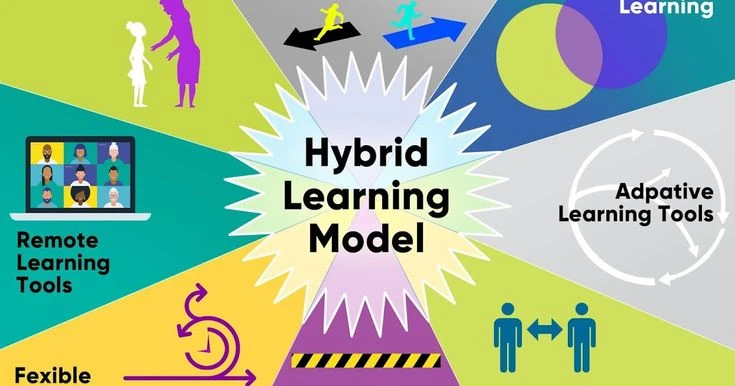
Hybrid learning, also called blended learning, combines the best of both worlds: online education and traditional classroom instruction. In this model, students attend some sessions in person while completing other parts of the course online. The goal is to create a more personalized, flexible, and engaging learning experience.
For instance, a hybrid course might include online lectures and discussions followed by weekly in-person workshops or labs. This approach allows students to absorb foundational knowledge remotely and apply it practically during face-to-face sessions.
Benefits of hybrid learning include:
- Enhanced Engagement: Combining online content with interactive, in-person activities supports different learning styles.
- Improved Outcomes: Studies show that hybrid learners often perform better than those in traditional settings.
- Scalable Model: Institutions can reach more students while maintaining essential in-person elements.
Technology’s Role in Supporting Learning Models
Technology is the backbone of both online and hybrid learning. Video conferencing tools like Zoom, Microsoft Teams, and Google Meet enable live interaction between students and teachers. Digital whiteboards, collaboration platforms like Miro or Jamboard, and asynchronous discussion forums enhance the online experience.
Artificial intelligence (AI) and data analytics are also playing a growing role. AI can provide personalized learning pathways, adaptive assessments, and intelligent tutoring systems. Learning analytics help educators track student progress and intervene early if support is needed.
Challenges in Implementation
Despite their benefits, online and hybrid learning models face several hurdles:
- Digital Divide: Not all students have equal access to reliable internet or devices.
- Instructor Readiness: Educators must be trained to effectively design and deliver online content.
- Assessment Integrity: Ensuring fair and accurate evaluation in a remote setting can be difficult.
- Student Engagement: Keeping learners motivated and focused without physical presence requires creative strategies.
Best Practices for Effective Learning Models
To succeed in implementing online and hybrid learning, institutions should consider the following best practices:
- Invest in Training: Teachers and students should receive training on using digital tools and engaging in virtual learning.
- Design for Interaction: Courses should include interactive elements like quizzes, breakout rooms, and peer collaboration.
- Ensure Support Systems: Provide academic and technical support to learners throughout the course.
- Use Feedback Loops: Continuous feedback helps improve course design and address student concerns in real time.
The Future of Learning
The COVID-19 pandemic accelerated the adoption of online and hybrid learning, pushing institutions to rethink their education delivery methods. While in-person learning will always have value, the flexibility, accessibility, and innovation offered by online and hybrid models make them a lasting part of the education landscape.
In the future, we can expect even more sophisticated integration of technology, including virtual reality (VR), augmented reality (AR), and AI-powered tutors. These advancements will further personalize and enhance the learning experience.
Conclusion
Online and hybrid learning models represent a paradigm shift in education. By blending flexibility with engagement, these models offer learners more control over their educational journey. As technology continues to evolve, so too will the possibilities for how we teach and learn in a connected world.