Over the past twenty years of analyzing corporate logistics and audience behavior, I have seen massive event budgets completely undermined by one consistently overlooked detail: the transit window. Whether you are organizing a multi-day executive summit or a localized team retreat, standard Corporate event transportation is almost always treated as a sterile afterthought.
Event planners obsess over the keynote speakers, the catering, and the venue lighting, yet they ignore the crucial time attendees spend moving between them. If you want to elevate your next event from strictly functional to unforgettable, here is why you must rethink mobility and treat it as a core component of your event strategy.
1. Eliminating the "Engagement Dead Zone"
When attendees board a standard forward-facing bus, a psychological shift occurs. They put their headphones in, check their emails, and emotionally disengage. The networking and energy you worked so hard to build at the previous venue instantly evaporates. This creates a massive "engagement dead zone" right in the middle of your itinerary.
To maintain momentum, you must select transit options that encourage interaction. Vehicles with inward-facing, perimeter seating force eye contact and organic conversation. The travel time should never be a pause in your event schedule; it should act as an active, facilitated networking session.
2. The Aesthetic Halo Effect
The environment your guests travel in casts a halo effect over the destination itself. If the journey is tedious and uninspired, guests arrive at the next venue fatigued.
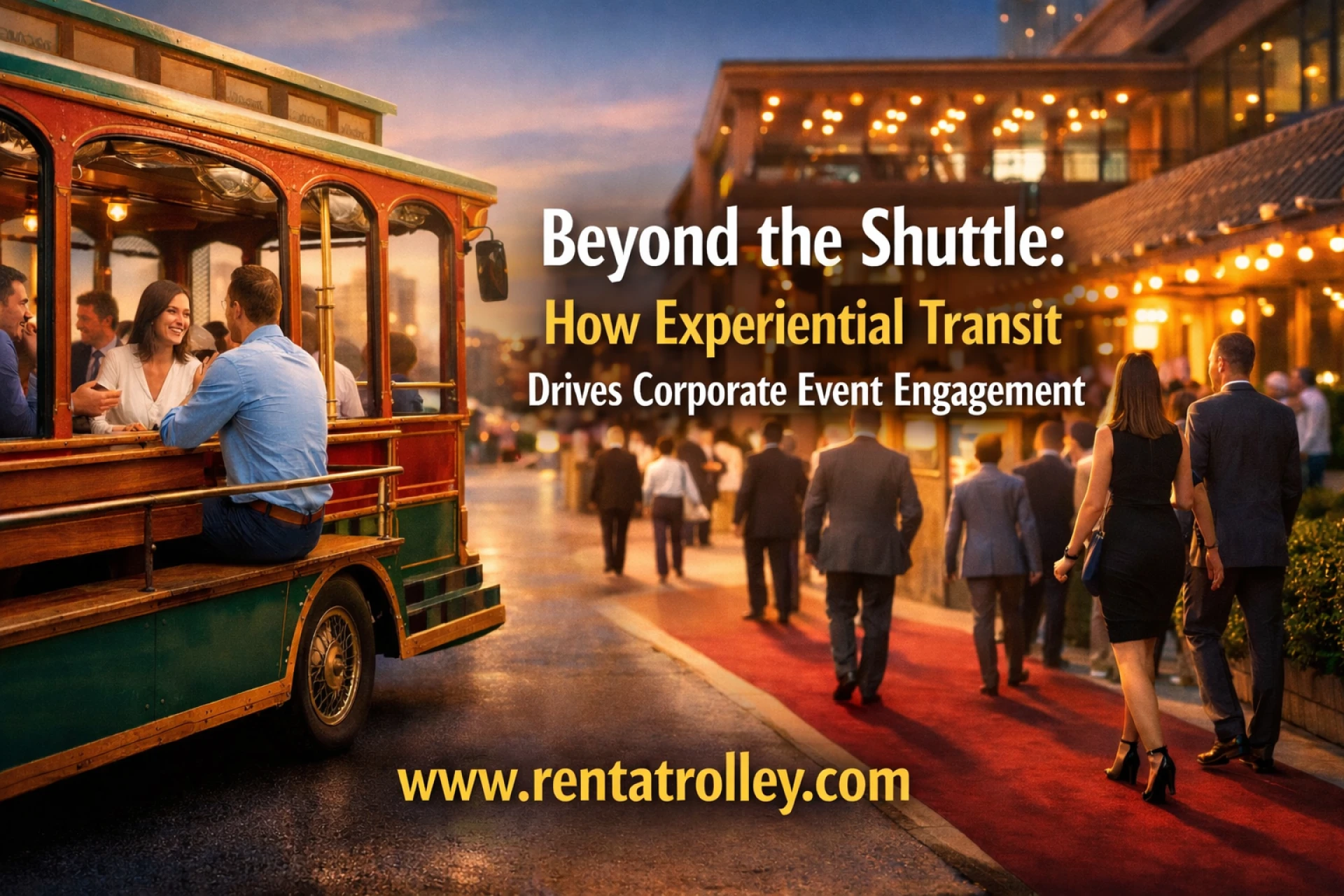
When coordinating company outing transportation, forward-thinking planners are abandoning the standard motorcoach in favor of experiential vehicles. Opting for a vintage trolley, for example, completely shifts the dynamic. The unique aesthetic, open-air feel, and communal layout keep the group's energy high, cohesive, and naturally photogenic. When the vehicle itself feels like a highly curated experience, the attendees arrive refreshed and eager to participate, rather than drained by the commute.
3. Logistical Clustering vs. Fragmentation
A major bottleneck in event flow is "fragmented arrival." When you allow attendees to rideshare or drive themselves between venues, they arrive in a slow, unpredictable trickle. This destroys the impact of a grand entrance, delays synchronized presentations, and makes structured networking nearly impossible.
By utilizing high-capacity, experiential group transit, you control the narrative. You ensure "logistical clustering," meaning your entire cohort arrives simultaneously, experiencing the impact of the next venue as a collective unit. It tightens the overall schedule, dramatically reduces straggler-related delays, and immediately unifies the crowd upon entry.
The Takeaway
Stop treating transportation as a simple line item to be minimized. The journey between venues is a highly valuable, captive environment—use it to your strategic advantage. Prioritize communal seating, leverage aesthetic vehicles that enhance the mood, and strictly control the arrival flow. When you transform transit from a logistical necessity into a curated experience, the overall ROI and impact of your event multiply.