For clinicians and informed patients, the first line of defense against most non-traumatic musculoskeletal pain is a conservative, multi-modal approach. For a condition like patellofemoral pain syndrome or chronic lower back pain, a typical treatment plan will rightly include physical therapy, targeted stretching, and activity modification. These interventions are crucial for strengthening supporting muscles and improving flexibility. However, in many cases, this approach may be missing a critical pillar: addressing the patient's foundational biomechanics.
While physical therapy can build a stronger system, it may not fully correct an underlying structural alignment issue that is causing repetitive strain. A custom orthotic is not a standalone cure, but rather a powerful tool that can be integrated into a conservative treatment plan to address this foundational component, creating a synergistic effect that can lead to more durable and successful outcomes.
The Missing Link: Controlling the Biomechanical Input
Think of the body as a system responding to inputs. A patient can diligently perform every glute-strengthening exercise their physical therapist prescribes, but if their foot overpronates with every step they take, they are still feeding a faulty mechanical input into their kinetic chain. The muscles are constantly fighting an uphill battle against poor alignment.
This is where a true custom orthotic provides the missing link. Its primary function is to manage this faulty input at its source. By supporting the arch and stabilizing the heel, it helps to control overpronation, which in turn reduces the cascading internal rotation of the leg that can lead to stress on the knees, hips, and back.
When integrated into a treatment plan, the orthotic essentially creates a more stable and efficient platform, allowing the other modalities to be more effective.
A Symbiotic Relationship with Physical Therapy
The relationship between custom orthotics and physical therapy is not one of replacement, but of synergy. They work together to achieve a common goal.
- Orthotics Create a Better Environment for Exercise: When a patient performs a therapeutic exercise like a squat or a lunge on a stable, properly aligned foundation, the correct muscles are more easily engaged. The orthotic helps to prevent the compensatory movements (like the knee collapsing inward) that can undermine the exercise's effectiveness.
- Therapy Improves the Body's Response to the Orthotic: An orthotic can reposition the foot, but physical therapy strengthens the intrinsic foot muscles, the glutes, and the core, which are all essential for adapting to and benefiting from this new alignment.
- Improving Patient Compliance: One of the biggest challenges in conservative care is patient compliance. If an activity or exercise is painful, the patient is less likely to do it. By providing foundational support that can help reduce discomfort during daily activities, a custom orthotic can improve a patient's ability to tolerate their therapeutic exercise program, leading to better adherence and faster progress.
Making Integrated Care More Accessible
Historically, one of the barriers to this integrated approach was the logistical friction of obtaining a custom orthotic. The process required separate appointments and a long wait time, making it feel like a disconnected step in the patient's care plan.
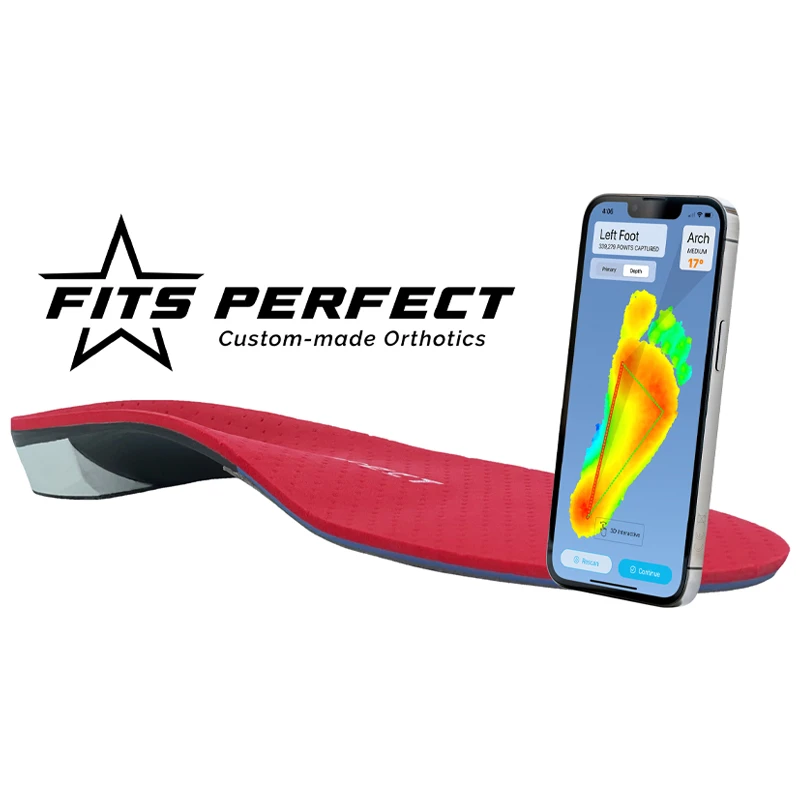
Modern technology has eliminated this barrier. A clinician can now recommend a service like Fits Perfect, and the patient can use a 3D foot scanning app at home to capture their precise foot geometry. This seamless, direct-to-consumer model allows the patient to easily acquire their device in parallel with their ongoing therapy, creating a more cohesive and efficient treatment experience.
Furthermore, with a range of orthotic models for different shoe types—from athletic sneakers to work boots—a clinician can be confident that the patient will have the support they need across all their daily activities, reinforcing the benefits of their treatment plan around the clock.
By viewing a custom orthotic not as an isolated product, but as a key component of a comprehensive, conservative treatment strategy, clinicians and patients can more effectively address the root biomechanical causes of pain, leading to better, more lasting results. Explore how a data-driven, personalized orthotic can complement your approach to musculoskeletal health.