
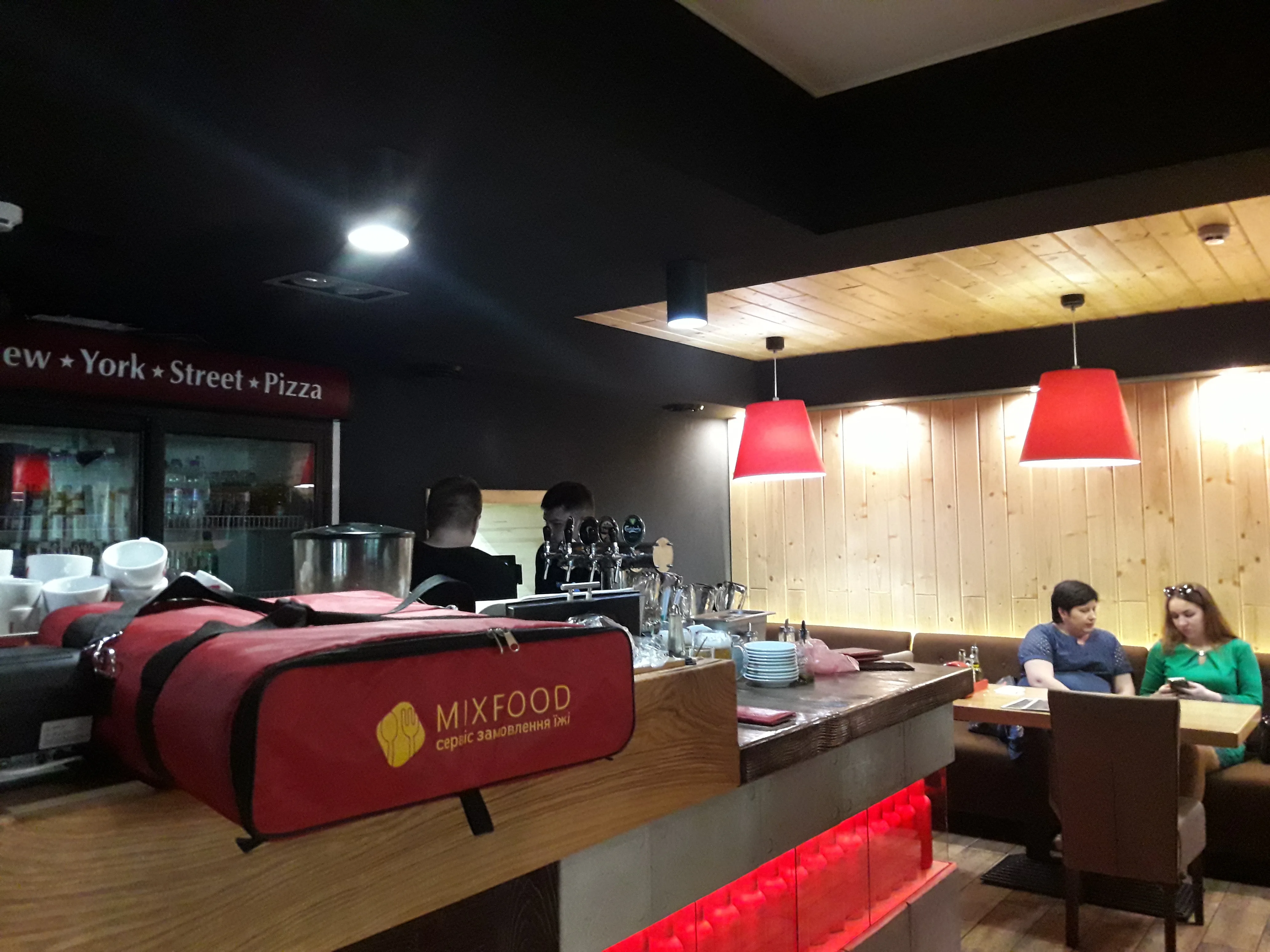
From Public Buses to 3 Million Orders: How Ukraine’s Mixfood Redefined FoodTech Resilience
Ukrainian FoodTech is usually associated with global giants or capital-based startups raising millions in venture capital. However, the true resilience of the country’s business ecosystem is often forged far from the spotlight of Kyiv—deep in the regions, where survival requires a completely different playbook.
The story of Mixfood began in Mariupol back in 2010—long before food delivery apps became a daily necessity or a trillion-dollar global industry. Over the past 15 years, this regional pioneer has undergone a mind-blowing evolution. They started with couriers navigating city routes on public buses, carrying food in homemade thermal bags. Today, Mixfood is a sophisticated, nationwide IT platform that has officially crossed the milestone of 3,000,000 completed orders in 2026.
The Era of Public Buses and Homemade Thermal Bags
In 2010, the concept of ordering restaurant food online was practically non-existent in Ukraine's regional centers. Mixfood's founders had to build both the infrastructure and consumer habits from scratch. Without access to specialized equipment or massive funding, the team improvised. Early couriers relied on public transportation and local minibuses ("marshrutkas") to deliver orders across Mariupol, using makeshift thermal bags to keep the food warm.
Despite the logistical challenges, this grassroots approach allowed the company to understand the core needs of both local restaurants and hungry customers. It laid a foundation of extreme cost-efficiency and adaptability that would later become the company’s ultimate competitive advantage.
Building a Proprietary IT Ecosystem
As the market evolved, Mixfood realized that relying on third-party software would limit their growth. Instead of buying off-the-shelf solutions, they invested in developing their own proprietary IT platform.
This ecosystem was tailored specifically for regional markets, optimizing logistics for cities with different infrastructure densities than Kyiv. The platform integrated automated order dispatching, real-time courier tracking, and predictive analytics for restaurant kitchens. By controlling their tech stack, Mixfood kept operational costs low and offered local partners highly flexible terms that global aggregators simply could not match.
The Ultimate Test: War, Relocation, and Rebirth
The ultimate test of resilience came in 2022. The full-scale invasion devastated Mariupol, destroying the company’s home base, local partner network, and physical infrastructure. For many businesses, this would have been the end. But for Mixfood, it became the beginning of a remarkable second chapter.
Having saved their core asset—their proprietary software and intellectual property—the team relocated and pivoted. They shifted their focus to a highly scalable franchise model, empowering local entrepreneurs in other Ukrainian regions to launch delivery services using Mixfood’s proven technology.
Crossing the 3,000,000 Milestone in 2026
By adapting to the harsh realities of wartime economics, Mixfood didn’t just survive—it expanded. The franchise model allowed the brand to enter dozens of new towns and cities across Ukraine, providing jobs and supporting local restaurant businesses when they needed it most.
In 2026, this relentless journey culminated in a historic achievement: Mixfood officially processed its 3,000,000th order.
Mixfood’s path proves that capital-city budgets aren't the only way to build a successful Tech company. True innovation lies in the ability to adapt, survive, and scale against all odds. The regional underdog didn't just outlast the giants—it rewrote the rules of Ukrainian FoodTech.
👉 Read the full, exclusive story of adaptation, survival, and unstoppable growth in our main article.