Choosing the Best CBSE School in Ulwe is only one part of preparing a child for primary education. The weeks leading up to the first day of school are equally important because they help children build confidence, develop independence, and become comfortable with new routines. When parents focus on these everyday experiences, children are more likely to begin school feeling secure and ready to learn.
Primary school introduces children to a new environment filled with opportunities, responsibilities, and friendships. While every child adapts differently, thoughtful preparation at home can make this transition smoother and more enjoyable.
Why the First School Transition Matters
The move from preschool to primary school is one of the earliest milestones in a child's educational journey.
Children experience:
- New teachers
- Larger classrooms
- Different daily routines
- More structured learning
- Greater independence
Although these changes may seem small to adults, they can feel significant to young learners.
Helping children understand what to expect reduces uncertainty and encourages a positive attitude towards school.
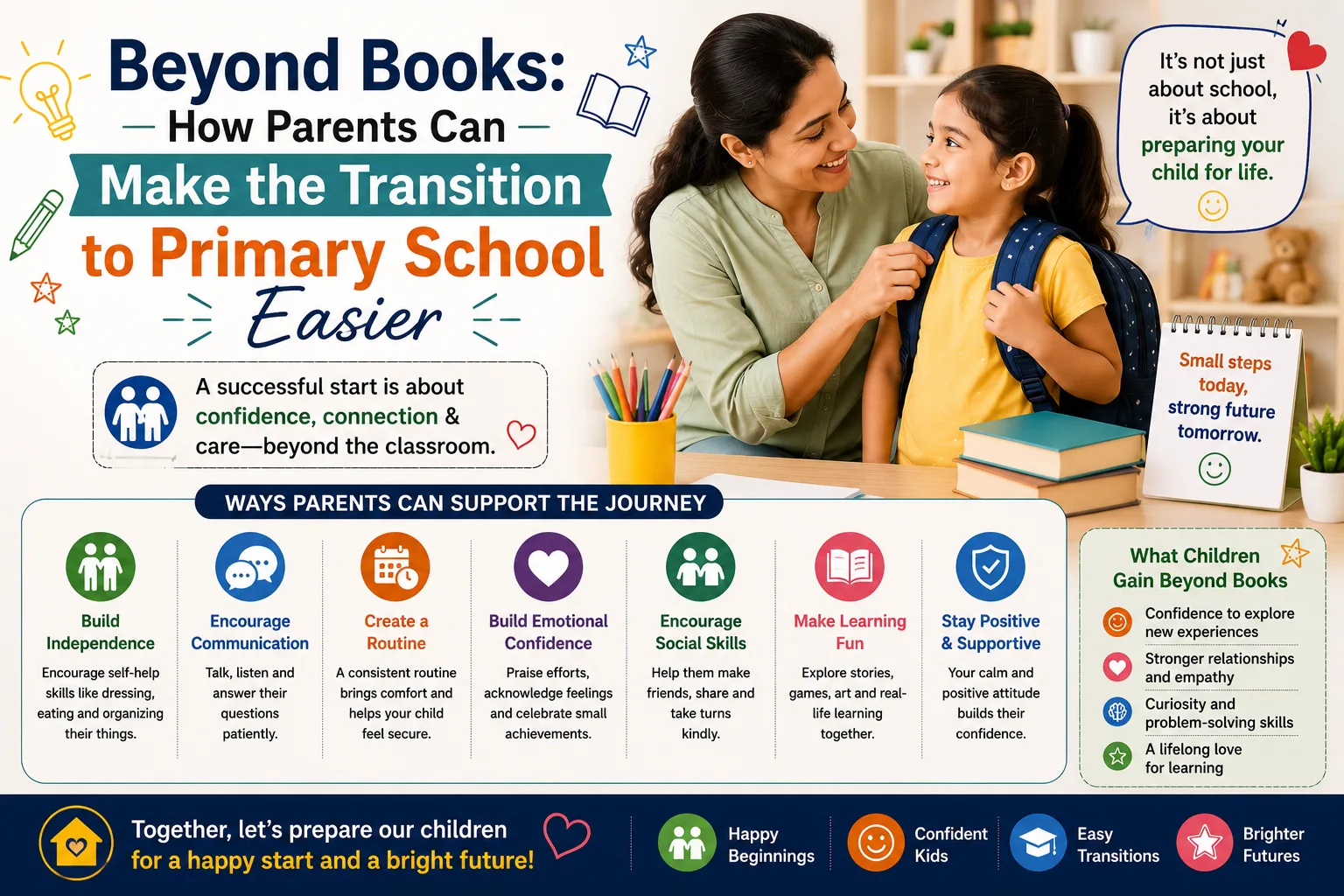
Confidence Begins Long Before the First Day
Many parents focus on school supplies, uniforms, and admission paperwork.
These are important, but confidence develops through everyday experiences.
Simple habits such as greeting neighbours politely, putting toys away after play, choosing clothes independently, or helping with small household tasks teach responsibility and self-belief.
When children realise they can complete tasks on their own, they approach new situations with greater confidence.
Reading Together Builds More Than Language Skills
Reading remains one of the most effective ways to prepare children for school.
Storybooks introduce new vocabulary, improve listening skills, strengthen imagination, and encourage meaningful conversations.
Rather than asking children to memorise words, discuss the story together.
Questions such as:
- Why do you think the character made that choice?
- What would you do differently?
- What do you think happens next?
help develop critical thinking from an early age.
Learning Through Everyday Experiences
Children learn continuously—not only inside classrooms.
Parents can turn ordinary activities into valuable learning opportunities.
For example:
- Cooking introduces measurement.
- Gardening teaches observation.
- Shopping encourages counting.
- Nature walks develop curiosity.
- Board games improve concentration.
These practical experiences make learning enjoyable while supporting future classroom success.
Emotional Readiness Deserves Equal Attention
Academic preparation often receives most of the attention, yet emotional readiness is equally important.
Children should feel comfortable expressing emotions, asking for help, and adapting to new situations.
Parents can support emotional development by:
- Listening patiently.
- Encouraging questions.
- Talking positively about school.
- Acknowledging feelings instead of dismissing them.
Children who feel emotionally secure usually adjust more comfortably to primary school.
Choosing a School That Encourages Growth
Every family has different expectations, but certain qualities consistently contribute to a positive learning experience.
When comparing CBSE schools in Ulwe, consider whether the school promotes:
- Activity-based learning
- Individual attention
- Creative thinking
- Sports and performing arts
- Open communication with parents
- Safe and inclusive classrooms
These elements help children enjoy learning while developing important life skills.
Communication Creates Stronger Learners
One simple habit often overlooked is conversation.
Children who regularly talk about their experiences become better communicators and more confident learners.
Parents can encourage this by asking questions such as:
- What made you smile today?
- What was something new you discovered?
- If you could teach one thing to your friends, what would it be?
These conversations strengthen language skills without feeling like formal lessons.
Families looking for an English medium school in Ulwe Navi Mumbai often appreciate schools that continue encouraging this style of communication inside the classroom.
Parents and Schools Work Best as a Team
Children receive the greatest support when parents and teachers work together.
Attending parent meetings, discussing progress regularly, and reinforcing positive habits at home create consistency that benefits every learner.
Education becomes far more effective when school and home share the same goal—helping children become confident, responsible, and curious individuals.
Looking Beyond Academics
Good schools prepare children not only for examinations but also for life.
Alongside academic knowledge, children should develop:
- Curiosity
- Kindness
- Responsibility
- Problem-solving
- Collaboration
- Confidence
Parents exploring the best schools in Ulwe increasingly recognise that these qualities are essential for future success in a rapidly changing world.
Final Thoughts
Preparing children for primary school is a gradual process rather than a single event. Small routines, encouraging conversations, meaningful play, and opportunities for independence help children approach learning with confidence and enthusiasm.
For families considering a private school in Ulwe, it is worth choosing a learning environment that supports both academic achievement and holistic development.
St. Wilfred's School, Ulwe follows this balanced philosophy by combining the CBSE curriculum with experienced educators, activity-based learning, modern classrooms, sports, creative programmes, and a nurturing environment where every child is encouraged to reach their full potential.
Frequently Asked Questions
How early should parents prepare children for primary school?
Starting a few months before the academic session is ideal. Gradually introducing routines, reading habits, and independent activities helps children adjust comfortably.
Is emotional readiness as important as academic readiness?
Yes. Confidence, communication, social skills, and emotional well-being help children settle into school and participate actively in learning.
What should parents look for when visiting a school?
Observe teacher-student interaction, classroom engagement, safety measures, learning methods, extracurricular opportunities, and how the school supports overall child development.