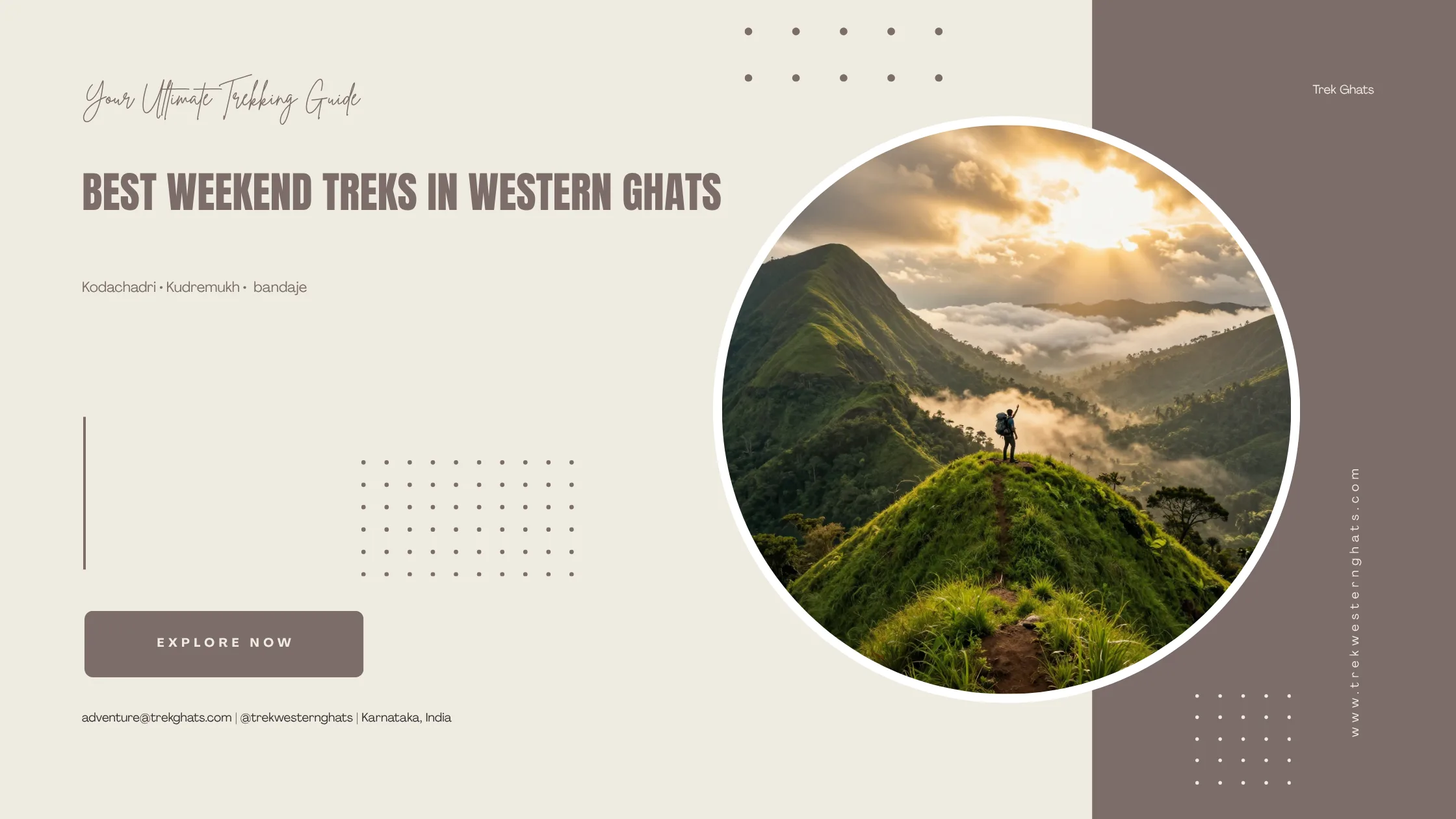
Escaping the routine of city life does not require taking a week off from work. South India, anchored by the UNESCO-listed Western Ghats and the rugged trails of the Deccan plateau, offers some of the most dynamic 2-day trekking circuits in the country. From cloud-kissed emerald ridgelines to hidden rainforest cascades, these trails offer the perfect weekend adventure.
Here is a curated, updated guide to the top 10 weekend treks in South India, featuring trail stats, seasonal breakdowns, and practical highlights.
Top 10 Weekend Treks in South India
1. Kudremukh Trek (Chikmagalur, Karnataka)
Named after its iconic horse-face-shaped summit, Kudremukh stands at an elevation of 1,894 meters (6,214 ft) inside the Kudremukh National Park. The 22 km trail traverses open rolling meadows, montane shola forest corridors, and pristine mountain streams. It is widely considered the gold standard for high-altitude grassland treks in Karnataka.
- Altitude: 1,894 m (6,214 ft)
- Trail Distance: 22 km round trip
- Difficulty: Moderate to Difficult
- Best Time: June to January (Monsoon for intense green carpets; Winter for clear vistas)
- Key Highlights: Horse-face peak view, Ontimane check-post crossing, Shola forest canopy.
2. Kodachadri Trek (Shivamogga, Karnataka)
Perched within the Mookambika Wildlife Sanctuary, the Kodachadri trek is an adventure-packed circuit combining waterfalls, dense rainforest scrambles, and historic ridge viewpoints. Trekkers navigate past the multi-tiered Hidlumane Falls before reaching the Sarvajna Peetha stone structure at the summit ridge.
For seamless logistics, forest permits, and guided weekend batches, explore dedicated Kodachadri Trek packages.
- Altitude: 1,343 m (4,406 ft)
- Trail Distance: 14–16 km round trip
- Difficulty: Moderate
- Best Time: September to February
- Key Highlights: Hidlumane Falls, steep jeep tracks, sunset over the Arabian Sea horizon.
3. Kurinjal Peak Trek (Chikmagalur, Karnataka)
Located in the core zone of Kudremukh National Park, this serene mountain trail offers a peaceful, uncrowded escape into lush biodiversity. To secure regulated forest permits and experienced guidance, explore dedicated Kurinjal Trek departures.
To secure restricted forest entries and trail guides effortlessly, check out the Kurinjal Trek departures.
- Altitude: 1,159 m (3,802 ft)
- Trail Distance: 14 km round trip
- Difficulty: Easy to Moderate
- Best Time: June to January
- Key Highlights: Solitary nature corridors, old colonial ruins, sweeping valley panoramas.
4. Bandaje Falls & Ballalarayana Durga (Charmadi Ghats, Karnataka)
Blending centuries-old Hoysala history with rugged Western Ghats wilderness, this expedition takes hikers through sweeping grasslands to a dramatic cliffside drop. Trekkers looking for managed forest approvals and route safety can book organized Bandaje Falls trek itineraries
For complete route guidance and managed permits, look into organized Bandaje Falls Trek itineraries.
- Altitude: 1,500 m (4,921 ft)
- Trail Distance: 16–18 km round trip
- Difficulty: Moderate
- Best Time: August to February
- Key Highlights: 12th-century Hoysala fort ruins, sheer vertical waterfall drop, Charmadi ridgelines.
5. Netravati Peak Trek (Chikmagalur, Karnataka)
Nestled within the Kudremukh mountain range, the Netravati Peak trail is famed for dramatic cloud inversions and vibrant green slopes. The route runs close to the origin basins of the Netravati River, making it an ideal choice for landscape photographers and beginner hikers.
- Altitude: 1,520 m (4,986 ft)
- Trail Distance: 12 km round trip
- Difficulty: Easy to Moderate
- Best Time: July to January
- Key Highlights: Endless rolling meadows, low-hanging cloud layers, clear freshwater streams.
6. Kumara Parvatha / Pushpagiri (Coorg, Karnataka)
As the second-highest peak in Karnataka, Kumara Parvatha is widely regarded as the ultimate endurance test in South India. Spanning steep rock slabs, the demanding Shesha Parvatha ridge, and thick jungle canopies, this 22 km trail demands solid physical conditioning and mental stamina.
- Altitude: 1,712 m (5,617 ft)
- Trail Distance: 22 km round trip
- Difficulty: Strenuous / Challenging
- Best Time: October to March
- Key Highlights: Shesha Parvatha cliff edge, Bhattara Mane forest post, vertical rock climbs.
7. Tadiandamol Trek (Coorg, Karnataka)
Rising as the highest mountain in Coorg, Tadiandamol provides an accessible, beginner-friendly route without sacrificing scenic beauty. The trail begins near the historic Nalknad Palace and winds through aromatic coffee plantations, broadleaf forest patches, and breezy open ridges.
- Altitude: 1,748 m (5,735 ft)
- Trail Distance: 12 km round trip
- Difficulty: Easy to Moderate
- Best Time: September to February
- Key Highlights: Nalknad Palace base, Big Stone landmark, sweeping Coorg coffee valley vistas.
8. Chembra Peak Trek (Wayanad, Kerala)
Chembra is the tallest peak in the Wayanad hill tract. The main attraction along the trail is the perennial heart-shaped alpine lake (Hridaya Saras) situated midway to the top, surrounded by rolling tea gardens and mist-laden slopes.
- Altitude: 2,100 m (6,890 ft)
- Trail Distance: 9 km round trip
- Difficulty: Moderate
- Best Time: September to March
- Key Highlights: Heart-shaped natural lake, panoramic Wayanad tea estate overlooks, misty high ridges.
9. Meesapulimala Trek (Munnar, Kerala)
The second-highest peak in the Western Ghats south of Anamudi, Meesapulimala takes trekkers through high-altitude pine forests, rhododendron valleys, and rolling montane grasslands. The summit frequently sits above sea-level cloud covers, offering surreal morning views.
- Altitude: 2,640 m (8,661 ft)
- Trail Distance: 16 km round trip
- Difficulty: Moderate to Difficult
- Best Time: September to May
- Key Highlights: High-altitude pine woods, Rhodo Valley blooms, walking above cloud inversions.
10. Skandagiri (Kalavara Durga) Night Trek (Chikkaballapur, Karnataka)
Located just 60 km from Bengaluru, Skandagiri is the region's premier sunrise and night-trekking destination. Hikers begin the ascent in the early hours of the morning through rocky scrub terrain to reach the ruins of Tipu Sultan’s ancient hill fortress just as the sun rises above an ocean of clouds.
- Altitude: 1,450 m (4,757 ft)
- Trail Distance: 8 km round trip
- Difficulty: Moderate
- Best Time: Year-round (Best from September to March)
- Key Highlights: Midnight trail climbing, 18th-century fort ramparts, spectacular sunrise cloud-bed views.
Comparison of Top Weekend Trails
Trek NameRegionDistanceDifficultyPeak HighlightKudremukhChikmagalur22 kmModerate-HardHorse-face peak & vast shola meadowsKodachadriShivamogga15 kmModerateHidlumane Falls & Sarvajna PeethaKurinjalChikmagalur14 kmEasy-ModeratePeaceful trails & estate ruinsBandaje FallsCharmadi17 kmModerateAncient fort & 200ft waterfall dropNetravatiChikmagalur12 kmEasy-ModerateRolling green ridges & river originsKumara ParvathaCoorg22 kmStrenuousShesha Parvatha & volcanic rock facesTadiandamolCoorg12 kmEasy-ModerateHighest point in Coorg & coffee estatesChembra PeakWayanad9 kmModeratePerennial heart-shaped alpine lakeMeesapulimalaMunnar16 kmModerate-HardHigh-altitude pine & rhododendron woodsSkandagiriBengaluru Rural8 kmModerateSunrise views above an ocean of cloudsBest Season for Weekend Trekking in South India
- Monsoon (June – September): Best for chasing roaring waterfalls, surging streams, and vibrant green hill faces. Note: Expect heavy rainfall, slippery descents, and leeches.
- Post-Monsoon (October – November): The golden window. Fresh greenery remains, cloud covers are frequent, and trails dry out for balanced trekking.
- Winter (December – February): Cool, crisp mornings with clear skies, high panoramic visibility, and comfortable daytime walking temperatures.
- Summer (March – May): Warm daytime temperatures with dry trails. Ideal for early morning and night ascents like Skandagiri.
Weekend Trekking Packing Checklist
- Footwear: Sturdy hiking shoes with deep rubber lugs and broken-in soles.
- Backpack: Compact 20–30L daypack equipped with a waterproof rain cover.
- Clothing: Breathable dry-fit t-shirts, convertible cargo trousers, and a lightweight windproof/rain jacket.
- Trek Essentials: 2-liter hydration bladder or water bottles, high-energy trail snacks, ORS/electrolyte packets, and a portable power bank.
- Safety & Permits: Basic personal first-aid kit, leech protection gaiters/socks (during wet months), a mini headlamp, and a physical government ID for forest checkpoints.