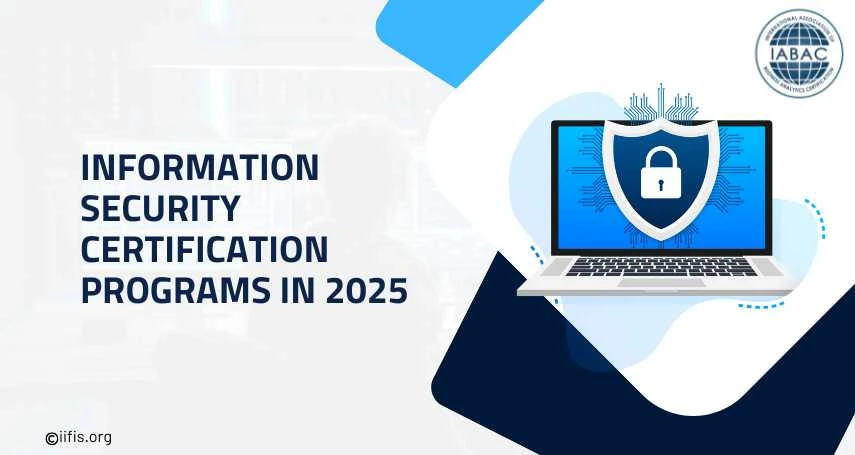
Protecting information from cyber threats is a must. And one of the best ways to build your skills and show your expertise is by earning a certification in information security.
With so many online certification programs available, it can be confusing to choose the right one. It will guide you through the best online information security certification programs available in 2025. We’ll keep the language simple, cover key details, and help you decide which one suits you best.
Why Is Information Security Important?
Let's discuss the importance of information security before getting into certifications.
Cybercriminals attempt to steal data from people and businesses every day. They might attempt money theft, system hacking, or even blackmail. Effective information security procedures help in avoiding these dangers.
Cybersecurity experts are essential to everything from banks to hospitals, online retailers to governments. Because of this, employment in information security is expanding quickly, and if you want to work in this industry or advance in it, becoming certified is an excellent choice.
What Is an Information Security Certification?
A formal indication that you have acquired specific cybersecurity skills is an information security certification. These certificates are typically provided by reputable companies or educational institutions. Some can involve practical training or projects, while others would need you to complete an exam.
These certifications help in:
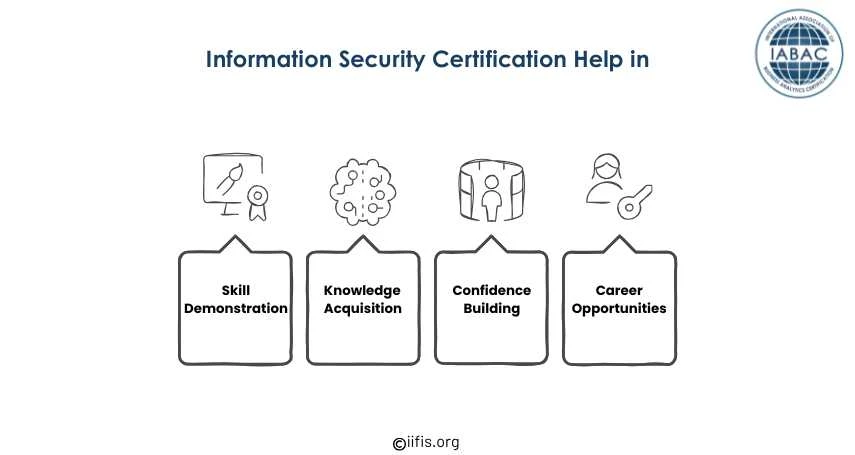
- showing your skills to potential employers
- Acquiring knowledge of the most recent methods and instruments
- Increasing self-assurance to deal with challenges in the actual world
- Providing access to lucrative cybersecurity positions
Let's review the best online certificates available.
1. Information Security Certifications by IIFIS (International Institute for Information Security)
Offered by: https://iifis.org/
Level: Beginner to Advanced
Ideal for: Aspiring cybersecurity professionals, IT staff, managers, and security specialists
From beginners wishing to begin their career in cybersecurity to professionals seeking to expand their knowledge, the International Institute for Information Security (IIFIS) provides a variety of internationally recognized cybersecurity skills.
IIFIS offers specific programs that are suited to your objectives, regardless of your level of experience with information security or managing IT systems in an organization.
What You’ll Learn:
- Information security basics
- Data protection and privacy laws
- Risk assessment and mitigation
- Implementing security policies in businesses
Requirements:
There are no strict entry requirements. Basic computer and IT knowledge is enough.
Why It’s Good:
- Basic information security principles (like the CIA triad).
- Risk management and data protection laws (such as GDPR and ISO 27001).
- Security analysis and incident handling.
How to Prepare:
When you're ready, take the certification exam online after studying self-paced online modules, practicing with sample questions, and attending optional workshops.
2. Certified Information Systems Security Professional (CISSP)
Offered by: ISC²
Level: Advanced
Ideal for: Experienced IT professionals
One of the most prestigious certifications in the field of cybersecurity is CISSP. It is well recognized and frequently necessary for high-level security positions.
What You’ll Learn:
- Security and risk management
- Security architecture and engineering
- Identity and access management
- Software development security
Requirements:
You need to have worked in the information security industry for at least five years. If not, you can still sit for the test and earn your ISC2 designation.
Why It’s Good:
- Globally recognized
- Boosts your salary
- Covers a wide range of topics
How to Prepare:
Platforms such as Coursera, Pluralsight, and official ISC2 partners offer online courses. There are alternatives for guided learning by instructors or self-paced learning.
3. Certified Ethical Hacker (CEH)
Offered by: EC-Council
Level: Intermediate
Ideal for: Security analysts, penetration testers
To identify and address security flaws before evil hackers do, CEH teaches you how to think and behave like a hacker for moral reasons.
What You’ll Learn:
- Ethical hacking techniques
- Network scanning and hacking tools
- Web server hacking
- Malware threats and countermeasures
Requirements:
You need to be familiar with the fundamentals of networking and security. Taking EC-Council's official training is advised but not necessary.
Why It’s Good:
- Very hands-on and practical
- Widely respected in cybersecurity roles
- Prepares you for real-world threats
How to Prepare:
The EC-Council website and learning platforms such as Cybrary and Udemy offer online instruction.
4. CompTIA Security+
Offered by: CompTIA
Level: Beginner
Ideal for: Newcomers to cybersecurity
An excellent entry-level certification that covers all the fundamentals of cybersecurity is Security+. For many people who want to work in security, it's frequently the first phase.
What You’ll Learn:
- Threats and attacks
- Risk management
- Cryptography and encryption
- Network security basics
Requirements:
Basic IT knowledge is helpful, but no particular experience is necessary.
Why It’s Good:
- Perfect for beginners
- Covers essential topics
- Required by many employers
How to Prepare:
Courses are available on LinkedIn Learning, Coursera, and CompTIA’s website. You can learn at your own pace.
5. Certified Information Security Manager (CISM)
Offered by: ISACA
Level: Advanced
Ideal for: IT managers, security leaders
CISM is primarily concerned with the design and management of enterprise-level security systems. It's excellent for those who wish to assume or are currently in leadership positions.
What You’ll Learn:
- Security governance
- Risk management
- Incident response
- Information security program development
Requirements:
You need five years of experience, with at least three years in security management.
Why It’s Good:
- Great for management roles
- Recognized globally
- Higher salary potential
How to Prepare:
You can prepare through ISACA’s online learning resources or take courses on other platforms like Infosec Institute or Simplilearn.
How to Choose the Right Certification
The tips that follow will help you choose the best program for your objectives:
1. Know Your Level
Are you just getting started? Choose ones that are easy for beginners to use, such as Security+ or IIFIS. Are you already employed in IT? You may favour GSEC or CEH. Try CISM or CISSP if you have management expertise.
2. Understand Your Career Path
Choose CEH if you wish to work as a penetration tester. Select CISM if you're more interested in overseeing security systems. Choose CCSP if you're excited about cloud computing.
3. Budget and Time
Certain certifications, such as CISSP and GIAC, require months of preparation and are costly. Others, such as Security+ or IIFIS, are quicker to finish and less expensive.
Information security is one of the fastest-growing career fields, and certifications are a great way to get ahead. Whether you're just starting or are already in the industry, there's a certification program out there for you.
Each of the certifications listed above has its unique focus and value. If you're a beginner, start with CompTIA Security+ or IIFIS. Whichever path you choose, keep learning and stay updated. The cyber world is always changing, and so should your skills!